
KABUL (Pajhwok): A new report by human rights organisation Rawadari says at least 1,187 civilians were martyred or wounded in Pakistani military attacks on Afghanistan between 1 December 2024 and the end of June 2026, with more than 29,000 families displaced and hundreds of homes and civilian facilities partially damaged or completely destroyed.
The report states that the documented attacks violated international humanitarian law and argues that an attack on a treatment centre in Kabul could amount to a war crime.
Rawadari published the report on Monday under the title “Examining the Consequences of Pakistan’s Military Attacks on Civilians in Afghanistan.”
According to the organisation, it analysed 50 attacks under international law and documented alleged violations of international humanitarian law resulting from Pakistani military operations between 1 December 2024 and the end of June 2026.
Casualties, damage
The report stated that Pakistani military regime carried out attacks in the provinces of Khost, Paktia, Paktika, Nuristan, Nangarhar, Kandahar, Helmand and Kabul.
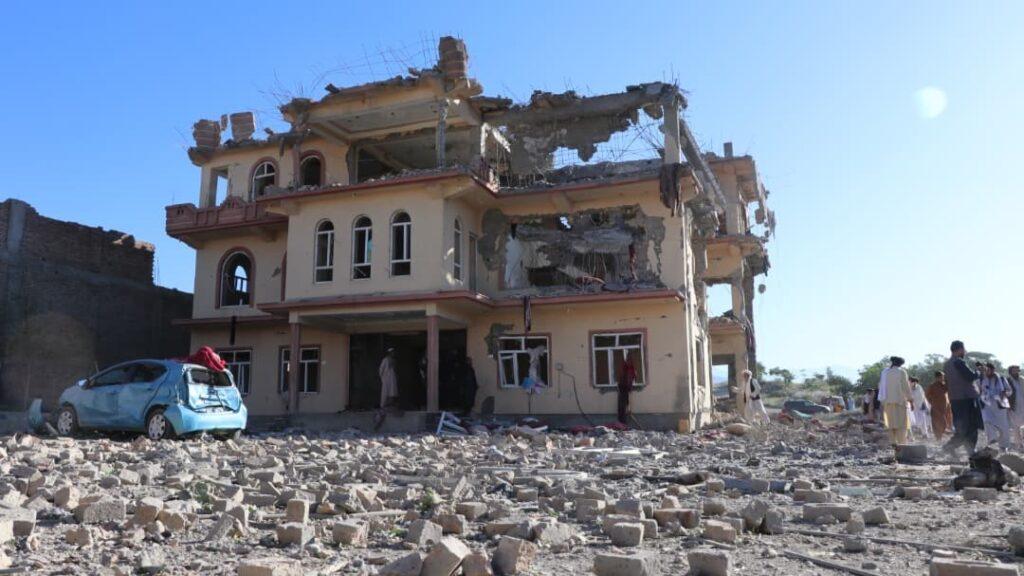
It added that the attacks left at least 1,187 civilians martyred or wounded, displaced more than 29,000 families and completely or partially destroyed hundreds of homes, healthcare facilities, schools, mosques and other civilian infrastructure.
According to the report, an airstrike by Pakistani forces on a drug rehabilitation centre in Kabul left at least 300 patients and staff martyred or wounded.
The organisation noted that the attack constituted a clear violation of the fundamental principles of international humanitarian law and could amount to a war crime.
Road closure in Nuristan
The report said Pakistani forces closed the only road linking the Kamdesh and Barg-i-Matal districts of Nuristan province for more than two months, from 1 February to 14 April 2026.
According to Rawadari, the closure left residents of the two districts facing severe difficulties in accessing food, healthcare and other basic necessities.
Psychological, social, economic impact
The report found that the consequences of the attacks extended beyond casualties and physical destruction, severely affecting the psychological, social and economic well-being of survivors, victims’ families and local communities.
Fear, loss of security, disruption to children’s education, worsening poverty, loss of livelihoods and family displacement were among the most common impacts identified through interviews conducted for the report.
Rawadari said the effects of the attacks continued long after the fighting had ended, making it difficult for victims and displaced families to return to normal life.
According to the report, a significant number of the attacks occurred in residential areas and villages along the Durand Line, where thousands of civilians live.
Methodology
Rawadari said the report was based on field evidence, interviews with victims, their relatives, eyewitnesses, healthcare workers, community elders and other relevant sources.
The organisation said it conducted online interviews in Pashto and Dari with 22 men from provinces affected by the attacks. It also reviewed photographs, videos, hospital and clinic records, as well as reports by media organisations and human rights groups to verify the information.
According to the report, only incidents confirmed by at least two independent sources were included in the final data, while cases that could not be verified because of limited access or insufficient evidence were excluded.
Limitations
Rawadari acknowledged that restricted access to villages and remote areas, unreliable internet services, security concerns among witnesses and other challenges affected the collection and verification of information.
The organisation added that the actual number of casualties, damage and alleged violations of international humanitarian law could therefore be higher than the figures documented in the report.
Pakistani authorities have not responded to the report’s findings by the time this report was published.
kk