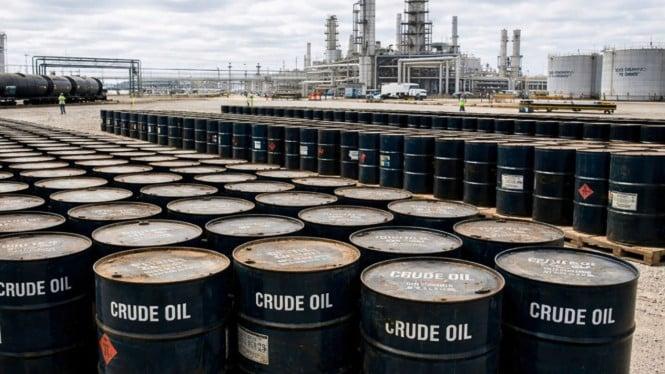

KABUL (Pajhwok): Global oil prices fell by more than 1 percent on Thursday as concerns over supply disruptions eased after Saudi Arabia offered Asian refineries the option of receiving additional crude shipments through Oman.
Reuters reported that Brent crude fell 1.2 percent, or $1.24, to $104.59 a barrel in early trading on Thursday. US West Texas Intermediate (WTI) crude also declined 1.1 percent, or $1.14, to $101.29 a barrel. Both benchmarks had dropped by about $3 on Wednesday.
According to the report, Saudi Arabia has offered Asian refineries the option of receiving more crude through ship-to-ship transfers near Oman’s Sohar port. The move eased concerns over potential supply shortages following an attack on Saudi Arabia’s East-West oil pipeline.
“Concerns over supply tightness eased slightly following news that Saudi Arabia would ship cargo via Oman,” Hiroyuki Kikukawa, chief strategist at Nissan Securities Investment, a unit of Nissan Securities, said.
He added that expectations of progress toward easing tensions in the Middle East ahead of next week’s US-China summit were also limiting gains in oil prices.
Oil prices had climbed to their highest level in about four months earlier this week after shipping industry sources reported that crude loadings at Saudi Arabia’s Yanbu port on the Red Sea had been halted and that Riyadh had cancelled some oil shipments to European customers.
Two pumping stations along Saudi Arabia’s East-West pipeline were damaged in last week’s attack, according to the report, while the exact timeframe for repairs remains unclear.
Yanbu port has become increasingly important to Saudi Arabia’s oil exports following the closure of the Strait of Hormuz. Before the current war, about one-fifth of the world’s oil passed through the strategic waterway, the report said.
Despite Thursday’s decline, concerns over continued regional tensions and conflicts continued to weigh on global oil markets.
The US Energy Information Administration also reported that US crude oil inventories fell by about 640,000 barrels last week, compared with analysts’ expectations of a decline of around 1.62 million barrels.
kk/sa