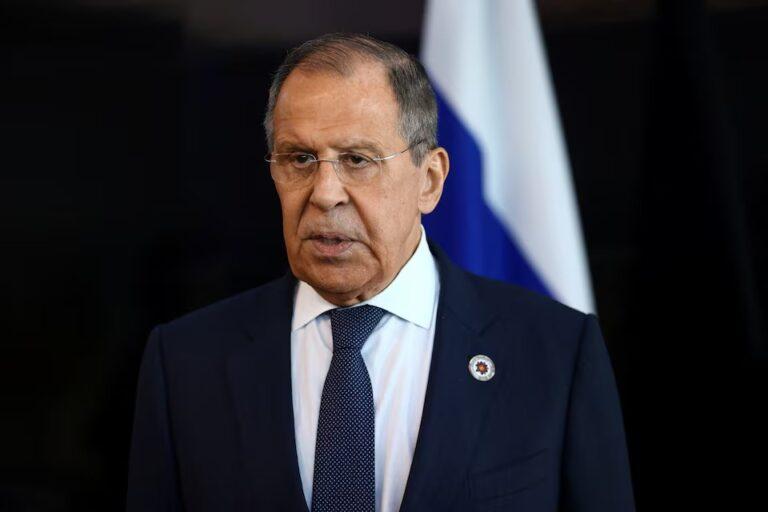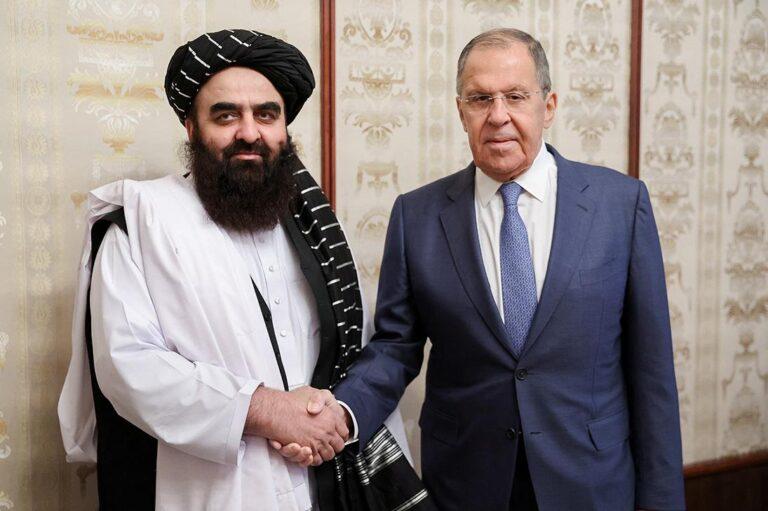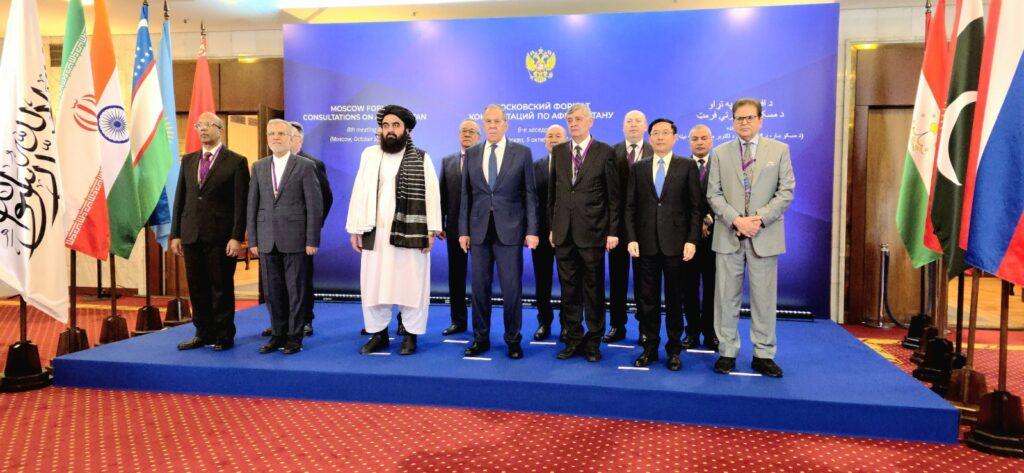

KABUL (Pajhwok): Foreign Minister Mawlawi Amir Khan Muttaqi has told the 8th Moscow Format meeting that Kabul wants to resolve its problems with Pakistan through dialogue, but said Islamabad has adopted a military approach and Afghanistan considers defending itself against any aggression its legitimate right.
He also spoke about security, the economy, investment, regional connectivity and balanced engagement.
Addressing the Moscow Format meeting, Muttaqi said the international system was going through a sensitive period of transformation, with relations and structures among major powers changing.
He said bilateral relations, regional organisations and regional mechanisms were becoming more important than before, while countries in different parts of the world were seeking to shape their relations based on their national and regional interests.
He said an assessment of Afghanistan’s situation over the past several years showed that the period of war in the country had ended, full security had been established across all parts of the country and the foundations of governance had been strengthened.
Afghanistan, he added, had moved from a situation in which prolonged war and widespread instability caused security concerns for the region and the world towards stability, economic recovery and regional engagement.
“Our belief is that stability is not a one-day product, but a continuous process that requires security, economic growth, political engagement and regional cooperation. Therefore, alongside our achievements, we clearly see greater responsibilities for addressing the challenges,” he said.
Muttaqi said security today had a dimension beyond the military and was directly linked to the economy, trade, energy, food, social stability and regional connectivity.
The foreign minister said Afghanistan believed the region’s future should be built on common security, economic integration, regional connectivity, and dialogue and understanding rather than security competition and pressure.
“The Islamic Emirate of Afghanistan has eliminated Daesh and other groups that were considered major threats to the security of Afghanistan and the region, and has effectively managed the fight against narcotics, which is an important part of our security policy,” Muttaqi said.
He said current security threats were not confined to the territory of a single country, with Daesh, terrorist networks, drug trafficking and organised crime crossing borders.
Therefore, he added, combating these threats should also be regional, and Afghanistan was ready to cooperate continuously with regional countries to strengthen border security and combat trafficking and narcotics.
He said he also wanted to clearly address the issue of relations with Pakistan, as it was directly linked to the security and economy of the region.
“Our fundamental belief is that the existing problems between Afghanistan and Pakistan, whether security, political or economic, can be resolved through dialogue and diplomacy. Afghanistan does not want this issue to become an arena of mutual accusations and propaganda. Our goal is to resolve the problem, not to find new means to prolong it. But unfortunately, I must say that the military regime ruling Pakistan is a non-political party. Instead of political understanding, they use only military language in their relations with Afghanistan,” Muttaqi said.
Muttaqi said the Pakistani military had for a long time carried out military attacks against Afghanistan’s sovereignty in violation of international principles, resulting in the killing of “patients in hospitals, students in schools and universities, children, women and innocent people in their homes.”
“Just days before this meeting, the same indiscriminate bombings in Afghanistan’s Kunar, Helmand and Paktika provinces once again killed innocent members of several families,” he said.
The foreign minister said that, alongside military aggression, Pakistan’s military regime had also used humanitarian issues such as regional economic routes, migrants and students pursuing education as tools of maximum pressure.
“The Pakistani military regime, in addition to its unilateral statements, always makes baseless accusations against Afghanistan, while it has now started working on a new project to undermine the security of Afghanistan and the region. They have begun practical efforts to spread insecurity in Afghanistan through members of Daesh as well as military personnel of the former regime. They have gathered thousands of armed men near the Durand Line to challenge the stability that has been established in Afghanistan, and their failed activities in Nuristan, Badakhshan and some other areas are before all of you,” he said.
He said the IEA would formulate its domestic and foreign policies independently and would never abandon its fundamental policy as a result of pressure. Afghanistan, he added, considered defending itself against any aggression its legitimate right.
Muttaqi said the fight against narcotics was directly linked to regional security and that poppy cultivation in Afghanistan had fallen to nearly zero as a result of government measures.
He said narcotics cultivation had reached record levels on the other side of the Durand Line, while trafficking networks remained active in the region.
He called on regional countries to strengthen joint security, technical and economic cooperation in this area and provide Afghan farmers with alternative livelihoods and access to markets.
Muttaqi said Afghanistan was moving towards stability and reconstruction after difficult economic conditions, and that economic indicators for the 1404 fiscal year also showed signs of gradual growth.
According to him, the country’s real gross domestic product grew by 1.5 percent during the year, while the economic recovery process, which began with 2.3 percent growth in solar year 1402, continued in 1403 and 1404.
He said the government was focused on production, industry, agriculture, exports, the private sector and investment, and wanted Afghanistan’s economic future to rely largely on production, trade and investment.
The foreign minister said increased private-sector investment was a sign of expanding economic activity. According to him, gross fixed investment reached 286.5 billion afghanis in 1404, of which 200.9 billion afghanis was private-sector investment. The share of investment in gross domestic product also increased from 17 percent to 21.5 percent.
He added that creating a suitable investment environment, developing infrastructure and strengthening regional economic cooperation were important for further increasing the private sector’s contribution.
Muttaqi called on regional countries to increase investment and economic engagement in Afghanistan.
He said Afghanistan had significant potential in energy, mining, agriculture, industry, transit, logistics and infrastructure, and wanted to position itself as a long-term economic partner for regional investors.
He said Afghanistan welcomed investments that, in addition to capital, create production, employment opportunities, technology, professional capacity and exports.
Muttaqi said Afghanistan’s mines represented an important potential for economic growth and that the government wanted to strengthen processing and manufacturing industries instead of exporting raw materials.
He added that Afghanistan wanted to further integrate its economy with those of the region and use its geographic location to become an important connectivity hub linking Central and South Asia, China, Russia and the Middle East.
He said the expansion of regional projects such as TAPI, TAP, CASA-1000 and the Trans-Afghan railway could increase economic opportunities and strengthen regional stability. Afghanistan, he added, wanted to diversify its trade and economic relations and avoid depending on a single country or route.
Muttaqi said Afghanistan’s foreign policy was based on balanced engagement, mutual respect and common interests, and that Kabul did not want to become part of international or regional rivalries.
He said Afghanistan wanted to expand political and economic relations with all countries and manage differences through dialogue and diplomacy.
He described Russia’s recognition of the Islamic Emirate as an “important development” and expressed hope that other countries would adopt a similar policy.
The foreign minister said Afghanistan should not be viewed solely from a security perspective, but that its significant potential in energy, trade, transit, mining, agriculture and regional connectivity should also be taken into account.
He added that Afghanistan wanted to be recognised not as a problem to be managed, but as a responsible partner for shared interests, and called on countries outside the region to base their policies on direct engagement and mutual interests rather than pressure and isolation.
He said Afghanistan’s stability was in the interest of the region and the world.
sa