
KABUL (Pajhwok): The Ministry of Public Health (MoPH) on Thursday said about 60 percent of blindness cases in Afghanistan are caused by cataracts, with more than 600,000 people blind and another 1.5 million suffering from visual impairment.
The ministry shared the figures on World Sight Day, observed annually on the second Thursday of October. This year, the day falls on October 8.
World Sight Day is coordinated by the International Agency for the Prevention of Blindness (IAPB), in cooperation with the World Health Organization (WHO) and other organizations working in eye care. The day aims to raise awareness about eye health, prevent blindness and visual impairment and promote universal access to eye-care services.
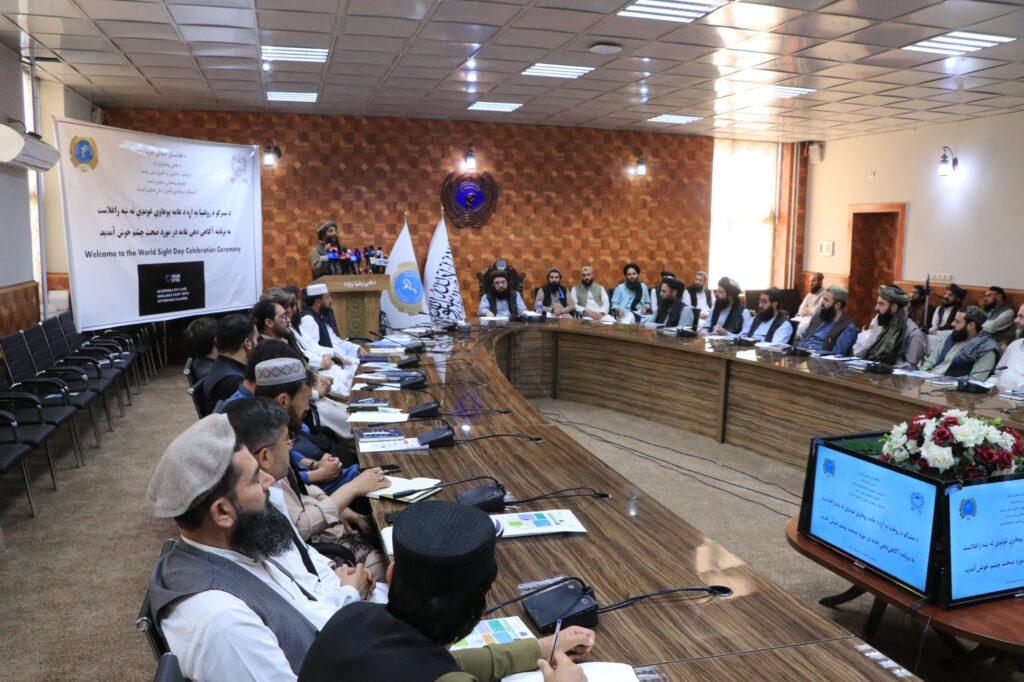
Mawlawi Abdul Wali Haqqani, deputy minister for health services delivery, said during a public awareness session marking the day that ensuring eye health, reducing blindness and preventing vision loss were among the ministry’s key priorities.
He said providing equitable, transparent and accessible eye-care services to all people required joint efforts and greater attention to prevention and public awareness.
“Timely diagnosis and treatment of eye diseases can prevent the progression of diseases and blindness among many people,” Haqqani said.
He identified glaucoma, cataracts and vitamin A deficiency among the major eye-health problems in the country.
Haqqani stressed that reducing blindness required more than treatment alone, saying greater focus should be placed on prevention, early diagnosis and public awareness.
He said eye-care services in Afghanistan faced several challenges, particularly limited access to eye specialists and specialized services in remote areas.
“Providing services to patients living in remote areas needs further strengthening,” he said, adding that the ministry was working to improve access to eye-care services.
He said strengthening oversight of eye-treatment services, facilitating access to eyeglasses, improving the capacity of eye specialists, strengthening eye surgery and expanding other specialized eye-care services were among the ministry’s priorities.
Meanwhile, Dr. Ahmad Sair Pashtun, director-general of disease prevention and control at the MoPH, said about 60 percent of blindness cases in Afghanistan were caused by cataracts.
He said cataracts were preventable and treatable, adding that efforts were underway to increase cataract surgeries in the country.
Pashtun said mobile teams of eye specialists conducted 4,578 cataract surgeries in 17 provinces and 18 camps during 1404, examined more than 71,000 eye patients, distributed medicines and provided 9,536 pairs of reading glasses to people with impaired near vision.
He added that so far this year, 1,870 cataract surgeries had been conducted in four provinces and five camps. A total of 20,925 patients had been examined and 5,050 pairs of glasses distributed.
He said 300 free cataract surgeries would be performed at the Paktia Regional Hospital during the week to mark World Sight Day.
Dr. Agha Mohammad Abid Totakhail, head of eye-care coordination at the MoPH, said an estimated 600,000-plus people in Afghanistan were blind and another 1.5 million suffered from visual impairment.
He said about 25,000 people in Afghanistan lost the sight of one eye every year, adding that 80 percent of such vision loss was preventable or treatable.
“It is expected that trachoma will be completely eliminated from the country by 2030,” Totakhail said.
In a message marking World Sight Day, the MoPH said around 90 percent of blindness cases were preventable or treatable.
It said early diagnosis of many eye diseases could allow timely treatment or prevent the progression of disease.
The ministry also warned that eye injuries were among occupational hazards and could, in some cases, result in partial or complete loss of vision. However, it said around 90 percent of workplace eye injuries could be prevented through the use of appropriate protective eyewear.
The ministry advised people working with computers to follow the 20-20-20 rule — after every 20 minutes, look at an object about six metres away for 20 seconds.
It also recommended regular eye examinations, maintaining an appropriate distance from computer screens and using protective eyewear in workplaces.
The ministry urged parents to watch for signs of vision problems in children, including holding objects close to the eyes, frequent eye rubbing, tilting the head, closing one eye, difficulty reading, eye redness or excessive tearing.
Parents were advised to take children to an eye specialist for examination if any of these symptoms were observed.
sa