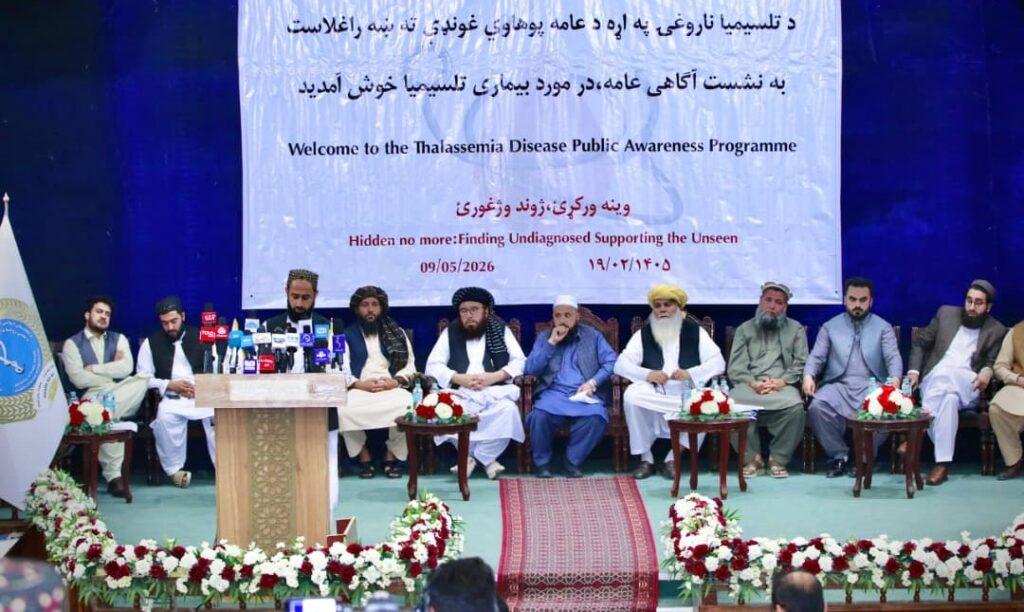

KABUL (Pajhwok): Officials of the Ministry of Public Health (MoPH) say that more than 11,000 people across the country are currently registered as thalassemia patients and the ministry is working to expand treatment services for them.
According to doctors, thalassemia is a hereditary and genetic disease passed from parents to children. In this condition, the number of red blood cells drops significantly, which can lead to mild to severe anemia, bone deformities, slowed growth and heart problems in affected individuals.
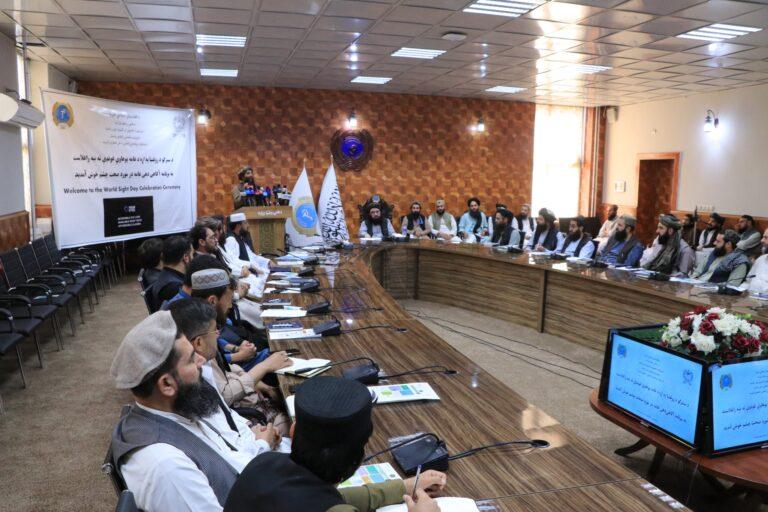
The MoPH today (Saturday) marked International Thalassemia Day, observed for patients suffering from chronic anemia.
Mawlawi Abdul Wali Haqqani, Deputy Minister for Health Services, at today’s gathering, called on international organizations and partner institutions in Afghanistan to cooperate with the ministry in strengthening health services, providing medical equipment and expanding awareness programs for disease prevention.
He added that the MoPH is committed to further strengthening treatment services for thalassemia patients in the country.
Haqqani said that the Islamic Emirate of Afghanistan considers strengthening the health sector a priority, adding: “The Ministry of Public Health has established special treatment centers for thalassemia patients in the country, where hundreds of patients are receiving treatment.”
He stated: “Through joint efforts and continuous cooperation, we can prevent thalassemia and ensure the provision of necessary treatment services.”
Meanwhile, Niaz Gul Niazmand, head of the National Blood Bank, said that currently 11,260 thalassemia patients are registered across Afghanistan.
He added that among these patients, 5,137 are men and 6,132 are women.
According to him, 1,500 thalassemia patients are registered in Kabul alone, including 798 men and 719 women.
Likewise, Dr. Wahdat Alokozai, Director General of Curative Medicine at the MoPH, said that thalassemia is a treatable disease and the best way to prevent it is through public awareness at the community level.
He said the MoPH is working nationwide to prevent the disease and has also established several treatment centers.
sa