
KABUL (Pajhwok): The United Kingdom government has proposed an overnight social media curfew for 16- and 17-year-olds as part of efforts to protect teenagers from potential online harms, while allowing users to opt out of the restrictions.
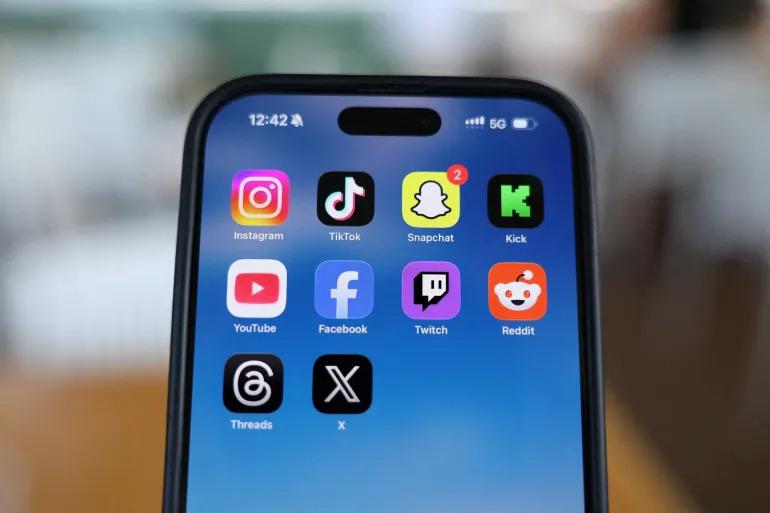
Under the proposal announced on Wednesday, major platforms including Instagram, TikTok and YouTube would apply a default six-hour restriction between midnight and 6am for older teenagers, Al Jazeera reported.
The plan would also disable highly engaging features, such as autoplay videos and infinite scrolling, by default for this age group, with the aim of improving sleep and reducing excessive screen use.
The move follows an announcement by outgoing Prime Minister Keir Starmer in June that the government planned to introduce a ban on social media access for children under 16, expected to take effect in 2027.
While younger children would face stricter restrictions, ministers have chosen a less restrictive approach for 16- and 17-year-olds, saying the policy is intended to guide teenagers rather than impose a complete ban.
The UK measures come amid growing international efforts to regulate young people’s access to social media.
Australia introduced a world-first ban on social media use for children under 16 in December, becoming a test case for governments seeking to address concerns over online safety.
UK Secretary for Online Safety Kanishka Narayan defended the voluntary nature of the proposed curfew, saying the government wanted to avoid a complete ban for older teenagers and instead create a gradual transition into adulthood.
“We want to empower our teenagers,” Narayan told Sky News, citing pilot programmes and voluntary trials by platforms in which more than 90 percent of teenagers kept restrictive default settings active.
However, opposition lawmakers and some child safety advocates questioned whether the measures would be effective if teenagers could easily disable them.
Laura Trott, the Conservative Party’s education spokesperson, criticised the proposal, saying restrictions that users could switch off would not achieve meaningful results, according to the Associated Press.
The National Society for the Prevention of Cruelty to Children (NSPCC) welcomed the announcement but warned that stronger measures would still be needed.
PAN Monitor/sa