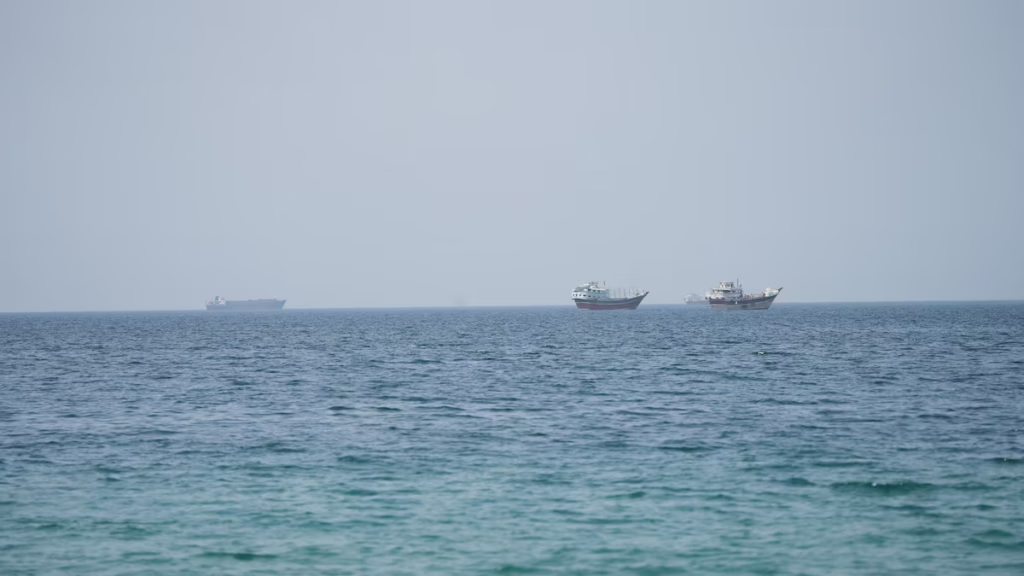

KABUL (Pajhwok): Iran is seeking to use its control over the Strait of Hormuz to increase pressure on the United States and strengthen its position in any possible negotiations, while the approach also carries risks for Tehran, the Associated Press (AP) reported.
According to the AP, Iranian officials believe continued military pressure and restrictions on shipping through the Strait of Hormuz could increase the likelihood of Washington accepting a greater Iranian role in managing the waterway, which is an important route for global energy supplies.
The report said Iranian leaders are also considering several factors they believe could strengthen their position, including reduced US stocks of some weapons, opposition to the war among parts of the American public, high oil and commodity prices ahead of congressional elections and the potential cost of reopening the strait through military action.
Iran is also relying on its Houthi allies in Yemen, who, according to the AP, could disrupt another major international trade route if the conflict expands.
The AP reported that Iran is close to finalising a proposed arrangement with Oman on managing the Strait of Hormuz. Implementation of such an arrangement would depend on the lifting of a US blockade and would therefore require Washington’s approval, according to the report.
The proposed arrangement could formalise Iran’s role in managing part of the waterway, which had operated as an open international route before the war, the AP said.
According to data from the US Energy Information Administration cited by the AP, about 20.9 million barrels of crude oil and petroleum products passed through the Strait of Hormuz each day during the first half of 2025, accounting for about one-quarter of global seaborne oil trade. More than one-fifth of global liquefied natural gas (LNG) trade also passed through the strait.
Abdolreza Davari, an Iranian analyst and former adviser to former President Mahmoud Ahmadinejad, told the AP that Iran’s de facto control of the Strait of Hormuz had increased Tehran’s bargaining position with the US and regional countries.
Davari said that securing recognition of Iran’s management of the strait was more important to Tehran than obtaining direct revenue from the waterway.
The AP reported that formalising Iranian control over part of the Strait of Hormuz could strengthen Tehran’s position while creating concerns over the future of international navigation through the waterway.
Iranian leaders believe they have the means to maintain pressure on the US, according to the report.
Mahdi Mohammadi, an adviser to Iran’s chief negotiator, said he believed the US had started the war but that Iran would decide when it ended. He also said Tehran was seeking more than a negotiated agreement.
The AP reported that Iran has repeatedly said the Strait of Hormuz would not return to its previous status as an open waterway and that it would continue attacking vessels attempting to pass through without Tehran’s permission.
Security analyst Mostafa Najafi told the AP that the Strait of Hormuz had become a strategic tool for Iran to address perceived threats, maintain the regional balance of power and seek changes to security arrangements in the Persian Gulf.
According to the AP, the dispute over the Strait of Hormuz has also shifted some attention away from Iran’s nuclear programme.
Iranian analyst Rahman Ghahremanpour said the situation had benefited Iran and that control of the strait could provide Tehran with additional leverage if nuclear negotiations resumed.
The AP also reported that the strategy carries risks for Iran. The war has affected the country’s economy, US and Israeli strikes have targeted parts of its industrial sector, and the US blockade has reduced Iran’s oil exports.
US President Donald Trump has spoken about the possibility of further military action while also saying that talks with Iran were progressing, according to the AP.
The news agency reported that after the first US and Israeli attacks on February 28, Trump said the war could end within weeks. The AP said the conflict had also affected the positions of Iranian leaders and their supporters.
Ghahremanpour said Iran could not maintain the current approach indefinitely and would eventually need to reach an agreement with the US.
Davari, however, said Iran currently had the ability to withstand the pressure and was unlikely to change its position despite economic difficulties, according to the AP.
kk/sa