KABUL (Pajhwok): Over the past five years since the Islamic Emirate of Afghanistan (IEA) returned to power, Afghanistan’s economy has faced challenges including declining foreign aid, frozen Afghan assets and banking restrictions.
At the same time, a stronger afghani, controlled inflation, increased domestic revenues and the implementation of several major economic projects have been among the country’s key economic developments.
August 15 marks the fifth anniversary of the political change in Afghanistan and the re-establishment of the IEA.
Following the return of the Islamic Emirate, the United States froze more than $9 billion in Afghan assets. According to reports, $7 billion of the frozen Afghan assets are held in the United States, while the remainder is in European countries.
But what changes and differences has Afghanistan’s economy experienced over the past five years, and what has been done in the country?
A Look at Economic Indicators: 2021 to 2026
An examination of economic indicators shows that Afghanistan’s economic situation has undergone various changes over the past five years.
According to data from the International Labour Organization, Afghanistan’s unemployment rate was estimated at around 13.3 percent in 2021.
World Bank data, which publishes this indicator based on modeled estimates by the ILO, puts Afghanistan’s unemployment rate at 13.4 percent in 2025. Full-year data for 2026 has not yet been published.
In terms of inflation, Afghanistan faced inflation of around 5.1 percent in 2021. The rate subsequently declined, reaching 2 percent in 2025, according to the World Bank’s latest annual data.
The value of the afghani also experienced significant fluctuations during this period. At the beginning of the political transition on Aug. 15, 2021, the afghani fell sharply against the US dollar. In December of that year, one US dollar was trading at as much as 130 afghanis. The rate has now fallen to 65.01 afghanis per dollar.
In terms of revenue, World Bank data shows that Afghanistan’s domestic revenue increased from 140 billion afghanis in 2021 to 272 billion afghanis in fiscal year 2025. Full-year revenue data for 2026 has not yet been released.
In one of its reports, titled Afghanistan Development Update and published on May 26, 2026, the World Bank said Afghanistan’s economy had continued to grow despite regional tensions and the closure of routes with Pakistan. According to the report, Afghanistan’s economy grew by around 4.8 percent in fiscal year 2025.
Ministry of Economy: Afghanistan made significant economic gains over the past 5 years
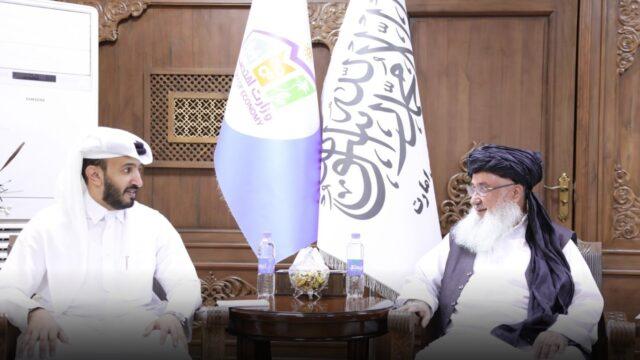
Abdul Latif Nazari, Deputy Minister of Technical Affairs at the Ministry of Economy, told Pajhwok Afghan News that Afghanistan had made significant economic achievements over the past five years.
He said there had been predictions that Afghanistan’s economy would collapse, but that this had not happened. Instead, he said, the IEA had made significant progress in the economic sector.
He added that the value of Afghanistan’s national currency was currently exceptional in the region and that inflation had been brought under control.
According to him, compared with neighboring countries, this demonstrated Afghanistan’s progress in managing inflation and achieving sustainable economic growth.
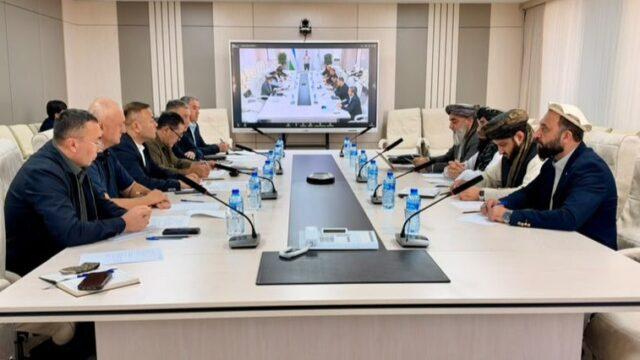
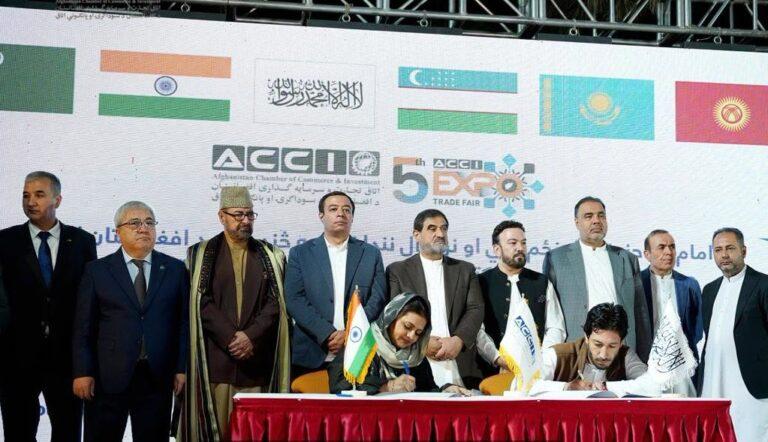
Nazari said that extensive economic relations and exchanges had developed between Afghanistan and neighboring countries, particularly the countries of Central Asia, over the past five years.
He added that Afghanistan had signed various agreements with Central Asian countries in agriculture, energy, transport, infrastructure and other sectors.
He described Afghanistan’s economic relations with Central Asia as a turning point that would benefit both sides.
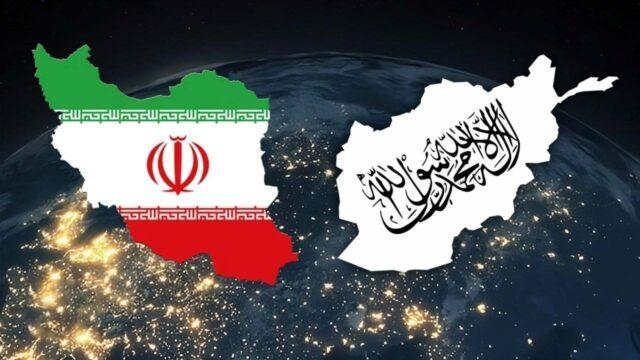
Nazari said Afghanistan now had good economic relations with Iran and that trade between the two countries was increasing. If stability is established in Iran, Afghanistan could potentially conduct up to $10 billion in economic exchanges with the country, he said.
He added that Afghanistan’s economic transactions and trade with China and Russia were also increasing.
He said these were precise and expert measures that had been placed on the government’s agenda over the past five years, including strengthening economic routes, implementing major economic projects and monitoring customs tariffs.
According to Nazari, despite Pakistan closing its routes with Afghanistan and Iran’s trade with Afghanistan being disrupted because of the war, the Islamic Emirate had managed to strengthen the country’s economic exchanges by establishing a new route to Central Asia and had prevented domestic prices from rising.
“Because in today’s world, if war breaks out in the Middle East, if conflict occurs between India and Pakistan in South Asia, and if there is war in Ukraine, all of these have negative effects on Afghanistan’s economic situation, including price trends,” he said.
According to Nazari, expanding exports was an important issue, while strengthening national revenue was also essential.
He added: “We properly managed our domestic and natural resources. Through the transparency we created and by eliminating corruption, we were able to bring economic governance in Afghanistan to a desirable level. International organizations occasionally confirm these economic advances in their reports.”
Nazari also noted that major national projects were under way in various parts of the country, including Kabul, while reconstruction and modernization efforts aimed at promoting economic growth were continuing.
He said Afghanistan’s highways had been constructed and others were under construction, adding that the better the highway network, the easier economic exchanges would become and the stronger the links between villages and cities would be.
Nazari said considerable work had also been done on railways, which would contribute significantly to exports and imports.
He said one of the Islamic Emirate’s main objectives was to increase employment-generating projects nationwide and that a key priority was to provide young Afghans with jobs.
He added that employment-generating and major economic projects were on the government’s agenda at various levels and that, according to assessments, these projects had achieved some success.
Nazari cited the Qosh Tepa Canal project as one example, describing it as one of Afghanistan’s major national achievements.
He said these efforts would expand in the coming years and could play an important role in reducing unemployment, creating jobs and strengthening household purchasing power.
Referring to Afghanistan’s continued high unemployment, Nazari said these projects had had a significant impact on job creation and had played a major role in reducing unemployment.
Regarding Afghanistan’s frozen assets in the United States, which he said had created economic challenges, Nazari described the freezing of Afghan people’s assets as part of a policy of exerting pressure on independent countries. He said such a policy was condemned and rejected under international law.
He said: “When we want to be an independent and free country, when our foreign policy should be in our own hands and we should make political decisions and policy decisions about Afghanistan’s future, this should not result in major powers putting pressure on us — including through sanctions, freezing the assets of the Afghan people, imposing banking restrictions and cutting off our banks’ connections with international banks.”
He said banking restrictions had created challenges for traders and investors, but that the Islamic Emirate’s economic diplomacy remained active to secure the release of Afghan assets, remove restrictions and either neutralize or completely eliminate sanctions through logical and rational mechanisms based on international rules.
According to Nazari, the most important current challenge across Afghanistan’s economy was sanctions and banking restrictions, which made it difficult for investors to transfer money and had affected even some major international organizations.
He added that the government was using economic diplomacy to remove these restrictions and secure the release of Afghanistan’s assets.
On attracting investment, he said the government was pursuing investment priorities and policies, while tax exemptions, the establishment of industrial parks, easier access to electricity, residency facilities, visa facilitation and security for traders were among the measures aimed at attracting domestic and foreign investors.
Regarding the revival and strengthening of economic infrastructure as a path toward self-sufficiency, Nazari said a correct, rational and logical course had been adopted and that Afghanistan was moving toward self-reliance.
He added that the plan was for Afghanistan to have a clear vision of self-sufficiency in various sectors in the coming years.
According to Nazari, although Afghanistan was no longer dependent on foreign aid, it welcomed development and humanitarian assistance.
He said the main objective was to revive and develop Afghanistan’s economic infrastructure so that strengthening these foundations would help the country move toward self-sufficiency.
He called on Afghans to remain hopeful and said that strengthening the private sector and keeping young people in the country would help Afghanistan progress as a free, developed and independent nation.
Central Bank: Afghani strengthened and inflation controlled
Hasibullah Noori, deputy spokesman for the Central Bank of Afghanistan, said the bank had made effective efforts over the past five years to maintain the value of the afghani and control inflation.
He said the value of the afghani against the US dollar had increased by 6.01 percent in the past year alone.
Noori added that relations with international financial and banking institutions had improved during this period and that licenses had been obtained from the US Treasury to facilitate money transfers for Afghan traders.
He said people’s bank deposits had increased and progress had also been made in digital banking.
He said new regulations had been introduced to regulate the activities of money changers and money services providers, and that operating in the sector without a Central Bank license was not permitted.
He also said banking products had been structured in accordance with Islamic banking principles and that efforts to expand Islamic banking were continuing.
Noori said the Central Bank had collected and destroyed some worn-out banknotes over the past five years and was encouraging people to use electronic payment cards to reduce reliance on cash.
Achievements and challenges: Economic experts’ views
Qais Mohammadi, an economic affairs analyst, told Pajhwok that the Islamic Emirate had made a number of economic achievements over the past five years.
He said continued border trade and transit, maintaining and strengthening the value of the afghani against other currencies, and restarting incomplete and launching new projects in various parts of the country were among the positive achievements of this period.
According to him, continued border trade with other countries had kept some Afghan industries operational and attracted a degree of investment into the country.
He said the launch of incomplete and new projects had also helped reduce pressure from unemployment and poverty.
Mohammadi said the Central Bank of Afghanistan had played an important and constructive role in controlling monetary inflation and stabilizing the afghani against other currencies, helping keep inflation under control.
He said that although trade relations with neighboring countries had experienced fluctuations over the past five years and the Central Bank of Afghanistan did not have access to all of its assets abroad, the Islamic Emirate had managed both issues successfully and had taken sufficient measures.
Mohammadi said that if inflation and the value of the Afghan currency remained stable over the next five years, it could increase investor confidence in domestic investment.
He added: “Alongside these achievements, Afghanistan still faces a number of economic challenges. The government has so far been unable to bring international aid back into the country — aid that previously represented an important source of employment, people’s income and government revenue.”
He described Afghanistan’s frozen assets as another major challenge and said they represented an important resource for combating poverty and unemployment.
He added that Afghanistan still faced banking restrictions and limitations on international payments, making trade with American and European countries difficult.
In his view, if the frozen assets were released and international aid resumed, poverty would decline further and unemployment would also decrease.
He recommended that the government focus on three priorities in the future to help Afghanistan emerge from its current economic situation and create conditions for economic development.
First, he said, Afghanistan’s relations with all countries of the world should be improved, strategic plans should be developed at both macro and micro levels, and domestic production should be strengthened.
Mohammadi added that Afghans should also make greater use of domestic products and that the Islamic Emirate should do more in this area.
According to him, major economic projects have a significant impact on Afghanistan’s overall development and economic growth in particular, because the greater the focus on national projects, the more directly people gain employment and poverty declines.
Meanwhile, Abdul Zohor Modabber, a professor at the Faculty of Economics at Hewad University, said Afghanistan’s economy had experienced fluctuations over the past five years, with both ups and downs.
He said important work had been carried out in several areas, including the Qosh Tepa Canal, attention to the TAPI project, relations with Central Asian countries, finding alternative options, stabilizing the afghani and controlling inflation.
In his view, factors such as the non-recognition of the Islamic Emirate and the freezing of Afghan people’s assets had negatively affected the country’s economy.
He said the solution to improving household incomes and the economy at the national level was to focus on Afghanistan’s infrastructure and create a productive economy.
He said Afghanistan had sufficient labor, natural resources, renewable and non-renewable resources, wind and rainfall, and that these resources should be used efficiently to develop a stronger productive economy.
Modabber added that Afghanistan needed sound trade relations with the region and the wider world, which would have positive economic effects on the country.
sa