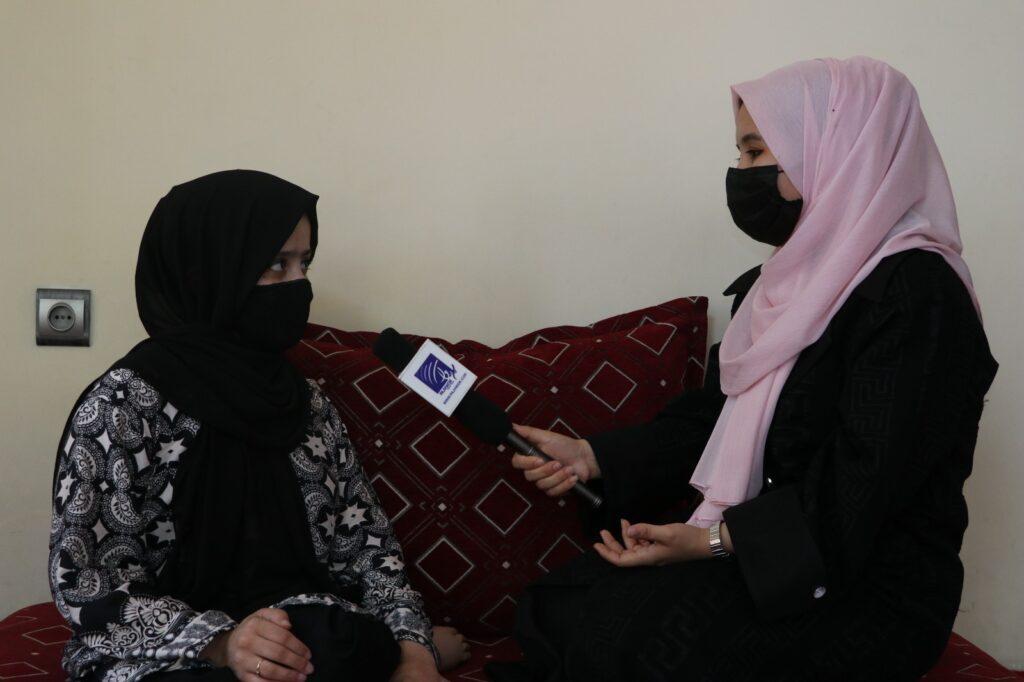

KABUL (Pajhwok): Ayesha Quraishi has lived with a disability since childhood, but with the support of her family and her own determination, her physical limitations have not prevented her from pursuing education and personal development.
She now works for the International Committee of the Red Cross (ICRC) and hopes to do more to support people with disabilities.
In this report, Pajhwok Afghan News introduces Ayesha Quraishi, a young woman who has overcome the challenges associated with her disability and has become an example for other people with disabilities.
Life begins with a challenge
Ayesha, who was born 28 years ago in the 500-Families area of Kabul to an educated family, says her family noticed her physical condition shortly after her birth. There was a visible swelling on her lower back, around the spinal area. After consulting doctors, she underwent surgery at the age of 52 days.
According to Ayesha, doctors told her family that the surgery could prevent further complications in the future, and her family made every effort to ensure she received treatment from the earliest days of her life.
Farida, Ayesha’s mother, said she noticed the swelling on her daughter’s back immediately after birth. At first, she thought it might be something normal, but doctors later determined that it was not and recommended surgery. They also warned that Ayesha could develop complications in the future, including losing movement in her legs.
Farida said accepting the situation was difficult. In the early days, she experienced mixed emotions, balancing the happiness of having a newborn child with concerns about her physical condition. However, the family decided to proceed with the surgery in the hope of improving her health.
Childhood in migration
When Ayesha was six months old, her family moved to Iran in 1997. They returned to Afghanistan in 2004, when she was six and a half years old.
Ayesha says that after returning to Afghanistan, her family took her to different hospitals for treatment. They eventually learned about the ICRC, registered with the organisation and began rehabilitation efforts for her.
Efforts to stand and walk
Ayesha says that from her first day at the ICRC, a brace was made for her legs and she began learning to walk, making every effort to stand on her feet.
Ayesha recalled: “On the first day I was trying to walk, one of the attendants was talking to my mother. She told my mother, ‘God willing, your daughter is intelligent. Talk to them here and connect with their education department so she can study.’”
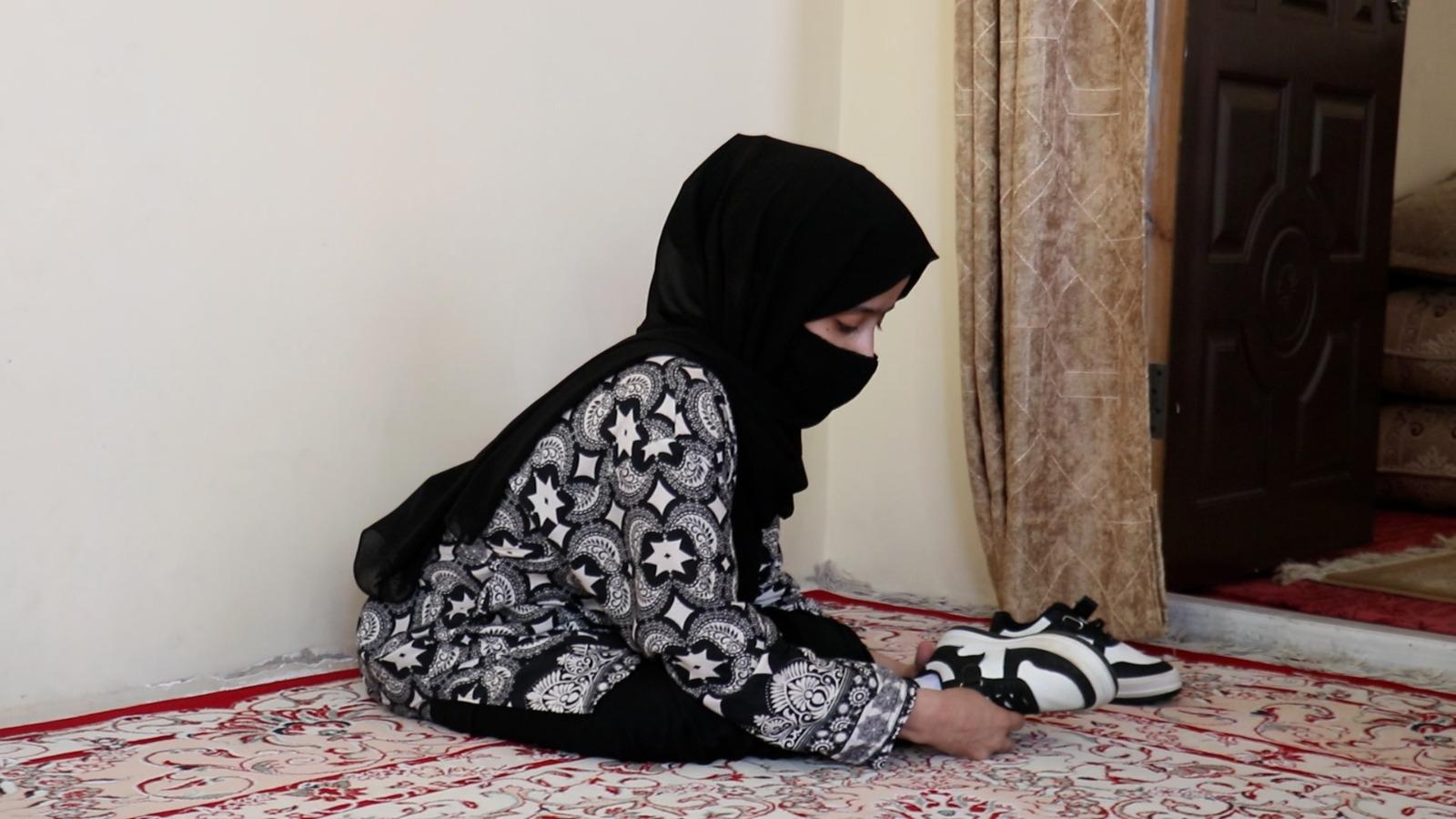
Ayesha says her mother was encouraged by the woman’s words and immediately spoke to the doctors, asking them to provide her daughter with access to education. This led Ayesha to the ICRC’s education department, where she began studying with the organisation’s support.
She says she studied with great interest and enthusiasm. At the time, she studied at home up to sixth grade, with her examinations also conducted at home. After sixth grade, however, she had to attend a school to be formally registered with the education system and obtain a registration number.
Ayesha continued her studies at home but took examinations at several schools, including Bibi Sara School, Sangi School and General Education.
Pursuing higher education
Ayesha says one of her few regrets in life is that she did not immediately sit the university entrance examination after graduating from school. She considers the lack of suitable facilities for people with disabilities at educational institutions one of the reasons for the delay in continuing her studies.
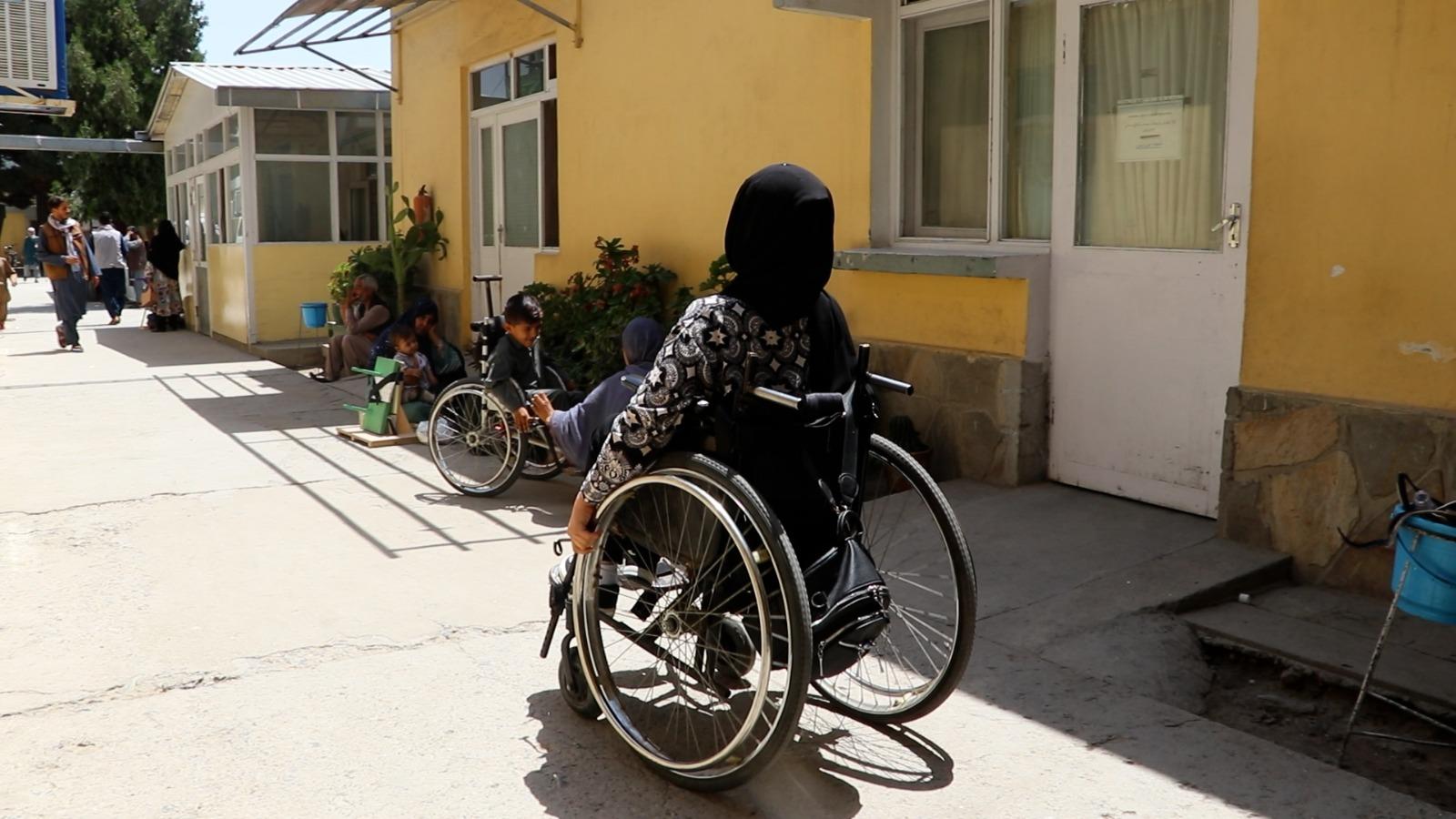
“In every academic institution I wanted to attend, I saw that there was no proper access. There were no wheelchair ramps. No one had considered that people with disabilities also live in our society,” she said.
Despite these difficulties, Ayesha did not give up. She first worked to learn English and computer skills, with the ICRC covering the cost of her course fees.
But learning English and computer skills was not the end of her journey. Ayesha wanted to pursue higher education and was always looking for an opportunity to begin.
She said: “One day, I came across a Facebook announcement about a university offering discounts to people with disabilities. I was very happy and searched extensively until I found a university close to our home. I took the entrance examination at Mashal University and was accepted to study economics.”
Ayesha studied economics for one semester, but her education was interrupted after the Islamic Emirate of Afghanistan suspended women’s education at higher education institutions until further notice.
Work: A step towards independence
After women’s higher education was suspended, Ayesha decided that she should look for a job. Around that time, she saw a vacancy announcement at the ICRC and applied, but was unsuccessful.
She says failing to secure the position did not discourage her. She continued her efforts and applied again when another vacancy was announced by the organisation, this time successfully.
Ayesha now works in the organisation’s patient registration section. She says working has its challenges, but her interest in her job and her sense of service to others motivate her to continue despite fatigue and difficulties. Financial independence and earning an income, even if modest, are also very important to her.
“Sometimes certain behaviours or things have upset me, but afterwards I encouraged myself and moved forward. I never gave up,” she said.
Ayesha, who hopes to do more for people with disabilities in different fields, said: “If I can work for people with disabilities, it will be a great honour. And if I can help anyone else alongside that, it would be wonderful.”
Family: Her greatest support
Ayesha considers her family’s role crucial to reaching where she is today. She says her mother has been her greatest supporter, while her father, brother and sisters have also always supported her.
She says that whenever she needed help travelling to school or courses, her father or brother accompanied her.
Ayesha’s mother
Farida, Ayesha’s mother, said caring for children is a mother’s responsibility, but Ayesha needed additional care and support. She therefore devoted much of her time and energy to her daughter.
She recalled that one day Ayesha’s doctor told her: “Mother, you have to be strong so that Ayesha also sees you as strong.” Farida said she took the advice seriously.
“I thought to myself that he was right. If I lose hope, perhaps Ayesha will also lose hope. I have to be strong so that Ayesha can also see strength in me. I made great efforts for her education,” she said.
She said some friends and acquaintances asked why she was making so much effort to educate Ayesha, but she believed her daughter had the same right as other children to receive an education and develop.
According to Farida, her daughter had a strong interest in studying, books and drawing from childhood and never allowed her disability to stop her development.
She urged other mothers of children with disabilities never to prevent their children from studying or receiving an education.
One of Ayesha’s colleagues
Mohammad Daud Sharifi, supervisor of the physiotherapy department at the ICRC rehabilitation centre in Kabul, describes Ayesha as a “good, capable girl who is proficient in her work”. He says she has a disability herself and works to support people with disabilities.
Sharifi urged families not to prevent their children with disabilities from pursuing education and personal development.
He said the ICRC’s physical rehabilitation programme in Afghanistan currently has seven centres in Kabul, Mazar-i-Sharif, Herat, Jalalabad, Kapisa and Faizabad, employing around 858 people, about 87 percent of whom are people with disabilities.
He added that some of these employees were previously beneficiaries of the rehabilitation centres but now provide services to other people with disabilities.
Sharifi said the ICRC began its rehabilitation centre programme in Afghanistan in 1988 with a single centre in Kabul. The programme has now expanded to seven centres.
He attributed the expansion to the needs of the Afghan population and disabilities resulting from four decades of war, saying efforts are being made to expand rehabilitation services and provide employment opportunities for more people with disabilities.
sa