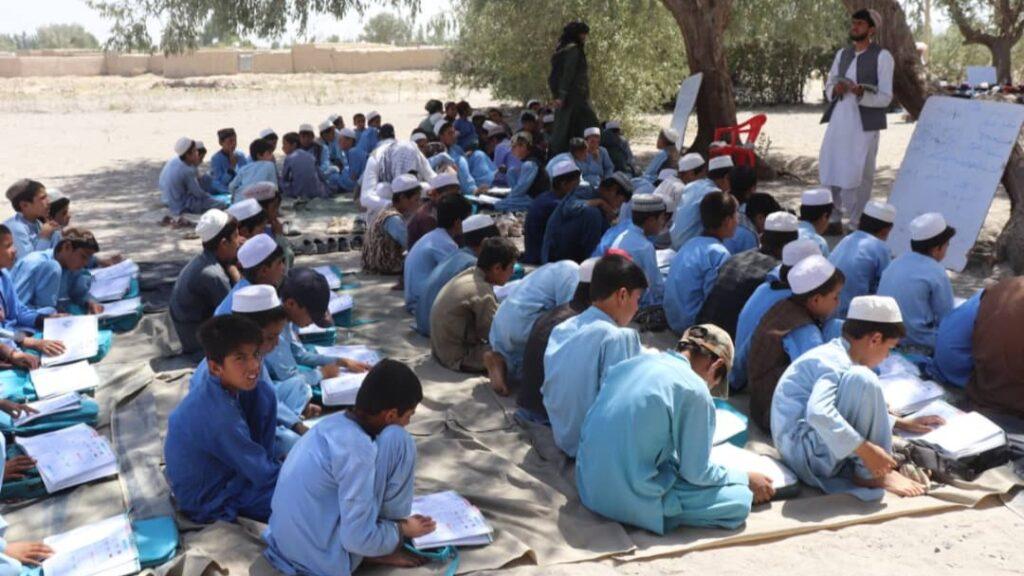

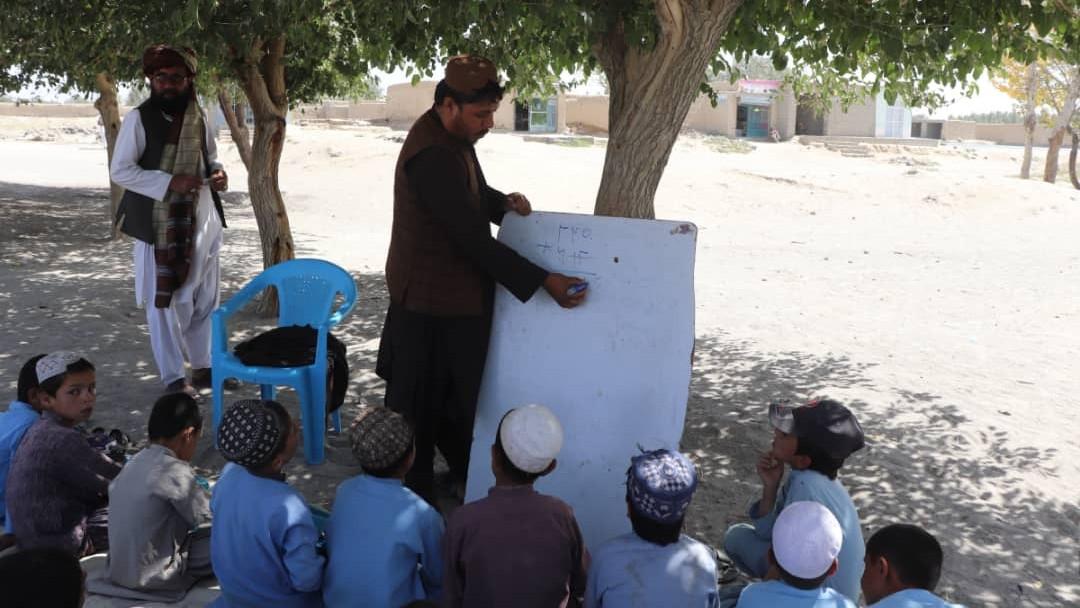
GHAZNI CITY (Pajhwok): Students in 19 of the 27 classes at Shaheed Abdul Salam High School in Qarabagh district of southern Ghazni province study in the open air, while local residents are constructing 16 classrooms for the school.
The Education Department says 200 schools in the province have no buildings and around 3,000 additional teachers are needed.
Students and residents said the shortage of classrooms and teachers had affected students’ education.
They said studying in the open air had raised concerns about students’ health, while heavy traffic on the nearby Kabul-Kandahar highway posed a serious safety risk.
Abdul Qadir Jalalzi, principal of the school, told Pajhwok that the school was established in 1372 solar year and currently had only eight classrooms.
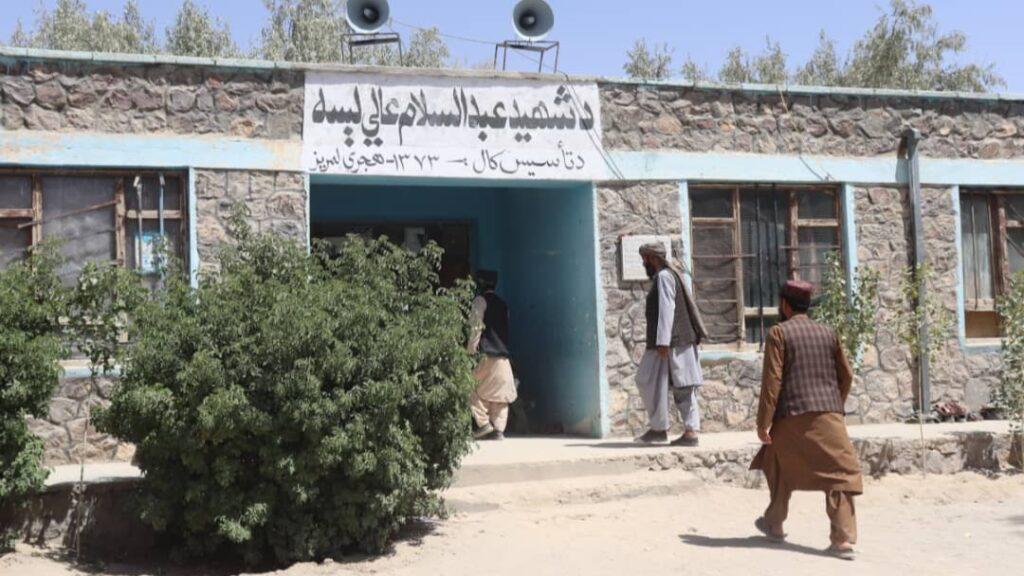
He said that due to the shortage of classrooms, students were forced to study outdoors in hot weather, rain and dusty conditions, negatively affecting their learning and concentration.
Residents said outdoor classes not only affected students’ education but also their health due to exposure to heat, rain and dust.
Mawlawi Abdul Razaq, a tribal elder from the Mishki area of the district, said students spent long periods studying under the sun during summer, with some falling ill because of the heat.
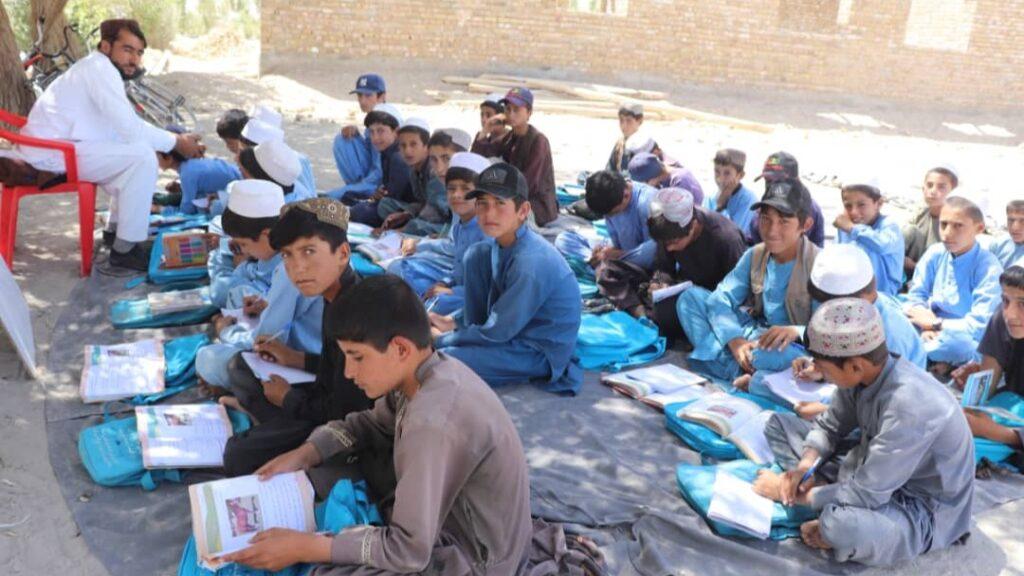
He said the school was located near the Kabul-Kandahar highway, where fast-moving vehicles had heightened concerns about students’ safety.
He added that students had occasionally been involved in traffic accidents on the road.
The tribal elder recalled that a seventh-grade student was killed in a traffic accident on the same road three months ago.
He said similar incidents had occurred previously, claiming the lives of four children and injuring several others.
Students also complain about teacher shortage
Mohammadullah, a student at the school, said the shortage of teachers, alongside the lack of classrooms, was one of the school’s major problems.
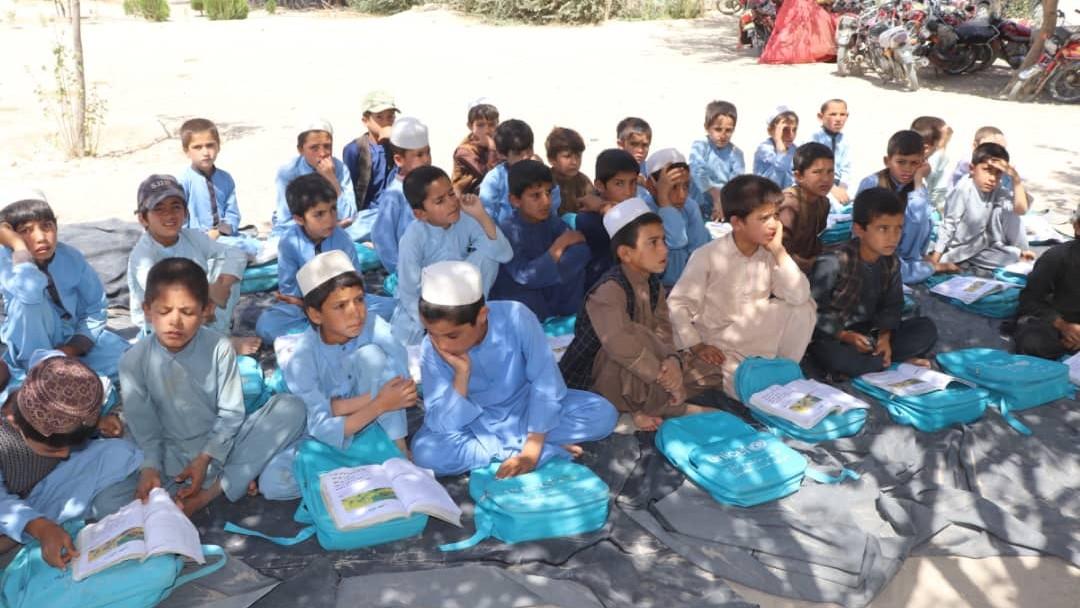
“We face many problems. There are not enough classrooms, some students study in the open air, and we also face a shortage of teachers,” he said.
According to the students, the school particularly lacks teachers for mathematics, English, physics, chemistry, biology, geography and history.
The Ghazni Education Department also acknowledges the shortage of teachers in the province.
Mawlawi Nasir Ahmad Hosaini, director of the department, said around 10,000 teaching positions were currently filled in Ghazni, but the province needed around 3,000 additional teachers to meet its current requirements.
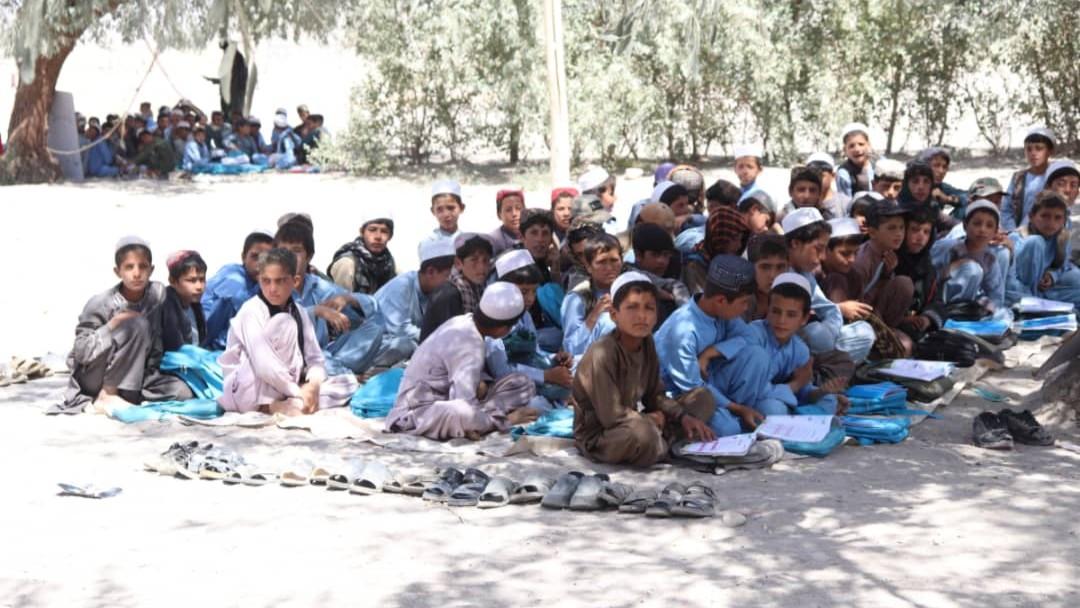
He said the shortage affected various subjects, including Pashto, Dari, Arabic, mathematics, English, physics, chemistry, biology, geography, history, social sciences, computer studies, art and drawing.
He said the issue had been shared with the Ministry of Education (MoE) and partner organisations in an effort to address the shortage.
Residents build 16 classrooms at their own expense
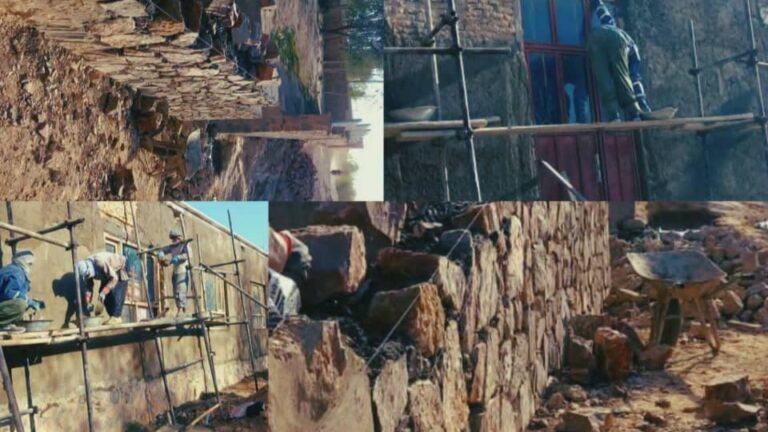
To partly address the shortage of classrooms, a number of local residents have begun constructing two new buildings next to the school’s old building. The buildings will provide a total of 16 classrooms.
Residents said construction began around three months ago and nearly 40 percent of the work had been completed so far.
They said the project was being funded by villagers, Afghans living abroad and other donors, with each contributor providing assistance according to their means.
Dr Ali Ahmad Ahmadi, a local resident, said each new building would have eight classrooms.
He added that once the 16 classrooms were completed, the shortage of classrooms would largely be addressed. However, the school’s overall needs were beyond the capacity of local residents, making government assistance necessary.
Education Department: 200 schools have no buildings
Education Director Mawlawi Nasir Ahmad Hosaini said the shortage of classrooms was not limited to Shaheed Abdul Salam High School, with 200 schools across the provincial capital and districts facing similar problems.
He said the department was striving to address the problems of all schools within its available resources.
According to the Education Department, around 700 schools are currently operating in the province. Of these, 200 have no buildings, while another 250 school buildings are in urgent need of reconstruction.
This comes as officials say construction and rehabilitation of school buildings are under way across the country.
At the beginning of the current 1405 academic year, the MoE said 800 school buildings had been repaired and rehabilitated across the country over the previous year.
The ministry had earlier told Pajhwok in December last year that 1,315 new school buildings had been constructed and 3,000 schools rehabilitated across the country over the previous four years.
kk/sa