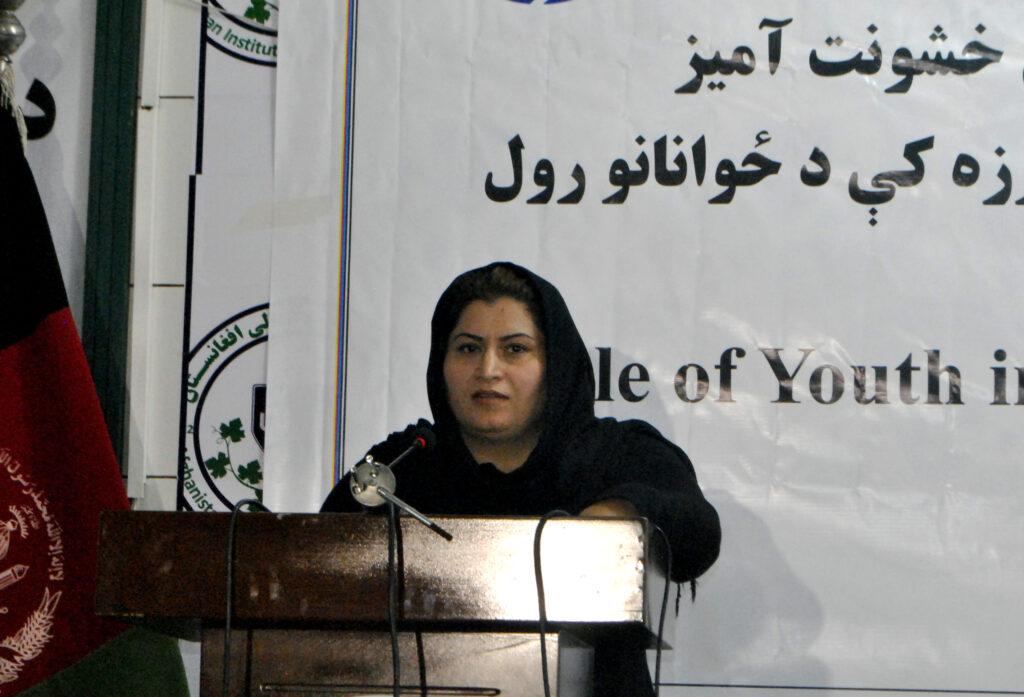
KABUL (AYCCS) has expressed its deep concernat the government’s lethargic attitude towards the administration of seminaries that are emerging as centres of fundamentalism.
Humera Saqib, head of the Women-linkedteachers in religious schools.
Addressing the participants including civil society activists and analysts on youth’s role in the fight against violent extremism and fundamentalism, she said: “Human rights organisations and civil society should play a proactive role in discouraging the brainwashing of impressionable individuals.”
The Afghan youth were being used by foreign elements for achieving their strategic goals in Afghanistan, she regretted, urging youngsters to mount pressure on the authorities to wage a decided struggle against extremism.
Saqib went on to ask civil society activists to work for spreading mass awareness about growing fundamentalism and militancy, its harmful effects, particularly youth -- the country’s greatest asset and architects of its future.
Mohammad M0haqiq, another member of the AYCCS, said the youth of society were both a source of manpower and concern. “When someone becomes adult, he/she does something for society and plays a role in shaping the future of his/her community.”
He called education was the most ideal tool of battling the menace of extremism and militancy, saying awareness should be promoted among youths to shield themselves against extremist ideologies and negative influences.
AYCCS member Abdul Samad Hakimi agreed extremist ideology had a negative impact on the freedoms and rights of, and trust in, a society. A resolution was also passed at the end of gathering, calling upon the rulers to spread awareness about the consequences of extremism.
nh/mud
GET IN TOUCH
NEWSLETTER
SUGGEST A STORY
PAJHWOK MOBILE APP