KANDAHAR CITY (Pajhwok): Traders and investors in southern Kandahar province complain of problems in paying taxes, delay in clearance of goods by the customs department and long power outages.
They shared the problem with the officials concerned in the central government about a week ago. Businessmen and investors in the province are faced with a host of problems.
Kandahar Chamber of Commerce and Industry head Haji Nasrullah Zahir told Pajhwok Afghan News traders previously paid taxes every six months. But now they have to pay taxes every three months, a major problem and a time-consuming exercise.
The late clearance trade goods by customs staff is another big headache as it inflicts losses on businesspeople. There is currently only one truck scale on Kandahar custom which cannot scale all trucks in short time, he said, adding that there was need for at least two truck scales in the custom.
Zaheer also hit out at Da Afghanistan Bank (DAB) for delaying traders’ cash transfers to foreign countries. The slow process has been impeding business deals.
On the other hand, investors grumble about the lack of electricity in Kandahar. The electricity provided to the Kandahar Industrial Park is inadequate, forcing factories to scale down their production.
Haji Syed Mohammad, owner of the Beans Processing Factory at the Kandahar Industrial Park, said his unit was powered by diesel generators that produced eight kilowatts of electricity.
But he added that generators’ electricity was weak and interruptions created problems. As a result, many factories have already been closed and those still active are functioning at 50 percent of their capacity.
The only hope for industrialists is the activation of a 10 megawatts solar power plant, but the project has delayed inordinately. Traders say they met the Chief Executive Officer (CEO) and the finance minister, who had promised resolving their problems.
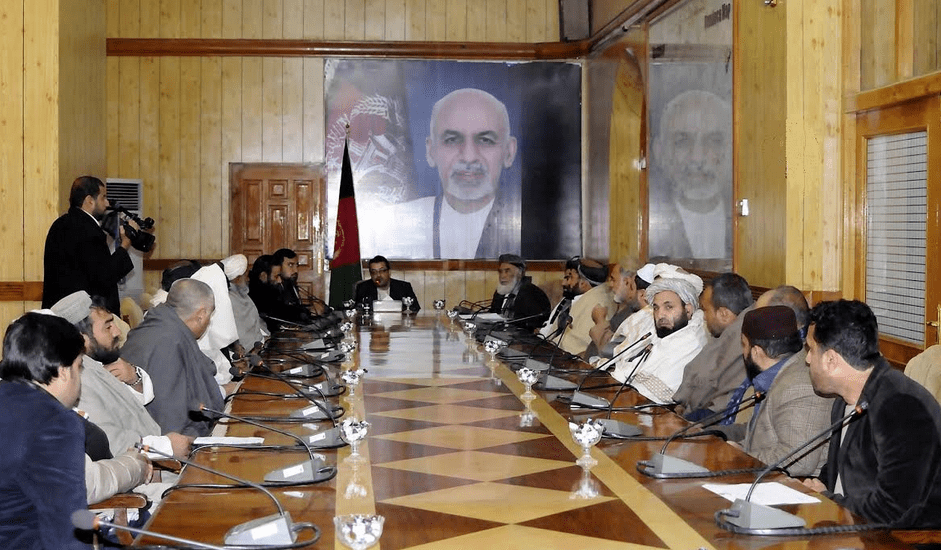
Samim Khpalwak, the governor’s spokesman, said Kandahar-based businessmen and entrepreneurs had been invited to the governor’s house for discussions on their problems. Steps for dealing with the existing issues were discussed with the officials concerned.
Revenue Director Mohammad Zahir Ibadi revealed a new plan for tax collection had been devised by the central government and they were just implementing it. He promised sharing the issues of traders with the central government and finding solutions to them.
But Customs Director Eng. Saleh Mohammad Nekzad said they were busy working on a scheme, whose implementation would eliminate delays in handing goods over to their owners.
Da Afghanistan Bank (DAB) in-charge in the south, Mohammad Naeem Akbari, said the issues in transferring money to foreign countries’ banks were because of the banks’ recent strict conditions in this regard. He recalled they were making all out efforts to find a way of solution to the problem.
Da Afghanistan Breshna Shirkat (DABS) chief for Kandahar, Eng. Sayed Rasool, called power shortages the main issue. Immediate resolution of the problem was impossible, he acknowledged, saying they were trying to ensure power supply to the industrial park.
He said work on installing Kajaki Dam’s third turbine, which was launched on August 6, 2016, ended recently. Previously, the two turbines had the capacity to produce 33MW of power, with the third one adding 18.5MW. The dam is now able to generate 51.5MW of power.
There was a 68-day halt to power supply to Kandahar and Helmand due to work on the third turbine. Now electricity is being supplied to the provinces on a trial basis for about two months back.
Besides snapping of power transmission lines as a result of fighting, the water level in the Kajaki Dam has also gone down. The generation level of each of the turbines, which earlier produced up to 16.5MW of power, fell to 10MW each.
Ibadi said the water level had a direct link with the quantity of power generation. When the water level slumps in the winter season, power production also falls.
Power supply to the industrial park is a top priority for the utility; but technical faults, late delivery of fuel and other irritants disrupt the process, according to the official.
USAID was supposed to establish a solar power plant at a cost of $15million for the Kandahar industrial park. The centre was to be functional by summer, but work on it is yet to be initiated.
The agency has asked DABS to provide land for the solar power plant and extend transmission lines from the centre to the industrial park.
DABS has also met certain other requirements, including the acquisition of 80 acres of land, making a sketch and establishing 135 pylons and extending power transmission cables.
Despite the work done by DABS, the USAID had not kept its promise of launching work on the project, the official alleged.
Electricity is far from enough for Kandahar, which needs more than 150MW. There are blackouts for days and at times for weeks in the province.
mds/sns/mud
GET IN TOUCH
NEWSLETTER
SUGGEST A STORY
PAJHWOK MOBILE APP