<p><a href="/en/afganistan/kabul" class="glossify-link">KABUL</a> in the first half of 2017, showing a 35 percent surge over last year.</p>
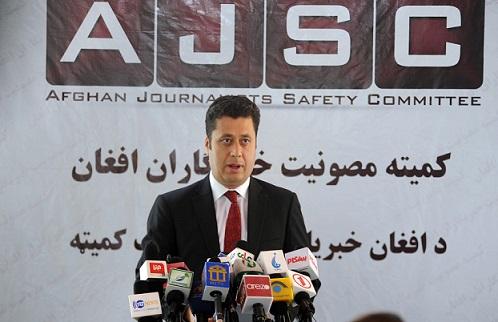
<p>The Afghan Journalists' Safety Committee (AJSC), an independent watchdog, issued a new report at a press conference here, saying the <a href="/en/taliban" class="glossify-link">Taliban</a> and the Islamic State (IS) extremist group were responsible for most of the "direct and indirect" attacks on media workers in Afghanistan.</p>
<p>The report said 73 cases of violence against journalists were recorded in the first six months of 2017, including 10 cases of killings, 19 beatings, and 12 injured.</p>
<p>The report said the violence included killing, beating, inflicting injury and humiliation, intimidation, and detention of journalists, calling the six months the most violent in the past 16 years.</p>
<p>Najib Sharifi, AJSC director, said 679 cases of violence against journalists had been recorded in Afghanistan during the past 16 years.</p>
<p>The statistics showed the crimes against journalists increased from 54 in the first half of 2016 to 73 during the same period in 2017, indicating a 35 percent increase.</p>
<p>During the period, four journalists were killed in a Daesh-claimed attack on the Radio Television Afghanistan (RTA) in eastern Nangarhar province, two in the attack on the parliament building in capital Kabul and four others in a deadly truck bombing in front of the German Embassy in Kabul, he said.</p>
<p>Sharifi added 12 journalists were wounded, 19 beaten, 18 mistreated, six threatened, five arrested and three others abusively fired from duty.</p>
<p>“The government is responsible for 34 cases of the violence against journalists and the major reason behind it was revealing information about illegal acts of government officials, he said, adding responsibility of the rest of the cases rested with the militants.</p>
<p>Some of parliament members, provincial council members, powerful figures and unidentified men were also involved in some of violence related cases against media, he added.</p>
<p>The central and eastern zones witnessed most of the cases while the southeastern zone witnessed the least, Sharifi said.</p>
<p>“Increasing violence against journalists has raised serious concerns about protection of the freedom of speech and media which is the greatest achievement of Afghanistan in the past 16 years,” he said.</p>
<p>He also expressed concern over a weak presence of <a href="/en/women" class="glossify-link">women</a> in the media and said insecurity and conflict barred women from joining the press.</p>
<p>“There is not a single female journalist in Zabul, Uruzgan, <a href="/en/afganistan/chagcharan/ghor" class="glossify-link">Ghor</a>, Panjshir, Paktika, Sar-i-Pul, Logar, Nuristan, Laghman and Kunar provinces”, he said.</p>
<p>mds/ma</p>