KABUL (Pajhwok): A Pajhwok Afghan News survey shows 32 percent of people believe the government’s negotiating team should value national and Islamic interests while 20 percent say the team should be composed of neutral individuals.
The poll Pajhwok launched on its Facebook social media page on Wednesday however showed around 32 percent of the survey participants offered irrelevant responses to the topic.
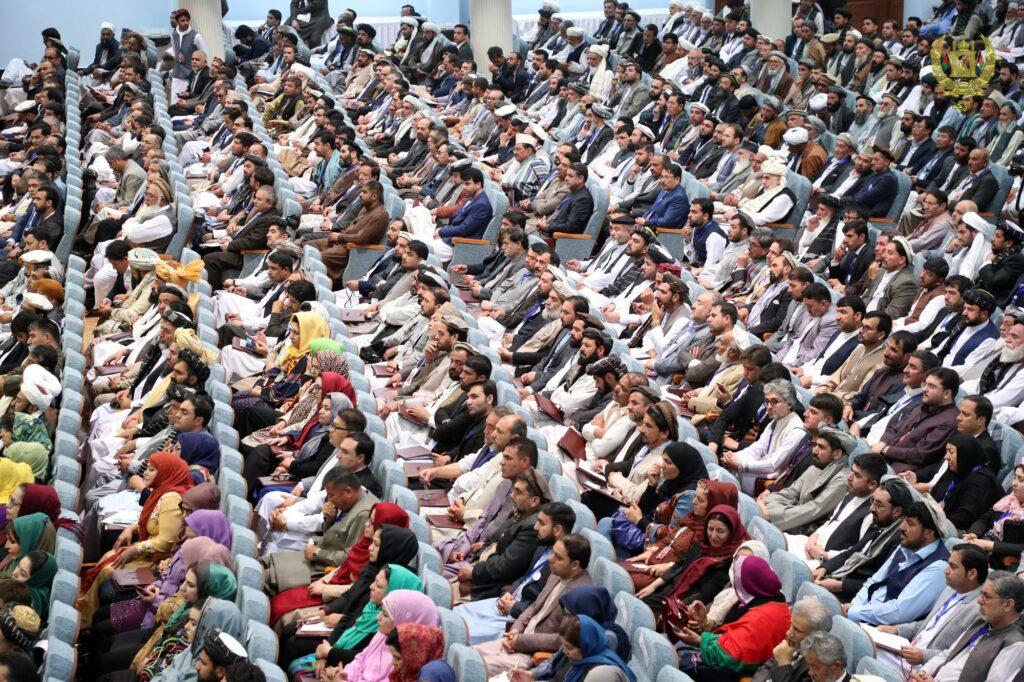
The Loya Jirga, which kicked off on Monday in Kabul, has been discussing a framework for peace talks, a possible agreement with Taliban and setting out conditions for reconciliation.
More than 3,000 participants and 300 guests, including foreign envoys, government ministers and other high-ranking officials, are taking part in the mammoth gathering.
On Wednesday, the jirga’s 50 panels worked on questions pertaining to convincing the Taliban into peace, preserving past achievements, composition of the government’s negotiating team and policy towards neighbours.
One of the four questions Pajhwok added to its poll was ‘How should be the structure of the government’s negotiating team and the character of its members for talks with the Taliban?’
This question was responded by 41 percent of the participants as of 9am Wednesday.
Loyal to Islamic and national values
Thirty-two percent of the respondents said individuals to be part of the government negotiating team should be loyal to Islamic and national interests as well as kind and affected in the war.
Khan, one of the respondents to the survey, in response to the question said, “The figures of the negotiating team should love Islam and their country and have no links with any foreign country and should equipped with higher education.”
NazifullahTanai, another respondent, said, “The negotiating team should be composed of patriots, not traitors.”
Najib Rahman Nikmal, another person, said, “The team members should be expert in political and economic affairs, they love their country and are not involved in land grabbing, free of discrimination and have the nationality of Afghanistan.”
One some respondents had similar views.
However, Hamza Sangari, said, “The negotiating team should be free of warlords.”
Nongovernmental figures
Five percent of the respondents said that members of the negotiating team should be nongovernmental figures.
Sula Ghwaro, one of the respondents, said, “Those people who have no stakes in the government should be chosen as members of the negotiating team, they should be neutral and if possible those who have lost their loved ones in the four decades of war should be part of the team.”
Ahmad Jalal, another respondent, had similar views and said the Taliban did not want to talks with the government.
Not to be against the government
Five percent of the respondents of the survey say members of the negotiating team should be a mixture of government and nongovernment figures.
Mushtaq Ahmad, one of the respondents, said, “Fifty percent of the negotiating team members should be government related, 20 percent should be political parties members and 30 percent should be educated figures from inside the country who have lost their beloved ones in the war.”
Hukumran Arya, another respondent, said, “Members of the negotiating team should be kind, educated, well wishing, familiar with the culture of Afghans and not involved in any bloodshed or crimes, there should be only one representative from each political party, not more than that.”
There were multiple figures from a single political party introduced to participate in a proposed negotiating team with the Taliban for a meeting in Doha, but it was cancelled due to differences few days ago.
Neutral figures
Twenty percent of the respondents of the poll said the negotiating team should be comprised of neutral people.
Himmat Khan, one of them, said, “Members of the negotiating team should know how negotiate, know the rules of mediation, national issues but not those engaged in wars or accused of corruption or links with foreign intelligence agencies.”
Malim Lahor Khan, another respondent, said, “The participants of the team should represent ordinary Afghans and should have no affiliation with any groups and have the knowledge about his or her country.”
A number of other respondents held similar views.
Pajhwok provided individual reports for each of the questions it asked on its Facebook social media page.
mds/ma
GET IN TOUCH
NEWSLETTER
SUGGEST A STORY
PAJHWOK MOBILE APP