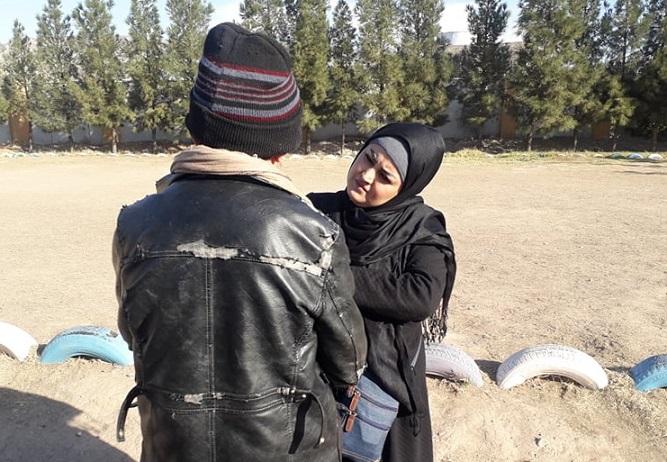

<p>HERAT CITY (Pajhwok): A number of children who have recently been deported by Iranian authorities to Islam Qala border area in western Herat province say they endured difficulties and torture during their <a href="/en/migration" class="glossify-link active">migration</a> and experienced a time full of sadness.</p>
<p>They said illegal migration has dangerous consequences especially for youth and children.</p>
<p>Noor Agha, 14, a resident of Sar-i-Pul province, experienced an unplanned migration to Iran in his small age.</p>
<p>He lives in a migrant camp in Herat and told Pajhwok Afghan News that he was deported by Iranian Police to Islam Qala over improper behavior.</p>
<p>Injuries on Agha’s wide face narrated the story of torture he suffered at the hands of Iranian police.</p>
<p>Agha told the story of his disorganized and unplanned migration to Iran. He said poverty forced him to plan illegal migration to Iran in coordination with his uncle, but he faced sexual harassment on his way to Iran and sometimes faced the threat of being killed.</p>
<p>“With my uncle, I traveled to <a href="/en/pakistan" class="glossify-link">Pakistan</a>, there were 14 more people whom I did not know, they were elder and would torture me. When the driver started driving, the men put me in the back of the car and tortured me. They sat on my shoulder and said we will kill you and your uncle.”</p>
<p>Agha is not alone who suffered torture and harassment but it happens with everyone especially children who want to illegally migrate to European countries or Iran.</p>
<p>Soulaiman, 15, is another teenager who has similar experience of illegal migration. He said travel agents transferred him from Pakistan where he was forced into hard labour for three months.</p>
<p>Soulaiman said he lost his father eight years back and then he left school and turned to work to earn livelihood.</p>
<p>He said in a clear contrast to his age and physics, he developed backbone injury as a result of hard labour in Iran. He said he missed his family and wept.</p>
<p>“I would suddenly break into tears whenever I would remember my family. Now I want <a href="/en/health" class="glossify-link">health</a> from Allah and would like to travel to Saudi Arabia for work and send money to my family,” he said.</p>
<p>Fighting, poverty and lawlessness in <a href="/en/afghanistan" class="glossify-link">Afghanistan</a> forced many families and even children to migrate who suffered difficulties, torture and other problems during their journey.</p>
<p>Noor Agha and Soulaiman acknowledged that children and youth during their migration to European countries were severely beaten and torched in Iranian camps.</p>
<p>“We were beaten, kept hungry, thirsty and tortured severely in camps in Iran. We were there for three days and Iranian security personnel hit us with fists and kicks. The injures on my face is due to that torture,” said Noor Agha.</p>
<p>Soulaiman said: “There is no Islam in Iran, their flag represents Islam but inside Iran and inside migrant camps there is no Islam,” he said.</p>
<p>AinuddinvAslami, in charge of Ansar Camp in Herat, told Pajhwok Afghan News that they witnessed painful cases of migrants.</p>
<p>“We also heard stories of torture and difficulties faced by migrants and the way agents get united against migrants,” he said.</p>
<p>Ahmad Javid Naadem, head of the refugees and repatriates department in Herat, said 2,349 children had been deported from Iran since the start of 2020.</p>
<p>He, however, rejected claims of sexual harassment and torture made by migrant children and said: “This year we did not receive such formal complaints. This is children’s claims and need to be investigated.”</p>
<p>According to International Organisation of Migration (IOM), in the past six months, among every three Afghans, one or 48 percent migrated to Iran, 31 percent to Pakistan and nine percent to Saudi Arabia and the remaining travelled to other countries.</p>
<p>Nh/ma</p>
<p> </p>