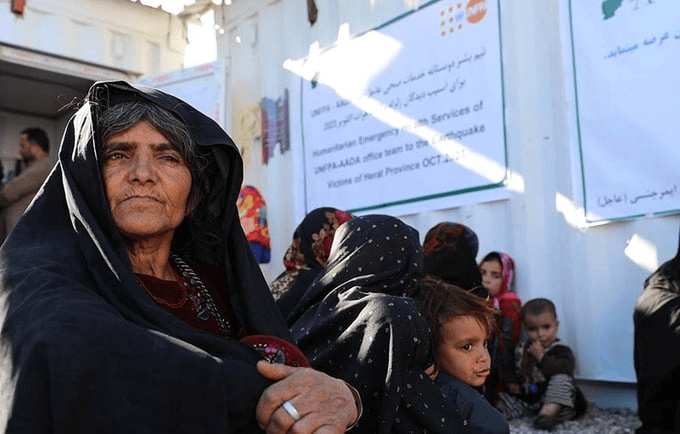
KABUL (Pajhwok): The international community should not lose focus on Afghanistan amid raging conflicts across the world, highlighted UNFPA regional director for Asia and the Pacific Pio Smith, while concluding a five-day mission to Afghanistan.
“We should not lose focus on Afghanistan where women and girls continue to acutely suffer from the impacts of the protracted polycrisis in the country, deepened by the recent earthquakes in Herat and the influx of the forced return of thousands of Afghans from Pakistan.”Smith said in a statement published UNFPA website.
He said UNFPA was supporting more than 700 health facilities across Afghanistan reaching around 700,000 people every month.
“While that is undeniably saving thousands of lives, it is nowhere near what is needed to ensure that every Afghan woman and girl receives essential reproductive health services, including psychosocial support to help them cope and rebuild their lives,” he remarked.
Lifesaving maternal health services and supplies
Over the last two months, over 340,000 forced Afghan returnees have crossed over from Pakistan at the borders at Torkham and Spin Boldak.
Among the returnees are hundreds of pregnant women – and pregnant girls – many of whom require urgent and life-saving maternal health services.
At the Torkham reception center in Nangarhar province, UNFPA, together with its partners, have set up a mobile health clinic comprising doctors, midwives, and psychosocial counsellors to provide 24/7 services to ensure women and girls receive the immediate care they need.
During the five-day mission to Afghanistan, Smith met with women and girls affected by the series of earthquakes in Herat and the influx of Afghan returnees at the Torkham border.
After the devastating earthquake on October 7, UNFPA set up medical tents within 72 hours to provide immediate maternal health and psychosocial support on the ground.
These tents are replaced with a fully equipped emergency maternity unit providing normal and Cesarean-section delivery services, as well as counselling and mental health support for women and girls.
“Many of those affected, including pregnant women, have physical injuries from the earthquakes… they are in dire need of psychosocial support to help them cope and to help them rebuild,” said Smith, reflecting on his interactions with the women and girls in Zindajan.
ma
GET IN TOUCH
NEWSLETTER
SUGGEST A STORY
PAJHWOK MOBILE APP