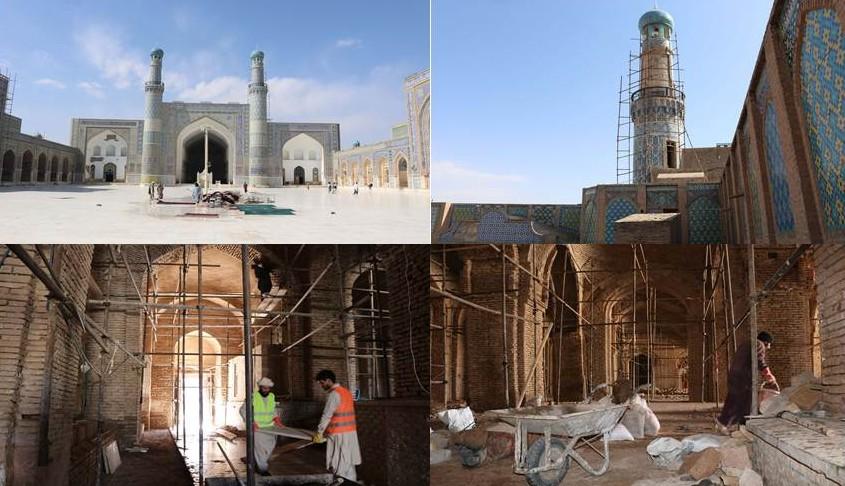
HERAT CITY (Pajhwok): The reconstruction work of the Herat Grande Mosque in western Herat province, which had been severely damaged in devastating earthquake last year, has been 70 percent completed, an official said on Tuesday.
Also known as the Blue Mosque, this sacred site is adorned with Quranic inscriptions, prophetic traditions, mystical poetry, seven-color mosaic tiles, towering minarets, and intricately crafted archways.
The mosque features four decorated porches and 12 minarets, ranging in height from 17 to 35 meters. The minarets were designed to amplify the call to prayer, while the mosque’s exquisite seven-color mosaic tile work is one of its most remarkable architectural elements.
Hafiz Raqibullah Rizwani, head of the historical monuments preservation and restoration at the Information and Culture Department, told Pajhwok Afghan News that last year’s earthquake caused significant damage to the historic mosque.
He stated that 70 percent of the reconstruction work has now been completed.
He also emphasised that the mosque, with its iconic turquoise tiles, is not only a religious landmark but also a valuable cultural heritage site that attracts thousands of domestic and international visitors each year.
According to Rizwani, all porches of the mosque, particularly the eastern one, suffered severe damage due to the earthquake.
Out of the 12 minarets, seven were severely damaged, and their restoration is still in progress, he added.
Currently, dozens of workers are actively engaged in different sections of the project, and $200,000 from the Ministry of Information and Culture’s budget has been allocated for the restoration efforts, with additional costs incurred in other sections.
The earthquake’s impact on Herat’s historical monuments
On October 7, 2024, a 6.3-magnitude earthquake struck Herat, followed by multiple aftershocks, causing widespread destruction, heavy financial losses, and tragic loss of life.
The earthquake also severely damaged important historical monuments, including Ikhtiyaruddin Fortress, the Herat Grand Mosque, Gazargah, and the famous minarets of Herat, all of which hold international recognition.
The Efforts of Local Artisans in Reconstruction
Ali Mohammad Saboori, a master tile-maker, has dedicated over half his life to crafting intricate tiles for the Herat Grand Mosque. He continues to lead a team of artisans in producing high-quality tiles for the restoration project.
Saboori stressed the spiritual and historical significance of the mosque, stating that no other monument in Herat matches its cultural value.
According to him, the most severe damage occurred in the mosque’s decorative and tiled sections, requiring meticulous restoration work. Since most of the iwans (porches) and minarets are covered in elaborate tile work, their preservation is crucial to maintaining the mosque’s historical integrity.
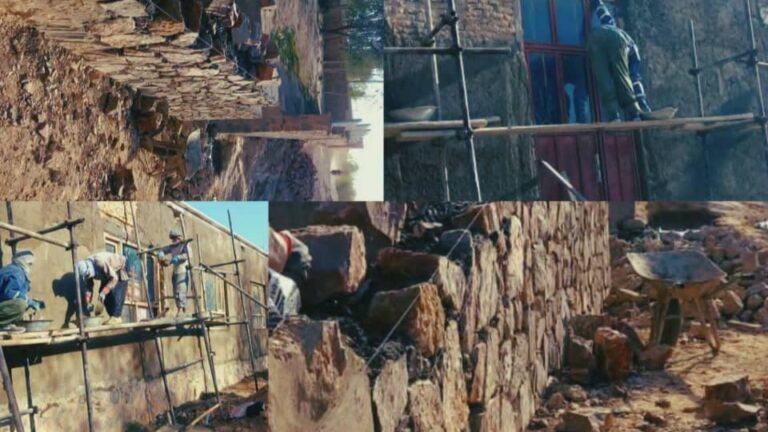
Aziz Ahmad Rasooli, head of the Herat Grand Mosque Restoration Project, said that 80 workers are currently engaged in five different reconstruction areas, including surface cleaning, tile work, stone flooring, and other structural repairs.
He emphasized that while restoration is progressing steadily, the extent of earthquake damage will become clearer as additional layers are removed during the restoration process.
Notably, the Herat Grand Mosque was originally built from wood but suffered a massive fire around 400 years after the advent of Islam in Afghanistan. 850 years ago, during the reign of Sultan Ghiyath al-Din Ghorid, the mosque was rebuilt into its present form.
Kk/nh