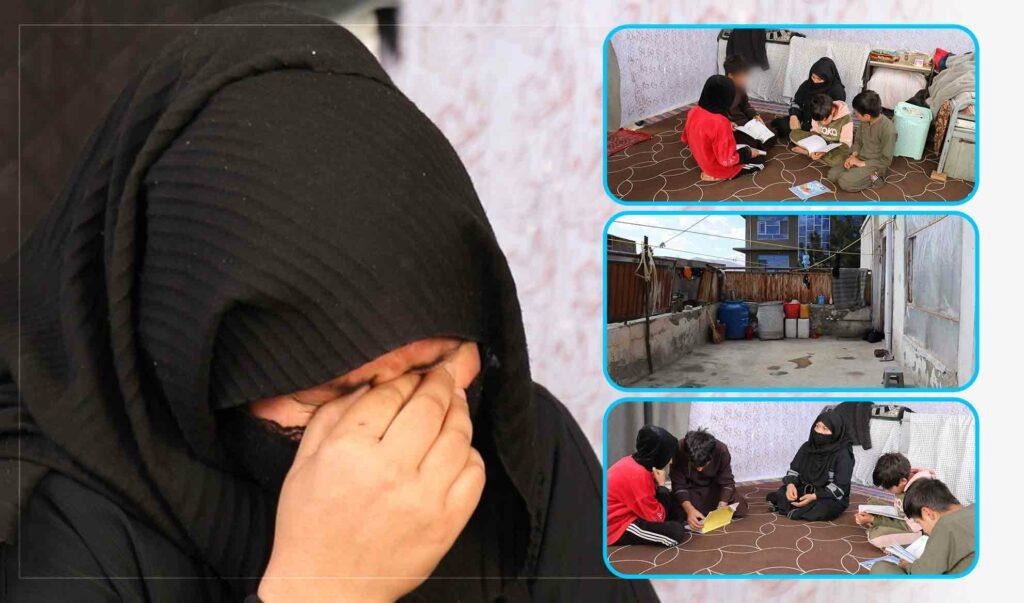

<p style="text-align: justify;">KABUL (Pajhwok): Mursal, a mother of four orphaned children, struggles with extreme poverty in the holy month of Ramadan, urging well-off individuals and charities to assist her and other impoverished families with food for <em>Iftar</em> (breaking fast).</p>
<p style="text-align: justify;">The 30-year-old mother of four orphans, is spending her days and nights with minimal resources in a rented house in the Khair Khana neighbourhood of Kabul</p>
<p style="text-align: justify;">While sharing her painful story with Pajhwok Afghan News, Mursal said her husband -- a drug addict -- passed away a decade ago, leaving her alone to care for the children.</p>
<p style="text-align: justify;">Even when her husband was alive, life was difficult for Mursal. After his death, however, her challenges became almost impossible to deal with, she recalled.</p>
<p style="text-align: justify;">Previously, she worked at a private orphanage in Kabul, where her children were also admitted.</p>
<p style="text-align: justify;">However, after the re-establishment of the Islamic Emirate of Afghanistan (IEA), the orphanage was shut down, leaving her jobless.</p>
<p style="text-align: justify;">Currently, Mursal works on and off as a house cleaner, often unable to find work. "There are days when we have just one meal," she said in a choked voice.</p>
<p style="text-align: justify;">Mursal is deeply troubled by her inability to provide her children with proper food. She has no choice but to endure the testing situation.</p>
<p style="text-align: justify;">Concerned about her children’s future, she said her sons were eager to study, but she could not afford to purchase them books, uniforms and other scholastic items.</p>
<p style="text-align: justify;">“I’m doing everything I can to ensure my children get an education so they don’t end up like their father, addicted to heroin. I would go hungry, but will try to send them to school,” she commented.</p>
<p style="text-align: justify;">In addition to caring for her four children, Mursal also looks after her 75-year-old mother, who is bedridden with paralysis.</p>
<p style="text-align: justify;">Previously, Mursal recollected, well-off families in the neighbourhood would help her during Ramadan, but this year, she has received no assistance so far.</p>
<p style="text-align: justify;">"Every evening at Iftar, we wait, hoping our neighbours will send us food or alms, but most of the time, nothing comes," she regretted.</p>
<p style="text-align: justify;">She appealed to the caretaker government and humanitarian organisations to assist orphans and widows, ensuring they had food to break fast with.</p>
<p style="text-align: justify;">Her 10-year-old son, Mustafa, a fifth-grade student, wiped away his tears with, pleading for support to orphaned children like him from the government and aid agencies.</p>
<p style="text-align: justify;">Mufti Shams-ur-Rahman Frotan, a religious scholar, emphasised the importance of helping the poor, especially during Ramadan.</p>
<p style="text-align: justify;">"Helping the needy is always virtuous, but in Ramadan, rewards are even greater. The Prophet (PBUH) said: 'Whoever provides Iftar to a fasting person will receive the same reward as the one who fasts, without diminishing the latter’s reward,’" he explained.</p>
<p style="text-align: justify;">Every individual was responsible for helping the less fortunate according to their capacity, and Allah would reward them accordingly, the scholar concluded.</p>
<p style="text-align: justify;">kk/mud</p>