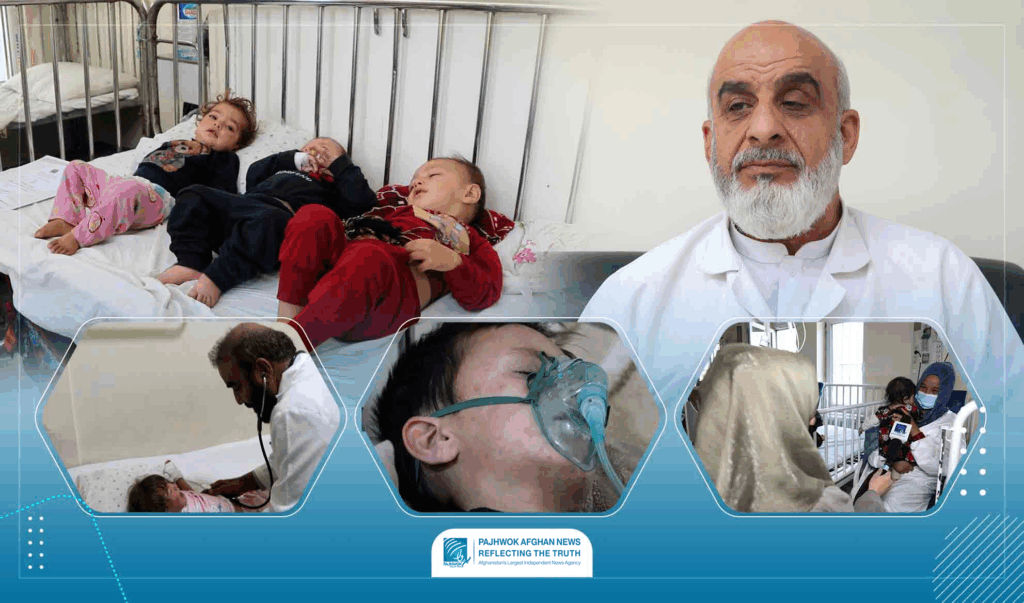

KABUL (Pajhwok): As some doctors in the capital Kabul report a rise in measles cases among children, the Ministry of Public Health (MoPH) confirms registering 4,000 suspected cases across the country in the first half of the current calendar year.
Doctors describe the surge as alarming and emphasise the importance of timely vaccination and adherence to public hygiene measures.
What is measles?
Professor Dr. Mohammad Arif Hassanzai, director of internal ward at Indira Gandhi Children’s Hospital in Kabul, said measles was a highly contagious viral illness that primarily affected children under the age of five.
The virus spreads through airborne droplets via sneezing and coughing or direct contact with nasal or oral secretions of infected individuals.
He noted that symptoms include fever, cough, runny nose, pneumonia, red eyes, and loss of appetite, small skin rashes, sore throat and white sports inside the mouth.
Rising measles cases
Dr. Hassanzai told Pajhwok Afghan News: “As the head of this ward, I can confirm that over the past eight to nine years, measles cases have increased and we continue to admit such cases every year.”
He added: “Currently, our infection diseases ward has around 25 to 30 hospitalised patients. Due to limited bed capacity, we are forced to place two to three patients in one bed. This reflects the seriousness of the outbreak.”
Similarly, Dr. Mohammad Shafiq Kosha Rasooli, paediatric internal medicine trainer at Ataturk National Children’s Hospital, stated: “According to reports, this disease has witnessed a notable increase not only in Afghanistan but globally.”
According to him, 600 children with measles were registered during the first three months of the current solar year and 1,200 cases were recorded over the course of the previous year at the same hospital.
However, due to sufficient medication and quality services, the mortality rate from measles remains very low.
Meanwhile, Dr. Sharafat Zaman, spokesperson for MoPH, without providing further details, said 4,000 suspected measles cases were registered nationwide in the first six months of this year.
Two months ago, the World Health Organization (WHO) in Afghanistan also expressed concern over the rising number of measles cases. The organization posted on its Facebook page: “Measles cases are on the rise. The disease spreads rapidly during the cold months.”
Doctors explain causes of the surge
Dr. Hassanzai explained reasons behind the increase in measles cases: “It’s a viral illness that spreads through the environment. Any child lacking proper hygiene, who lives with an infected family member, is unvaccinated or has a weak immune system, is at higher risk. In such cases, the virus easily spreads from an infected child to a healthy one.”
Treatment & prevention
According to Dr. Hassanzai, early diagnosis makes treatment easier and prevents severe complications. However, if the illness persists for an extended period, it may become life-threatening.
He stated measles vaccination protects children from infection in 95 percent of cases and emphasised isolating infected children from healthy ones.
He also stressed the importance of routine childhood immunisations and urged families to maintain hygiene and proper nutrition for their children.
Dr. Rasooli also underscored the importance of vaccination and urged families to vaccinate their children and uphold hygiene measures to prevent infection.
He added that infected individuals should wear masks, avoid contact with healthy people, and take prescribed medicines on time according to doctors’ instructions.
WHO has also emphasised the need for measles vaccination, saying: “Ensure your children receive at least two doses of the measles vaccine to protect them. Early action prevents outbreaks.”
The organisation further recommended keeping sick children at home to avoid spreading the disease.
Families call for free medicine
Hayatullah, a resident of Parwan province and a patient’s relative at the Children’s Hospital, said his daughter had contracted measles and was brought to the hospital for treatment.
He added: “Initially, we took her to Qarabagh clinic, but she didn’t recover and the medicine had no effect. We then brought her here— she has pneumonia and measles.”
He called on the Islamic Emirate to ensure free distribution of medicines for patients from economically disadvantaged backgrounds.
Meanwhile, Manizha, a resident of Khushal Khan in Kabul and a guardian at Ataturk National Children’s Hospital, said: “My son developed a high fever three nights ago. We brought him to Ataturk Hospital. Initially, they couldn’t diagnose measles and gave him some medication. But his condition worsened, and when we returned, they confirmed it was measles.”
She praised the hospital’s services but appealed for free medication for families unable to afford treatment.
kk/ma