

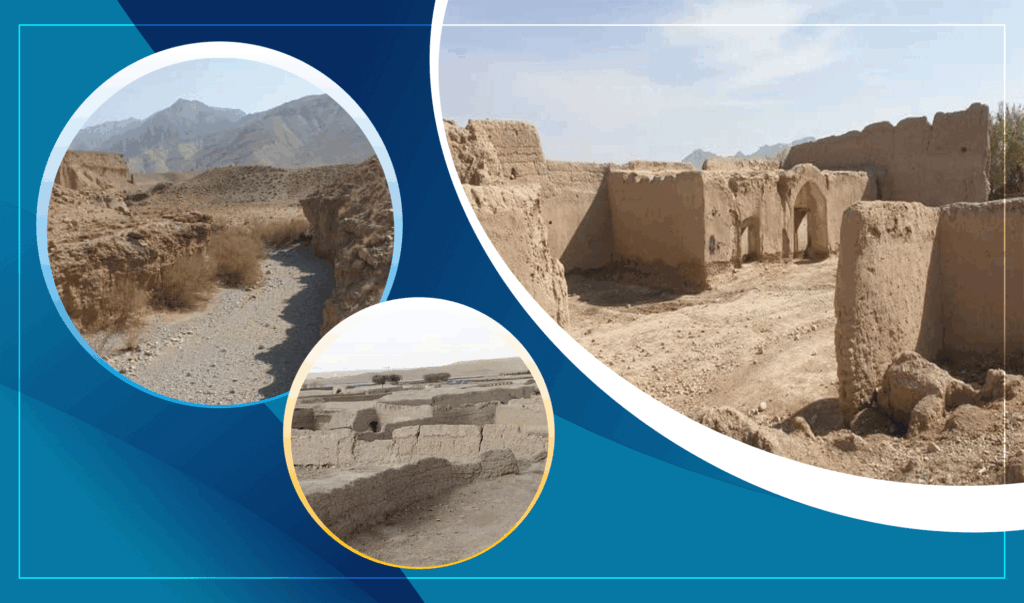

KANDAHAR CITY (Pajhwok): More than 200 families have left their homes and moved to other areas in southern Kandahar province due to severe drought. The displaced families are now asking the government provide them with urgent assistance, an official said on Monday.
Nasrullah, a resident of Ghozang village in Nish district, who has moved to Shah Walikot district, told Pajhwok Afghan News: “I can see my dried-up gardens with my own eyes. These gardens were our entire life. Our village has dried up. Now we are forced to move to Shah Walikot”.
Previously, groundwater was found up to 60 meters deep in their area, but now the level has dropped to 120 meters, making it impossible for them to afford to dig such deep wells and purchase solar panels to extract water, he added.
Mir Mohammad, another resident, explained: “We are unable to dig deep wells. We drilled one well, it dried up, we drilled another, it did not produce water. We are no longer able to farm and live in our area”.
Abdul Rauf, a resident of Pir Qadam area of Ghorak district, is among those who have been forced to leave their area due to severe drought.
“There was no water, our fig and other tree gardens dried up, we had to walk for three hours to get drinking water, there was nothing else to live on there”: he claimed.
According to him, many of the people remaining there are still facing the problem of water shortage and want to move to other areas, but due to economic problems, they cannot leave their homes.
They asked the government to ensure proper water management, build dams, and provide emergency assistance to the displaced families.
Mohammad Hamid, a professor at Kandahar University and an environmental protection expert, said that Kandahar’s economy is based on agriculture and that if water is not managed properly, an economic crisis will occur.
If the situation continues like this and serious measures are not taken for water management, not only Ghorak and Nish districts but the entire Kandahar province will face drought, Hamid explained.
Their department is working with other institutions to build dams in districts to control water and prevent drought, spokesman for Agriculture, Irrigation and Livestock Department Mohammad Hanif Haqmal said.
“Nearly 40 percent of residents of the Mianko, Wachi Kandi, Landi Kandi, Kholgai, Kochne Karez, Chargombat, and Ghozang areas of Nish district are facing severe drought. Some gardens there have also dried up, and many families have been forced to leave their areas”.
He said there were no exact figures, but more than 200 families from Nish and Ghorak districts had migrated to other areas due to the drought.
Climate change, its impacts on Afghanistan
The Earth’s climate is changing rapidly; global warming is causing drought in some areas, but severe storms, rains, and floods in others.
Afghanistan is one of the countries with the lowest greenhouse gas emissions (0.19 percent), but is reported to be the fourth most vulnerable to climate change. This situation has severely affected the country’s agricultural sector, which is still the main source of livelihood for nearly 80 percent of Afghans. Unseasonal rains and floods linked to climate change are also causing crop failures.
hz/ma


GET IN TOUCH
NEWSLETTER
SUGGEST A STORY
PAJHWOK MOBILE APP