



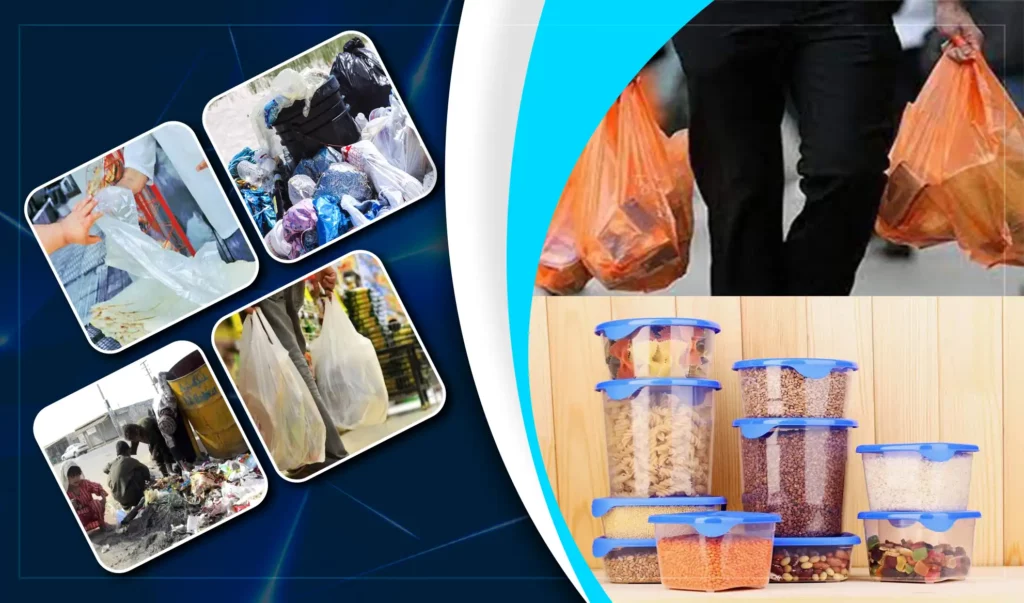

KABUL (Pajhwok): Despite warnings about the dangers of plastic bags and the ban on their import, the use of these bags continues widely in markets, and experts have once again stressed the need for public awareness and full enforcement of the ban on such bags.
Health, agricultural and environmental experts worldwide have warned that plastic bags have harmful effects on human health, agriculture and the environment and that governments must take action to discourage their use.
For this reason, in recent days, representatives from about 180 countries gathered in Switzerland to finalize a historic treaty aimed at combating the plastic pollution crisis.
Health hazards of plastic bags
Dr. Mujtaba Sufi, an internal medicine specialist in Kabul, says that dangerous chemicals such as Bisphenol A (BPA) and phthalates are used in making plastic bags and containers.
He warns that when hot food is placed in plastic bags, these substances can dissolve into the food, and over time, cause nervous system disorders, weakened immunity, headaches, heart and respiratory diseases, and even cancer.
He added: “Black plastic bags, which are made from recycled waste, are the most dangerous type of plastic. Using them to carry food, or even having skin contact with them, poses a serious health risk.”
Meanwhile, Dr. Ahmad Javid Zarang, an oncology specialist at the National Cancer Control Program, also confirms that the alarming rise in cancer cases in the country may be linked to the uninformed use of plastic containers and bags.
He added: “Plastic bags have been banned in most countries, not only because they cause various diseases, but also because their remnants do not decompose and are very difficult to destroy. Most of these plastics are made from polyethylene molecules, which means they can remain unchanged in the environment for hundreds or even millions of years.”
Both sources offered three solutions to address the problem — nationwide public awareness campaigns on the health and environmental hazards of plastics, gradual banning of plastics—especially in bakeries and stores — and supporting the production of cloth and paper bags as sustainable and healthy alternatives.
Environmental, agricultural risks of plastic bags
Eng. Tofan Jibran, acting director of environmental monitoring and inspection at the National Environmental Protection Agency, says: “Unfortunately, in Afghanistan, the use of plastic bags and items is seen as a luxury good and has become almost a necessity for shopping,
transporting goods from one place to another, storing food for longer periods, protecting goods from dust, covering windows in winter, sealing roofs to prevent leaks during rainy seasons, leveling floors, covering floors and stairs, shading shop fronts, making signboards, and dozens of other activities. In the long term, this is one of the most critical threats that can remain on Earth for centuries.”
According to official statistics, more than four tons of plastic bags are used daily in Kabul city alone, most of them being plastic bottles.
Jibran added that in recent years, awareness campaigns have been launched to replace plastic bags with cloth bags. In cooperation with the Ministry of Finance, the import of plastic bags from abroad has been banned.
According to him, the private sector has also been encouraged—through cooperation with the Ministry of Industry and Commerce—to recycle and reuse plastic materials, and the collection of plastic items from cities is ongoing.
Similarly, Eng. Sayed Qayum Hashimi, an environmental pollution control expert, says: “Due to their durability, plastics can remain in nature for hundreds of years. Therefore, they release harmful substances including methane and carbon dioxide—both greenhouse gases—into the environment for long periods. Plastics can pollute water, air, and soil.”
He also emphasized the need to raise public awareness about the harms of plastic bags and recommended that their use should first be restricted and then completely banned.
Economic experts
Abdul Nasir Rashtia, an economic expert, while pointing to the negative consequences of using plastic bags, called for banning their import.
He stressed that these bags not only harm human health and pollute the environment, but also cause social disorder.
He described the use of cloth bags as a solution for reducing environmental damage and creating job opportunities for women.
Why has the use of plastic bags not been restricted?
Ahmad Wali Haqmal, spokesperson for the Ministry of Finance, told Pajhwok: “The import of all kinds of plastic bags is completely banned, and no person or company is allowed to import them.”
Afghanistan self-sufficient in plastic bag production
According to Sherbaz Kaminzada, head of the Afghanistan Chamber of Mines and Industries, Afghanistan currently has 20 factories producing plastic bags and has become self-sufficient in their production.
He added that although Afghanistan is self-sufficient in producing these bags, some low-cost plastic bags are still imported from Iran and Pakistan.
Pajhwok Afghan News tried to obtain comments from the relevant authorities about why plastic bags are still widely used and not restricted, but did not succeed.
Views of citizens
Khalilullah, a shopkeeper in the Deh Mazang area of Kabul city, says: “Plastic bags are a good thing; they make people’s work easier and are convenient for shopkeepers because they are single-use and easy to use. Nowadays, most of these plastics are produced inside the country.”
He added: “I don’t have specific knowledge about the harms of these plastics. If they are truly harmful, it is the government’s responsibility to address it. This issue doesn’t concern shopkeepers.”
Meanwhile, Mahmood Amiri, a resident of the Qowaye Markaz area in Kabul city, says: “Paper bags are better, but one cannot completely avoid plastic because they are simple and easy to use.”
sa

GET IN TOUCH
NEWSLETTER
SUGGEST A STORY
PAJHWOK MOBILE APP