



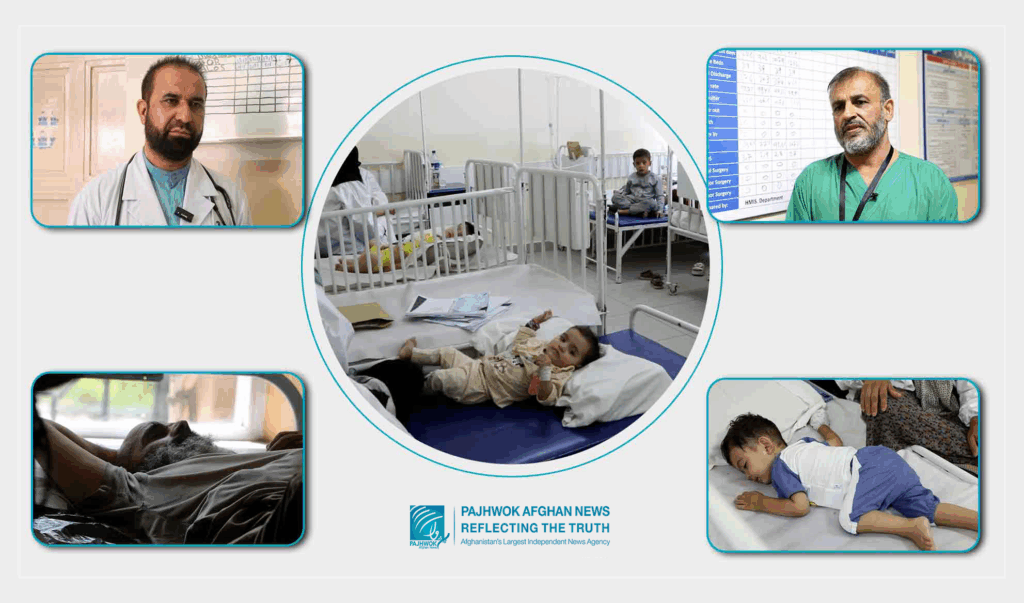

KABUL (Pajhwok): Doctors say with the intensification of the summer heat, infectious diseases—especially diarrhea—have increased in Kabul city. They urge citizens to observe both personal and environmental hygiene and avoid eating leftover food.
A specialized infectious disease hospital operates in Kabul for such patients, and every year during this season, it admits the highest number of adult patients.
Dr. Faridullah Omari, a trainer and specialist at Kabul’s infectious disease hospital, told Pajhwok Afghan News that every year, with the rise in temperature, infectious diseases spread.
He considers the lack of personal and environmental hygiene and the improper washing of vegetables and fruits as major causes of these illnesses.
Although he did not provide specific statistics on the increase in infectious patients, but said they hospitalize 50 people with diarrhea each day, whereas before the heat began, the number was limited to only a few individuals.
According to him, this year, the majority of patients visiting this hospital are returning migrants and people living in tents.
It is worth noting that for children with infectious diseases, in addition to the Indira Gandhi Institute of Child Health, the Ataturk National Children’s Hospital is also operating.
According to Dr. Rafiuddin Naseri, a pediatric professor at the Ataturk National Children’s Hospital, there has also been an increase in cases of infectious diseases, especially diarrhea.
He said that in the month of Hamal (March–April), 290 children with diarrhea were hospitalized; in the month of Saur (April–May), 312 children; in the month of Jawza (May–June), 385 patients; and in the month of Saratan (June–July), 457 children with diarrhea were admitted to the hospital.
He added: “Based on the available statistics, it is evident that the number of patients with this disease—especially diarrhea—has increased considerably month by month.”
According to him, every year, the number of people affected by infectious diseases, particularly diarrhea, rises in the summer season not only in Afghanistan but worldwide.
He said that according to available global statistics, between 3 to 5 billion people contract diarrhea annually, with deaths also recorded among them.
Dr. Naseri considers the causes of increased infectious diseases and diarrhea during this season to be the extreme heat and the lack of hygiene.
Recommendations
Dr. Faridullah Omari says leftover or stale food should be avoided, as eating such food is one of the causes of these diseases.
He emphasized the importance of environmental and personal hygiene, stating that vegetables and fruits should be thoroughly washed before consumption, then soaked for a few minutes in a chlorine solution or salt water, and that drinking water should be boiled.
He added: “It is summer, and your body needs more fluids; when you drink more fluids, that water must be safe—meaning, do not use water from open canals and lakes.”
Meanwhile, Dr. Naseri also recommends: “Prevention is better than cure; every individual must maintain personal hygiene and wash their hands with soap and water after using the toilet.”
He said that parents must be very careful about their children’s hygiene and should explain to children not to drink from open water sources.
He added: “My message to all respected families is that if their children or family members develop diarrhea, they should visit doctors and hospitals as soon as possible.”
Patients and caregivers
Nadera, a Kabul resident who had visited the Afghan-Turk Hospital, said: “It has been 20 days since we returned from Iran, and my son developed diarrhea and vomiting due to the heat, but his condition has now improved.”
She expressed satisfaction with the hospital’s services, saying that the staff treated all patients equally.
Similarly, Salim Shah, another resident of Kabul who is hospitalized at the infectious disease hospital, said: “A few days ago, I developed diarrhea due to the heat, but now, thanks to God, I am fine.”
He also expressed satisfaction with the healthcare services provided to patients at this hospital.
sa/ma


GET IN TOUCH
NEWSLETTER
SUGGEST A STORY
PAJHWOK MOBILE APP