

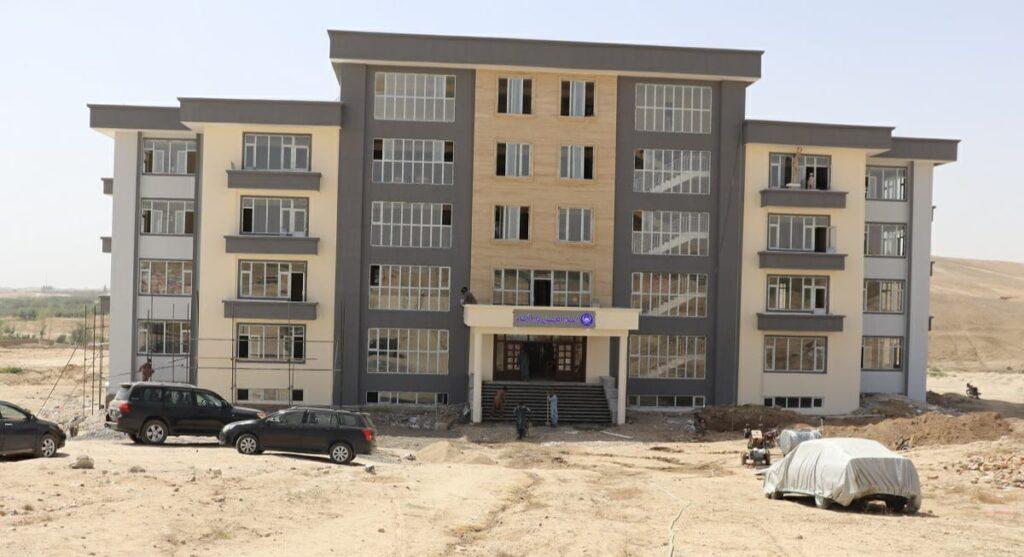

GHAZNI CITY (Pajhwok): Construction of an orphanage at the Asmaul Husna Educational Complex has been completed and inaugurated in southern Ghazni province at a cost of 55 million afghanis.
At the same time, work has commenced on a mosque within the same complex.
The complex, located in the Sraa Qala area of Ghazni city – the provincial capital – is being built by the Turkish charity foundation Al-Khair. It will include an orphanage, school, madrassa, university, mosque, guesthouse, modern student dormitory and a medical clinic.
Planned to be completed within three years, the Asmaul Husna Educational Complex is set to become one of the largest centres of its kind in the region.
Mohammad Khalis Adib, head of the project, told Pajhwok Afghan News that the orphanage alone had cost 55 million afghanis.
The facility comprises 48 classrooms and dormitory rooms, two large halls, a kitchen, bathrooms and other essential amenities, with the capacity to accommodate 500 orphans at a time.
He added that construction of the mosque had also begun, with a budget of 50 million afghanis. The project is expected to be completed within six months. Work on the other parts of the complex will commence soon, he noted.
According to Adib, the total cost of the entire complex has not yet been finalised, but estimates put it between 300 and 350 million afghanis, fully funded by Al-Khair.
Once complete, the school, madrassa, orphanage and university will provide free education to around 3,000 students.
“This will be one of the largest educational centres in the country and the region,” he remarked.
Mohammad Shandila, a senior official of Al-Khair, said the foundation was expanding its support for Afghans. It had already built orphanages in Giro, Andar and Ab Band districts and planned to establish another in Zankhan soon.
Meanwhile, Information and Culture Director Mullah Hamdullah Nisar said the centre was being built on 12.5 acres of land in Ghazni city’s 6th municipal district. Eight major buildings are expected to be completed within three years.
He added that the project would also generate hundreds of jobs.
Nisar explained that the aim was to bridge the gap between modern and religious education, ensuring graduates become both Hafiz-i-Quran and equipped with contemporary knowledge.
Local elder Haji Ishaq told Pajhwok: “From now on, the people of Ghazni will no longer need to travel elsewhere for modern or religious education.”
kk/sa


GET IN TOUCH
NEWSLETTER
SUGGEST A STORY
PAJHWOK MOBILE APP