



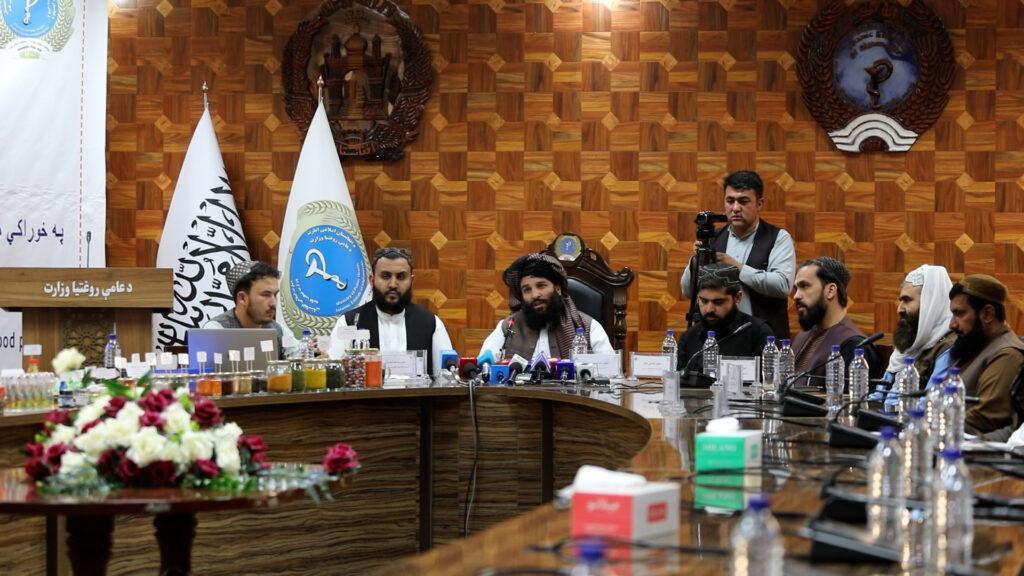

KABUL (Pajhwok): Recent investigations by experts from the Ministry of Public Health (MoPH) show that some domestically produced and imported food products contain harmful substances, including chemical dyes and industrial acids. The ministry has taken several corrective measures in response.
Eng. Sayed Neamat Hosseinian, Food Science and Public Awareness Capacity Development Expert at the Food and Drug Authority (FDA), said 39 types of food items had been analyzed over the past year.
He provided information about the results of the ministry’s experts’ analysis concerning certain food items such as tea, pickles, spices, cakes and biscuits, soft drinks, burger meat, salt, ice, children’s sweets and fried oils.
Use of industrial acetic acid in pickle production
Hosseinian said that industrial acetic acid — a chemical compound commonly used in paint manufacturing, plastic production, and the textile industry — had unfortunately been used by about 65% of pickle and achar producers before the risks were identified.
Following a comprehensive survey and risk analysis by the Directorate of Risk Assessment, Food Surveillance, and Standards Development, it was confirmed that consuming this compound can cause digestive damage, poisoning, liver and kidney injury and, with prolonged exposure, cancer.
He said that more than five tons of contaminated pickles and achar were destroyed, capacity-building programs were held for producers, and the operations of violating companies were suspended.
Use of non-food (illegal) dyes in the food industry
According to Hosseinian, prior to the risk analysis, about 70% of food producers, particularly spice manufacturers, used non-food-grade dyes — substances with strong carcinogenic properties that can damage the liver and kidneys, cause allergic reactions, hinder growth, and threaten consumer’s health.
After expert evaluations, approved food-grade dyes were introduced as replacements.
He added that 27.44 tons of food products contaminated with illegal dyes were destroyed, violators were referred to judicial authorities, and further studies were conducted on the effects of sunlight exposure on non-alcoholic beverages and other foods.
Beverage safety
Ministry experts found that direct sunlight exposure of non-alcoholic drinks, particularly those stored in plastic containers causes the release of toxic compounds such as antimony and bisphenol A (BPA).
These substances can reduce product quality and cause hormonal imbalances, increased cancer risk, and digestive disorders.
Hosseinian added that public awareness campaigns were launched through mass media, warnings were issued to producers and vendors, and school canteens were inspected as part of the ministry’s food safety initiatives.
Children’s food
A preliminary survey conducted jointly by the Ministry of Public Health and the Ministry of Education — covering about 150 schools — showed that around 95% of schools offer foods unsuitable for children.
These products, including energy drinks, snacks, and fast foods, can lead to allergies, digestive problems, early puberty, hormonal disorders, lack of concentration, poor academic performance, and other serious health issues.
Hosseinian said that training sessions were held for school principals and teachers to raise awareness, introduce healthier alternatives, and assist schools in developing nutritional meal plans. The ministry also investigated the use of spoiled meat and unsafe ingredients in sausages and other processed meats.
Sausage, burger factories
According to Hosseinian, inspections revealed that about 63% of sausage and burger factories used spoiled meat and unsafe water sources, including melted snow collected from rooftops, in their production processes.
He warned that such materials can cause digestive disorders, allergic reactions, and severe liver and kidney damage. Contaminated materials were destroyed, and violators were referred to judicial authorities.
For less severe offenders, training and awareness programs were conducted, and public education campaigns were launched to encourage consumers to exercise caution when purchasing these products.
Use of metallic dyes in cake decoration
Investigations by ministry analysts showed that about 70.65% of cake producers used non-edible dyes, including construction paints, metallic (metal-based) colors, and Genshin Velvet, for decoration.
These compounds adversely affect the nervous, respiratory, and digestive and immune systems, posing serious health risks to consumers.
After these violations were identified, safe food dyes were introduced, training programs were held for producers, violating companies were sealed and public awareness campaigns were launched to discourage the consumption of cakes decorated with such substances.
Ice quality
Analyses by ministry experts and the Central Food Laboratory found that 90% of ice factories in Kabul used water contaminated with physical, chemical, and microbial pollutants. Consumption of such ice can cause diarrhea, kidney, liver, and nervous system diseases.
Factories were required to install purification systems, replace rusty molds, and comply with sanitary standards. Awareness campaigns were also conducted to advise the public to be cautious when consuming ice.
Risks of repeatedly heated cooking oil
A survey of about 2,000 food producers revealed that frequent reuse of burnt or overheated oils, especially after reaching the smoke point and producing foam, leads to the formation of free radicals and toxic compounds. These substances can cause cardiovascular diseases, digestive problems, weakened immunity, hormonal imbalances, and cancer.
In response, training seminars were organized to encourage producers to use fresh, healthy oils and avoid excessive reheating.
Use of unrefined salt in the food industry
Analyses showed that unrefined salts available in markets contain excess minerals such as magnesium, potassium, and iron, along with impurities like gravel, soil, and heavy metals, and also lack iodine. These issues can lead to digestive disorders, nervous system problems, depression, and goiter.
After assessments, over 86 tons of non-food-grade salt were removed from circulation in Kabul and redirected for industrial use.
Producers were advised to install purification systems, and those unable to produce edible salt were ordered to stop selling it.
Nutritionally worthless children’s sweets
Hosseinian said analyses found that certain children’s sweets and snacks — including chocolate tablets, powdered milk, lollipops, and toy-filled candies — lack nutritional value and are made from cheap, low-quality ingredients. These can cause early puberty, poisoning, tooth decay, diabetes, and even choking hazards.
In cooperation with the Ministry of Industry and Commerce, 22 types of such products were banned from import, domestic sales without Central Food Laboratory approval were prohibited, and public awareness campaigns were launched to reduce the risks posed by smuggled products.
Chemical dyes in dry tea
Expert analyses also revealed that chemical dyes, particularly non-food and industrial colorants, are sometimes used in tea to enhance the appearance of low-quality products.
However, these dyes pose serious health risks to the nervous, respiratory, digestive, and immune systems.
Gradual accumulation of heavy metals and toxic compounds in the body can lead to chronic and life-threatening diseases.
Hosseinian said that strict monitoring of tea imports is now in place and that public awareness has been increased to help consumers identify and avoid dyed teas.
Maulavi Abdullah Hamed, Director General of Food Safety at the Ministry of Public Health, said: “Since Afghanistan is an import-dependent country and its market heavily relies on imported products, it is essential to ensure the quality and safety of both imported and locally produced food items.”
sa/ma


GET IN TOUCH
NEWSLETTER
SUGGEST A STORY
PAJHWOK MOBILE APP