

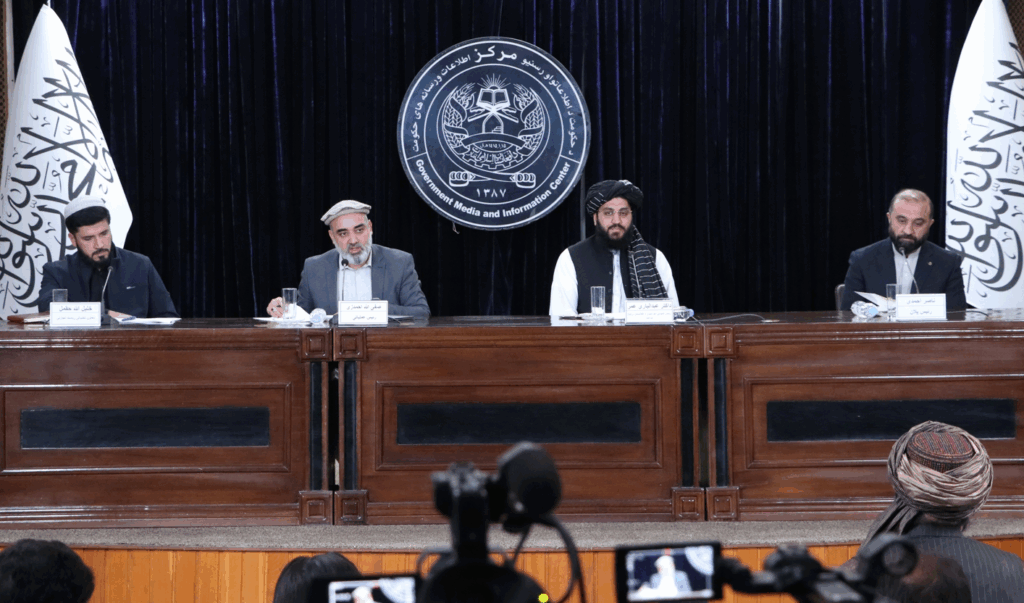

KABUL (Pajhwok): Da Afghanistan Breshna Sherkat (DABS) Chief Executive Officer Dr. Abdul Bari Omar says improper structure of the national power grid and the increasing demand for electricity are the main causes of frequent power outages in the country.
However, he emphasised that significant investments have been made in this sector and the problem will gradually reduce over time.
At a briefing session held today (Tuesday) in Kabul regarding power outages, Omar said over the past five years, electricity supply has not increased, but demand grown significantly.
He cited several causes for rising power cuts, poor construction of the electrical grid, an increased demand in industrial zones and housing complexes, return of millions of Afghan refugees, water shortages and unregulated electricity consumption by the public.
Speaking about the current electricity situation, he said: “At present, our maximum demand in the available grid is 1,152 megawatts, of which we have only 829 megawatts. This means we are facing a shortage of approximately 322.6 megawatts within the existing network.”
According to him, government institutions and some organisations that provide 24-hour essential services receive electricity around the clock, industrial towns receive 12 hours of power and residential areas—particularly in Kabul—are supplied with 10 hours of electricity daily.
Omar explained that DABS supplies each customer with 10 hours of electricity in a 24-hour period based on a schedule, but excessive simultaneous usage of electrical appliances by residents puts pressure on the grid and leads to more outages in those areas.
He said: “When electricity is restored after four hours, people immediately switch on all their appliances at once—water heaters, boilers, heaters, washing machines, and more. If a household’s normal demand is five kilowatts, they suddenly increase it to 20 kilowatts. This overloads the grid, heats distribution lines, burns them out, and puts excessive strain on transformers.”
However, he added that this year alone, DABS has spent 1.1 billion afghanis on upgrading the power grid.
Regarding electricity production and investments, Omar said: “In the past year alone, we have invested approximately 50.3 billion afghanis in the electricity generation sector. This investment was not made by DABS alone. In some areas, DABS participated as a partner, while in other areas, the investments were made directly by DABS or by other domestic and foreign investors.”
He explained that around 1,200 megawatts of electricity generation projects were currently under implementation across the country.
He further added that agreements have been signed for the production of 19,700 megawatts of electricity nationwide, but electricity production requires time to become operational.
He said it would take at least ten years to produce 20,000 megawatts of domestic electricity and distribute it to consumers.
Speaking about people’s complaints regarding power shortages, Omari said: “To address part of this shortage, we have activated an 80-megawatt thermal plant. You know our thermal plant runs on diesel and is located in Kabul. The cost of one litre of diesel is very high for us. Producing one kilowatt of electricity costs us more than 20 afghanis, whereas our consumer tariff starts from 2.5 afghanis and gradually increases.”
Omar urged the public to be patient, saying that while electricity supply was limited, the country’s power grid was also initially weak and substandard and could not meet current demand.
kk/ma


GET IN TOUCH
NEWSLETTER
SUGGEST A STORY
PAJHWOK MOBILE APP