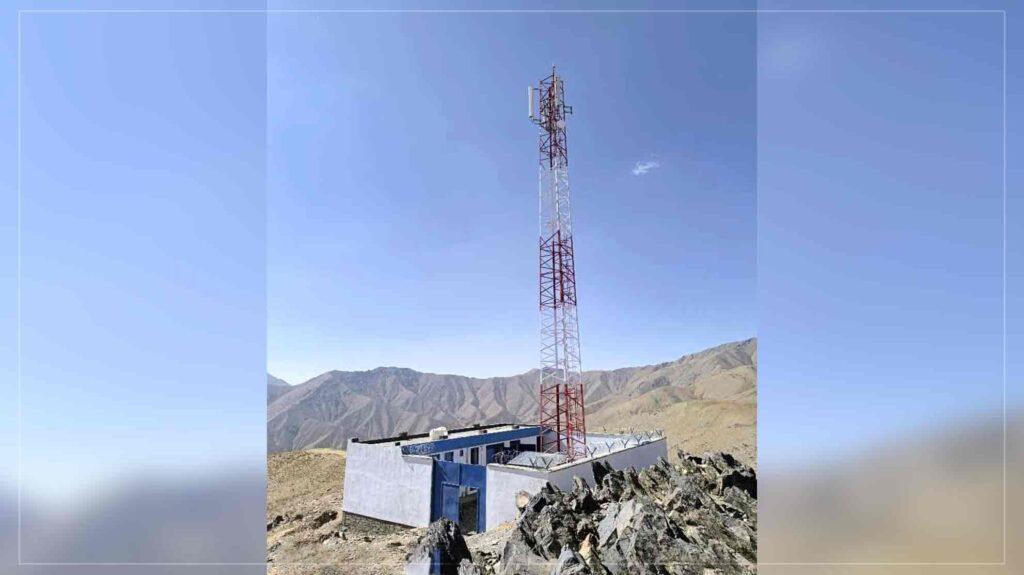

NEILI (Pajhwok): Following the publication of a Pajhwok Afghan News report on the poor quality of telecommunication and internet services in central Daikundi, the provincial Department of Telecommunications and Information Technology has announced that 10 new telecommunication sites have been activated in various districts of the province.
On August 17, Pajhwok published a report in which a number of Daikundi residents said that the absence or poor quality of telecommunication and internet services in several districts and remote areas of the central province had created serious challenges in their daily lives.
They complained that even in this digital era, many people are still forced to walk kilometres into the mountains and hills just to make a simple phone call. They also expressed concern that this ongoing issue has left people—particularly the youth—deprived of access to modern technology.
After the publication of the report, Mawlawi Sayed Barat-Shah Agha Nadim, Director General of ATRA, travelled to Daikundi to assess the condition of telecommunication networks.
In separate meetings with the provincial governor and representatives of telecommunication companies, he discussed the challenges and ways to improve services, and announced the establishment of 19 new telecommunication sites.
Nematullah Jeedzada, Finance and Administrative Director of the Daikundi Department of Telecommunications and Information Technology, said today that ten new telecommunication sites have been activated in various underserved areas of the province—an important step toward improving residents’ access to these services.
Jeedzada said that six of the sites were activated at a total cost of $600,000 from the Ministry of Telecommunications’ development budget, while four others were built and put into operation by telecommunication companies.
He added that the new sites have been activated in the districts of Miramor, Shahristan, Ashtarlay, Pato, Sang-e-Takht and Bandar, as well as in the provincial capital.
According to him, the sites provide 2G and 3G internet services to thousands of residents, with each site covering between three to five thousand people.
Jeedzada further said that with the activation of these ten sites, about 90 percent of telecommunication problems in the affected areas have been resolved, and work is underway on the establishment of three additional sites.
He assured all Daikundi residents that the expansion of telecommunication services in deprived areas will continue.
Daikundi is one of Afghanistan’s mountainous and hard-to-reach provinces, where rugged terrain—along with other challenges—has slowed the delivery of telecommunication services.
sa