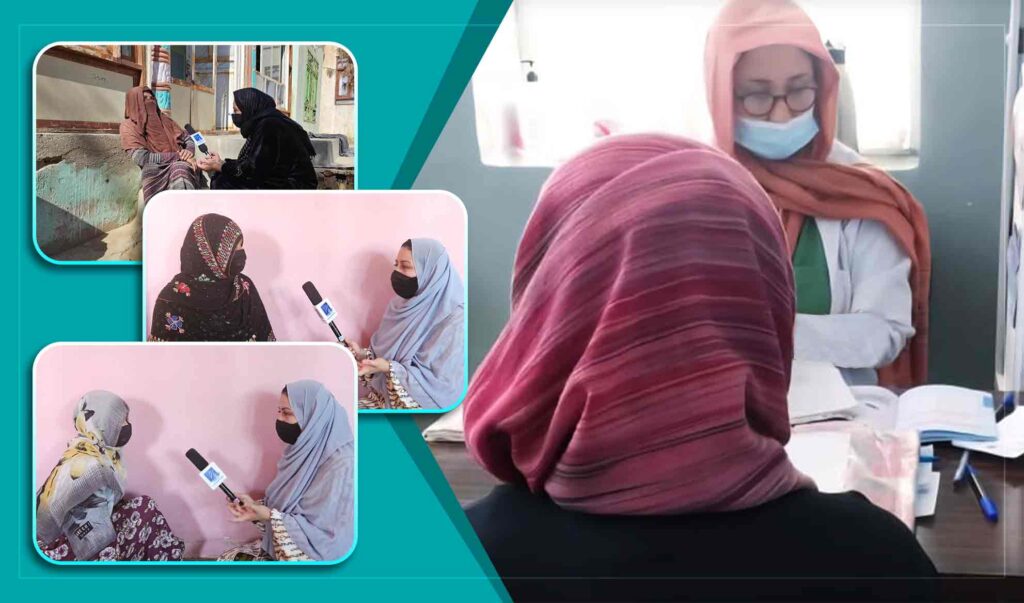

SHIBERGHAN (Pajhwok): Several widows in northern Jawzjan province report that following the deaths of their husbands, they have been struggling with poverty and psychological distress, and are deeply concerned about the future of their children. They are urging the Islamic Emirate to implement support programmes and create employment opportunities for women without guardians.
Experts, however, warn that the continuation of such conditions could have serious social and psychological consequences. Local authorities have indicated that they are making efforts to attract assistance for these women.
It is worth noting that more than four decades of war and insecurity in Afghanistan, combined with migration and natural and man-made disasters, have left hundreds of thousands of widows and orphaned children behind. Many mothers have become the sole breadwinners of their families.
Bitter stories of widows’ struggles
Mawloda, a 35-year-old resident of Alti-Khwaja village in Shiberghan city, is one of the women who has shouldered the heavy responsibility of supporting a family of five since her husband’s death. Poverty and hardship weigh heavily on her daily life.
Speaking tearfully to Pajhwok Afghan News, Mawloda said that a year ago her sick husband, who had travelled to Iran for treatment, died en route. She is now the sole provider for her family.
“After my husband’s death, I faced many problems. I do hard labour, wash clothes in people’s homes, and with great effort manage to meet my family’s expenses,” she said.
Mawloda, who complained about a lack of support from relatives, added: “Many nights we sleep hungry with my children because some days I cannot find any work and return home empty-handed, carrying the heavy burden of responsibilities.”
She earns a living by spinning wool and undertaking domestic work. “If I work and earn some money, I buy a little oil, bread, onions, and potatoes; if not, we spend the night hungry,” she said.
During the interview, Mawloda sometimes struggled to find words. She continued: “After my husband died, my mother-in-law also developed mental health problems. She stays isolated and does not speak to anyone. I am also unwell; I forget things, cannot sleep at night, and have headaches. My six-year-old daughter looks like a two-year-old; doctors say she is malnourished.”
She urged the Islamic Emirate to provide employment opportunities for herself and other women without guardians. “If we cannot find work, I will be forced to send my two daughters and one son to an orphanage,” she added.
Mawloda is not alone. Farzana, another widow in Shiberghan, has been caring for her children for nine years.
With tearful eyes, Farzana recounted that nine years ago her husband died in a traffic accident, leaving her as the sole breadwinner for her family of five.
“I have four children, three of them girls. My eldest son is 15. From morning till evening, I weave carpets, and my sons perform hard labour. Day and night we struggle with extreme hardship,” she said.
Farzana is concerned that her sons are unable to attend school. “I dreamed that my children would study and become doctors or engineers, but alas, my sons share my daily struggles and cannot go to school,” she said.
The hardships have taken a toll on Farzana’s physical and mental health. She suffers from insomnia and forgetfulness. “For three years, I have been under the treatment of a neurologist. When I take the medication, I feel better; when I don’t, I cannot sleep and have headaches,” she explained.
Her worry about her children’s future often keeps her awake at night. “The Islamic Emirate hears our voices, and we ask for help. Jobs should be provided so our children can study and receive an education,” she added.
Amina (not her real name), another widow in Shiberghan, also voiced her struggles with economic hardships and unemployment. “There is no work, and we are lost, not knowing what to do. There is no one to support us,” she said.
Amina, who lost her husband in a traffic accident five years ago, now lives with her three children in a rented house and struggles to pay the rent. She too is requesting employment opportunities for women without guardians.
Psychologists stress the need for support
Masuma Akbari, a counsellor at a private hospital in Shiberghan, said that psychological problems are more prevalent among women and girls.
“Depression causes insomnia, loss of appetite, and social withdrawal, making the individual distrustful of their surroundings,” she explained.
According to her, if such problems are not addressed in a timely manner, they can result in severe consequences, ranging from psychological shocks to suicide.
Guzal Amiri, a psychology professor at Jawzjan University, told Pajhwok: “When a woman in Afghanistan loses her husband, she suffers irreparable damage in three areas: psychological, social, and economic.”
Prof. Amiri added: “Life becomes even more difficult for widows who are illiterate and inexperienced in work, as they lack the skills to earn a living outside the home and are vulnerable to psychological problems and tragic events.”
She emphasised that the government should implement support programmes and create employment opportunities for widows and orphaned children to prevent negative outcomes. She also stressed the importance of expanding psychological counselling alongside material support.
Officials speak of efforts to assist widows
Dr Afzal Azimi, director of Jawzjan Provincial Hospital, said the hospital currently has a psychological counselling department providing free services to patients.
Male doctors attend male patients, and female doctors serve female patients. Approximately 20 patients visit the department daily.
Mawlawi Shabir Ahmad Maqsud, head of the Martyrs and Disabled Affairs Department in Jawzjan, said the department is working to improve the living conditions of women without guardians and provide employment opportunities.
He added that nearly 2,000 widows are currently registered with the department and that they are trying to attract assistance from aid organisations to support these women.
sa/ma