
KABUL (Pajhwok): A survey reveals water level in some areas of Kabul city has plummeted by 40 meters, forcing residents to buy clean drinking water from private companies.
Nearly 57 percent of the survey participants said they buy drinking water from private companies and only 10.5 percent said they get it from government sources.
The survey was announced by the Salaam Afghanistan Media Organization and Salaam Watandar Radio titled “Access to Drinking Water of Kabul Residents”.
The survey was conducted over a period of two months, interviewing 1,800 people, including about five percent women, in 20 districts of Kabul city.
Salam Watandar Radio reporter Mohammad Nasir Kishawarz presented the survey’s findings. The study was conducted to measure the level of sustainable access of Kabul city residents to drinking water, assess household expenditures for water supply, and measure the economic income of households in this regard.
The survey results show that 60 percent of the participants called water from private companies as of poor quality.
He said the income of many households in Kabul city was low and worrying and they spent a large part of their income, almost half, on buying drinking water.
The results show that the water crisis in Kabul is not just a crisis, but has directly put heavy pressure on the livelihoods of households.
“The survey results show that groundwater that belongs to the people or residents is extracted by private companies and sold back to the same people,” Kishawarz said:
The survey shows 62.2 percent of the participants said that the water level in their area has decreased by up to 40 meters, and nearly 72 percent said the government does not monitor private companies that sell drinking water.
Salaam Afghanistan Media Organization and Salaam Watandar Radio say suggestions including implementing continuous research and media programs, accurately reflecting social and economic challenges, focusing government’s and international organizations’ attention on solving problems, strengthening cooperation between people, cultural measures, and providing extensive information should be considered.
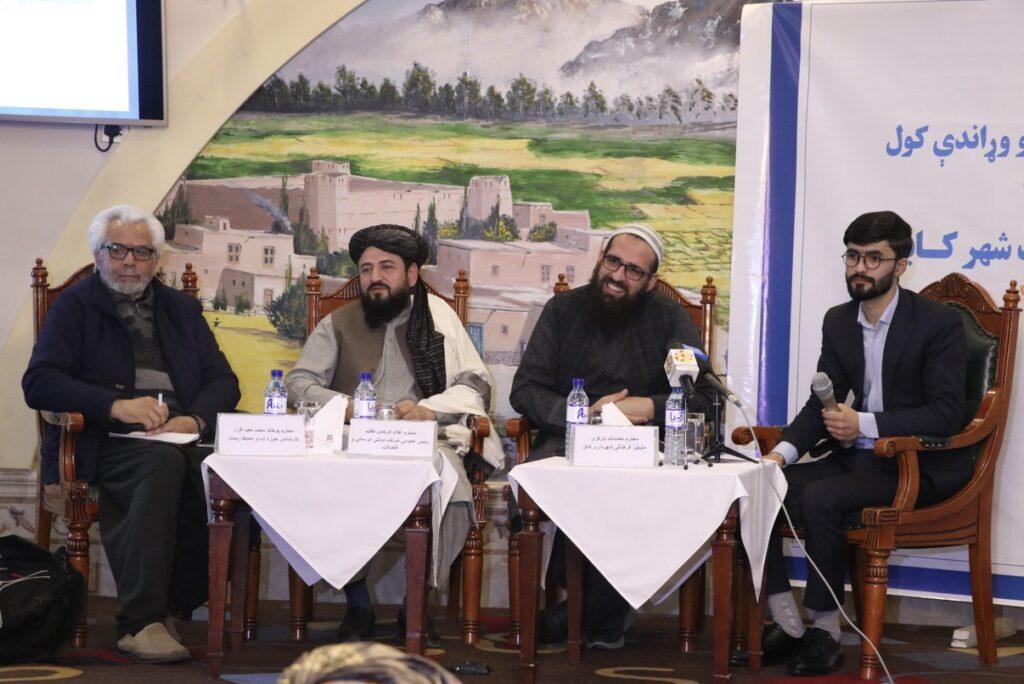
At a meeting, Azizur Rahman Aziz, Director of Groundwater Resources at the Ministry of Water and Energy, said that the design of the Lalandar Dam has been completed and efforts are underway to build it.
He said that the dam will have the capacity to provide water to about 4.5 million people.
According to Aziz, the groundwater level in different areas of the capital Kabul has decreased by 40 to 120 meters, but much work is also underway for water management.
Also, in this meeting, the Deputy Director of Publications of the Ministry of Information and Culture, Maulvi Hayatullah Muhajir Farahi, said that the media should provide public awareness to the public regarding water management and consumption.
He added: “The media should pay attention to these areas and also think about the recycling of consumed water.”
Maulvi Saaduddin Saeed, Deputy Director of the National Environmental Protection Agency, said that Afghanistan emits no gases that harm the world.
He added: “Afghanistan contributes 0.08 percent to the production of greenhouse gases, which is very low… Afghanistan is affected by climate change and is facing a severe water crisis.”
Saeed called on the public that everyone should play their part in water management.
ma