

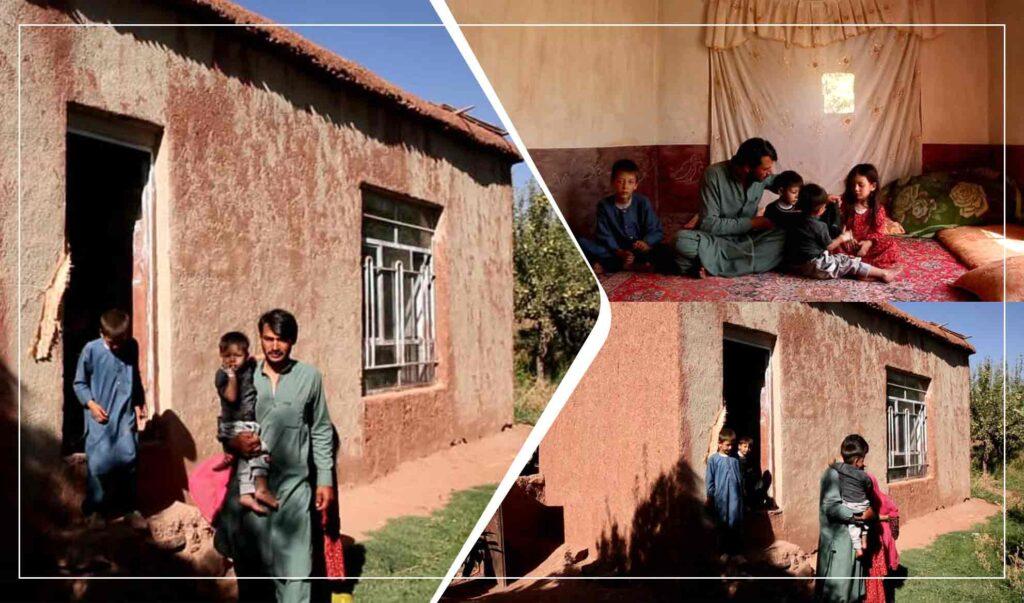

FEROZKOH (Pajhwok): A number of Afghan refugees who recently returned from neighbouring Iran to western Ghor province have expressed concern over economic hardships and limited job opportunities, urging the government and aid agencies to provide support.
They say the absence of job opportunities has created severe hardships in their lives, urging the Islamic Emirate of Afghanistan (IEA) and aid giving organisations to create sustainable employment programmes to utilise their work skills.
Meanwhile, local officials say around 2,000 families have returned to the province from neighbouring Iran and Pakistan this year and received assistance from various organisations.
Returnees urge job-creations programmes
Ramazan Samandari, a returnee from Iran, told Pajhwok Afghan News that he had migrated to Iran about five years ago due to unemployment and economic challenges, where he worked in construction and lived a relatively stable life.
However, he said: “We were deported from Iran five months ago. I have an eight-member family and anyone who can work and support the household currently has no job. I strived several times to go back to Iran but failed. There are very few jobs in Ghor province now. We ask the government and organsiations to provide us with work opportunities.”
He said he was currently living in a rented house and was suffering severe financial difficulties due to unemployment.
Samandari explained that many returnees have experience in construction, agriculture and handicrafts, calling on traders, investors and organisations to create job opportunities in these sectors.
“We worked in construction in Iran and have experience, but there is very little work here,” he said. “Most days I return home empty-handed. If organisations and the government launch work projects, we will be able to earn a living for our families, the provincial economy will improve and we will never be forced to migrate again.”
The challenge is not limited to Samadari. Fazal Ahmad, another returnee from Iran, said unemployment and economic hardship have caused him severe difficulties and even negatively affected his mental health.
The sole breadwinner of a six-member family, he said: “There is no work here. Every day we go to a labour stand. Some day we earn 200 or 300 afghanis, which is not enough for household expenses and rent. Most days we remain unemployed. This situation had made us deeply worried and we do not know what our fate will be.”
He recalled that the assistance he received from some organisations was insufficient and stressed that, alongside winter aid, job opportunities must also be provided.
He also urged the government and aid agencies to increase food and cash assistance and create employment opportunities for returnees.
Similarly, 32-year-old Abdul Karim, who has returned from Iran to Ghor, said he faces the same problems and called for attention from IEA and humanitarian organisations.
He said he had migrated to Iran years ago due to war and unemployment. “We had everything in Iran — a good house and a decent life — but four months ago we were deported. All our belongings were left behind and now we are living in very poor conditions.”
He added: “Four families were deported together. Since returning, there is very little work and we are worried about providing for our families. On the other hand, we are also concerned about our daughters’ education, as girls here are not allowed to attend school beyond the sixth grade.”
Calling for support, he said: “At present, the most important thing is to find work. The government, organisations, donors and wealthy individuals must take action to reduce unemployment and create job opportunities.”
Officials: Solid plans in place to address returnees’ problems
Local officials say around 2,000 families have come back to the province from Iran and Pakistan this year and received assistance.
Refugees and Repatriation Director Eng. Mir Ahmad Musamem told Pajhwok: “This year, about 2,000 families have returned to Ghor from Iran and Pakistan. We have provided assistance to all of them and some of them have been enrolled and technical and vocational training programmes.
“Efforts by the committee to address the situation of internally displaced persons (IDPs) and returnees are ongoing and we have good programmes planned for them in the future.”
People have suffered from unemployment for many years and forced to migrate to other countries in order to meet their families’ basic needs.
kk/sa


GET IN TOUCH
NEWSLETTER
SUGGEST A STORY
PAJHWOK MOBILE APP