



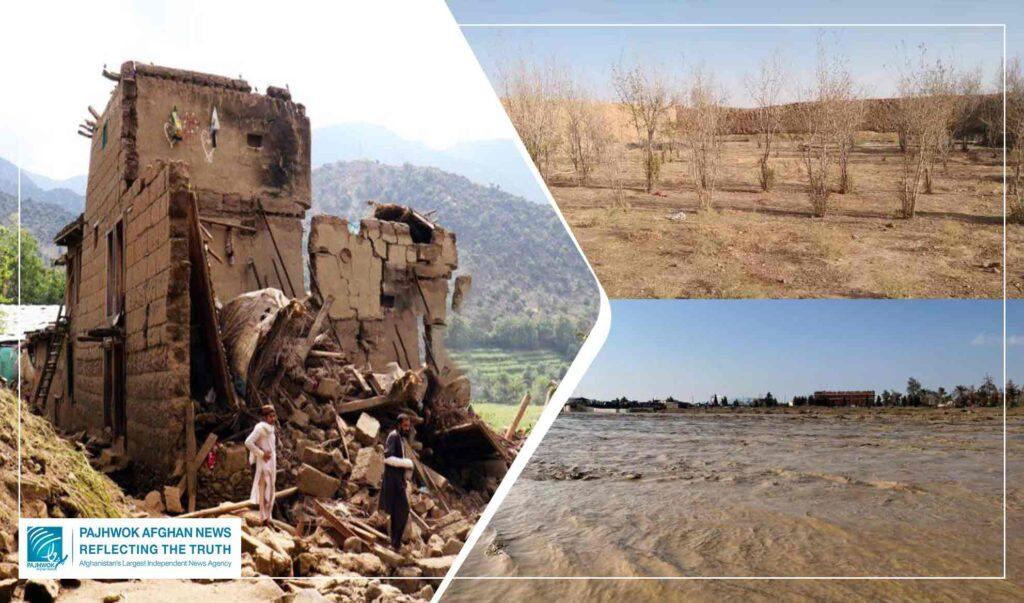

KABUL (Pajhwok): As Afghanistan continues to face recurring natural disasters such as floods, earthquakes and drought, experts say access to accurate, timely and reliable information through the media plays a decisive role in reducing casualties and managing the consequences of such events.
In recent years, various provinces across the country have been affected by floods, earthquakes, droughts and other natural disasters, resulting in significant human and material losses.
Mohammad Sayem Halim, a university lecturer, told Pajhwok Afghan News that media outlets help reduce confusion among families during crises by providing accurate and trustworthy information.
He said that when people clearly understand the nature of the risks they face and the actions they should take, they were better able to protect their lives and property. Informed communities, he added, were more capable of making rational decisions.
“For example, understanding the timing and intensity of floods, or knowing how to prevent the spread of disease, enables people to take timely measures and reduce further losses,” he said.
Halim stressed the importance of accuracy in reporting, noting that media outlets have a responsibility to publish precise, transparent and verified information during emergencies. Incomplete or inaccurate reporting, he warned, can cause fear, lead to poor decisions and even put lives at risk.
He said Afghan media have generally played a positive role in raising public awareness, but in some cases delayed reporting due to limited access to credible sources remains a key weakness in crisis coverage.
According to him, fast, transparent and continuous reporting helps prevent rumours, while the use of reliable sources, responding to public questions and explaining facts in simple language builds trust and discourages belief in misinformation.
He added that training journalists in crisis reporting, strengthening cooperation with specialised institutions, focusing on public education and making better use of local media could significantly improve the quality of information dissemination during emergencies.
Meanwhile, media analyst and writer Qazi Najibullah Jame said timely and accurate information provided by the media—particularly during emergencies such as natural disasters and infectious disease outbreaks—not only increases public awareness but also strengthens national unity.
He said awareness of natural hazards and disease outbreaks prepares people psychologically to cope with crises and helps prevent loss of life and property.
Jame stressed that media outlets were a key pillar of modern societies, noting that timely information alerts people to imminent dangers.
He warned that failure to provide accurate reporting, or publishing content that undermines national interests, security or social cohesion during crises, reflects a lack of professional responsibility.
He described the performance of Afghan media in promoting public awareness, national unity and public support during difficult times as commendable.
He cited coverage of earthquakes in Herat and Kunar, floods in northern provinces and Pakistan’s military attacks on Afghanistan as examples where the media fulfilled their responsibilities professionally.
However, Jame cautioned that some propaganda organisations at times publish content contrary to Afghan values and unity, urging media outlets to remain vigilant and resist the influence of rumours and misinformation.
Environmental expert Najibullah Sadid also emphasised that the role of media in public awareness during the early stages of crises—particularly natural disasters—is critically important.
He noted that many global centres forecast weather patterns and natural hazards, making most disasters predictable, with the exception of earthquakes and a few other events.
Sadid said media outlets act as a bridge between research centres and the public, giving them a vital role in disaster management.
He stressed the need for accuracy and transparency, adding that when media convey expert information in clear and understandable language, it becomes far more effective.
According to Sadid, the media play an important role before, during and after disasters. Timely warnings about storms, dust storms, floods, avalanches or damaged roads before an incident can significantly reduce casualties, as people avoid unnecessary travel and take precautionary measures.
He said media reporting, supported by expert analysis, can also help communities learn lessons from disasters and reduce their impact in the future.
Sadid pointed to drought and its effects on agriculture, noting that in many countries people were informed not only about long-term natural hazards but also about suitable crops that can help reduce losses.
He emphasised that information must be delivered in clear and simple language, as technical and complex data cannot be effectively communicated to the general public.
He added that during crises, the media should also communicate practical guidance. For example, during cold waves or floods, officials should use the media to inform people about safety measures, temporary shelters, evacuation routes and ways to protect livestock.
He noted that because some people lack access to mobile phones or social media, warnings and information should also be disseminated through traditional channels such as radio, television and mosques.
According to Sadid, when people have sufficient information about natural disasters, fear decreases and preparedness increases. He urged greater involvement of experts in media programmes related to environmental issues.
Public views on role of media
Zakria, a resident of western Herat province, said the media play an important role in assistance and information dissemination during natural disasters.
“The earthquake we experienced in the province showed how effectively the media performed. They presented the reality of the disaster to the world, which helped attract assistance and prevent further risks,” he said, also praising media coverage during the Covid-19 pandemic.
He added that media outlets also introduced alternative crops to farmers during droughts in some districts of the province.
Zabihullah Wafa, a resident of Ghor province, said that despite media efforts, timely and comprehensive information is still lacking in many cases due to limited resources, access challenges and weak coordination with authorities.
He called for strengthening media institutions, improving journalist training in crisis reporting and enhancing coordination between media and government agencies to better protect lives.
Meanwhile, Qais Mohammad Mohammadi, a resident of Shiberghan city in Jawzjan province, said the media play a vital role during floods and earthquakes.
“Practical guidance, such as where to take shelter during earthquakes and which routes to avoid, can be learned through the media,” he said, adding that accurate information helps reduce fear, rumours and confusion among the public.
kk/sa


GET IN TOUCH
NEWSLETTER
SUGGEST A STORY
PAJHWOK MOBILE APP