

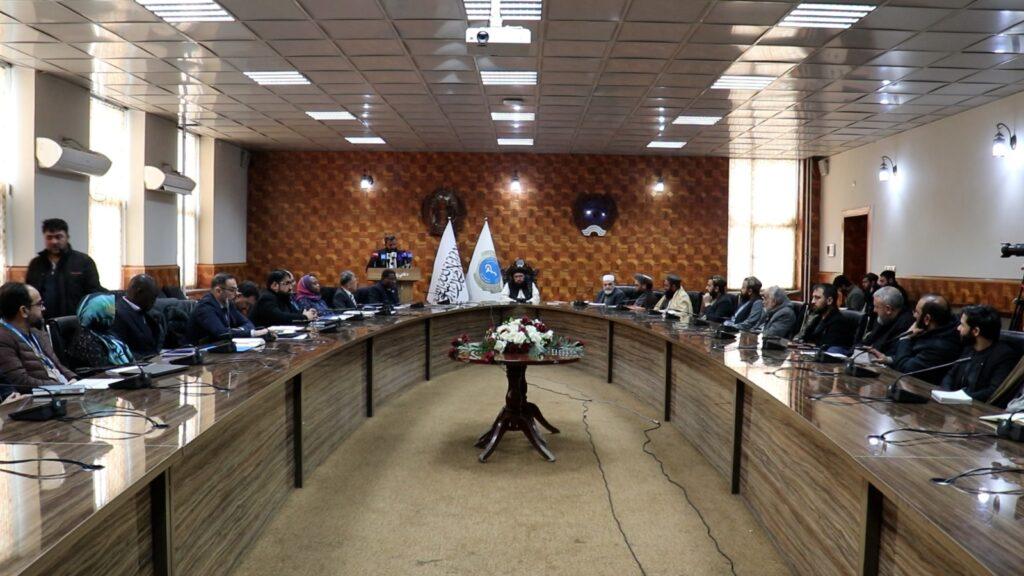

KABUL (Pajhwok): The Ministry of Public Health (MoPH) and representatives of international organisations on Tuesday emphasised the need to strengthen the capacity of health workers and ensure timely and accessible healthcare services for children and mothers.
The remarks were made during a programme titled “National Guideline on Acute Malnutrition and its Management Action Plan” held at MoPH on Tuesday.
Addressing the event, Deputy Minister of Public Health Mawlawi Abdul Wali Haqqani stated that acute malnutrition was not merely a problem of weight loss or stunted growth, but a serious threat to children’s mental development, immunity, education, future potential and even survival.
He highlighted that health forms the foundation of every society and a healthy individual was central to development, welfare and empowerment.
He added that strengthening health services and prioritising maternal and child health were among the ministry’s key objectives.
Haqqani said that capacity-building for health workers, improving service quality, raising community awareness, and ensuring timely access to healthcare for children and mothers were core components of the guideline.
“We are committed to expanding and strengthening services in this sector, and cooperation and coordination with international organisations are highly valuable in this process,” he stated, adding that the national guideline would not be limited to the capital but would also be implemented in provinces.
MoPH reaffirmed that combating malnutrition was a priority and noted that extensive efforts had already been undertaken in this regard.
Meanwhile, Dr Hikmatullah Masoumi, head of nutrition at the MoPH, explained that the main objective was to develop a national guideline aligned with international standards, practical for implementation, and responsive to public health needs.
World Health Organization (WHO) Representative in Afghanistan, Dr Edwin Ceniza Salvador, congratulated MoPH on what he described as a major achievement, noting that the guideline and management plan for preventing and treating acute malnutrition had been prepared at a critical time.
Also speaking at the event, UNICEF Representative in Afghanistan, Dr Tajudeen Oyewale, said the strength of the national guideline lay in its needs-based approach, focusing on key areas, including recommendations for healthy child nutrition.
He praised the ministry’s efforts to combat malnutrition, acknowledging the challenges but stressing the importance of continued joint efforts to address them.
Dr Oyewale warned that the number of malnourished children in Afghanistan was rising, estimating that 3.5 million children were affected in 2025, increasing to 3.7 million in 2026.
He cautioned that malnutrition significantly raises child mortality and can adversely affect children’s abilities and intelligence.
According to him, more than 600,000 malnourished children were treated with UNICEF support in 2025, and the number is expected to rise in 2026.
kk/sa


GET IN TOUCH
NEWSLETTER
SUGGEST A STORY
PAJHWOK MOBILE APP