

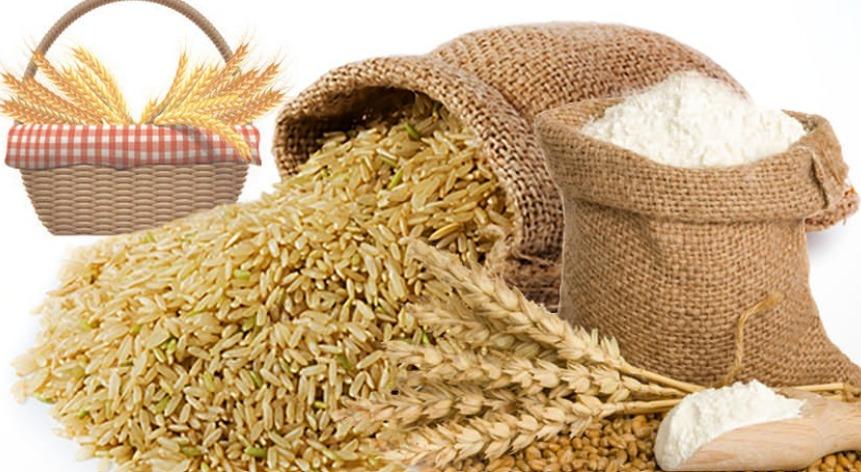

KABUL (Pajhwok): Religious scholars say that Fitr charity, or Sadaqat-ul-Fitr, is a Shariah obligation and an Islamic duty that strengthens support, love and brotherhood between the wealthy and the needy in society. Based on current wheat prices in the market, this year the Fitr charity has been set between 62 and 64 afghanis.
Fitr charity is an obligatory donation that Muslims must give to the poor and needy before the Eid-ul-Fitr prayer at the end of Ramadan.
Who should give and receive Fitr charity?
Religious scholar Noorullah Kawsar told Pajhwok Afghan News that the term “Fitr” is Arabic and the charity is a Shariah obligation that must be given per family member.
He explained: “Fitr charity is obligatory on anyone who has the means to give—someone who meets the nisab (minimum wealth threshold) and has more than their daily needs for today and tomorrow. Scholars say that if a person reaches the nisab threshold and zakat is due, Fitr charity is also obligatory.”
Kawsar added that the head of a household can give Fitr charity on behalf of other family members, while independent individuals must give their own. The charity should be given to the poor and needy.
Although it becomes obligatory on the morning of the first day of Eid-ul-Fitr, it is permissible to give it earlier and it is recommended to do so in the last two days of Ramadan.
He stressed that Fitr charity should always be given before the Eid prayer and highlighted its broader impact: it fosters love and brotherhood between the rich and poor, promotes economic balance, and helps reduce poverty.
Local perspective
Zabiullah, a resident of Kabul’s 9th district, said his family of ten gave Fitr charity at the start of Ramadan.
He explained: “I gave Fitr charity at the beginning of Ramadan because one side was the fast and the other was unemployment. I wanted to help the needy during Ramadan as well.”
He urged all citizens to give their Fitr charity to the poor during Ramadan, so that fasting can be completed properly.
How much Fitr charity should be given?
Based on current wheat prices, the Ministry of Hajj and Religious Affairs (MoHRA) has set this year’s Fitr charity between 62 and 64 Afghanis.
According to a ministry statement on the rules of Fitr charity:
- 1,900 grams of wheat – 59 afs
- 1,900 grams of wheat flour – 61 afs
- 3,800 grams of barley – 118 afs
- 3,800 grams of barley flour – 122 afs
- 3,800 grams of dates – 540 afs
- 3,800 grams of raisins – 920 afs
The ministry noted that these quantities are based on the Hanafi school of thought. As a precaution, it is preferable to consider two kg of wheat or wheat flour per person, costing 62 afs for wheat and 64 afs for flour.
For other items, the recommended quantity is four kg per person, with prices as follows: barley – 124 afs, barley flour – 128 afs, dates – 568 afs, and raisins – 986 afs.
The MoHRA also stated that in provinces, if cash is given instead of these items, the amount should be set according to local market rates.
sa

GET IN TOUCH
NEWSLETTER
SUGGEST A STORY
PAJHWOK MOBILE APP