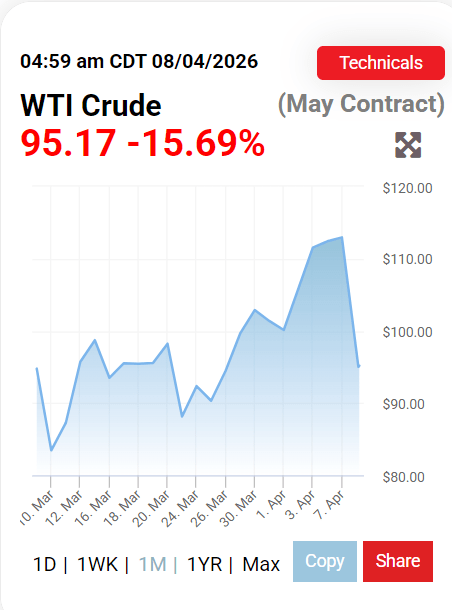

KABUL (Pajhwok): Following the outbreak of conflict between the United States and Israel with Iran, the price of crude oil rose by 68.5 percent, reaching $112.95 per barrel. However, after the announcement of a two-week ceasefire, prices dropped by about 17 percent, returning to $93.75.
The United States and Israel launched attacks on Iran on February 28, 2026. In these attacks, Iran’s Supreme Leader, Ali Khamenei, was also killed. The strikes were met with a military response from Iran and clashes between the sides continued.
On Tuesday night, US President Donald Trump announced that the two sides had reached an agreement under which attacks would be halted for two weeks. He added that efforts toward achieving a lasting peace agreement are still ongoing.
Meanwhile, officials in Tehran stated that if attacks against Iran stop, the country will also suspend its military operations. During this period, the safe passage of ships through the Strait of Hormuz will be ensured in coordination with Iran’s armed forces.
These developments caused oil prices in global markets to decline.
According to data from OilPrice.com, the price of one barrel of crude oil (WTI) in global markets was $67.02. However, after the conflict began, prices surged, reaching $112.95 per barrel as of on Tuesday (April 7).
Following the announcement of the two-week ceasefire between the United States and Iran last night, oil prices fell to around $93.75 per barrel by approximately 4:30 PM Kabul time today.
These figures show that oil prices increased by about 68.5 percent after the conflict began, rising to $112.95 per barrel, but then dropped by about 17 percent to $93.75 following the ceasefire announcement.
These developments demonstrate that even a short-term ceasefire in the volatile Middle East region can have a significant impact on global energy markets and that relative stability can quickly ease the price pressures caused by crisis.
sa