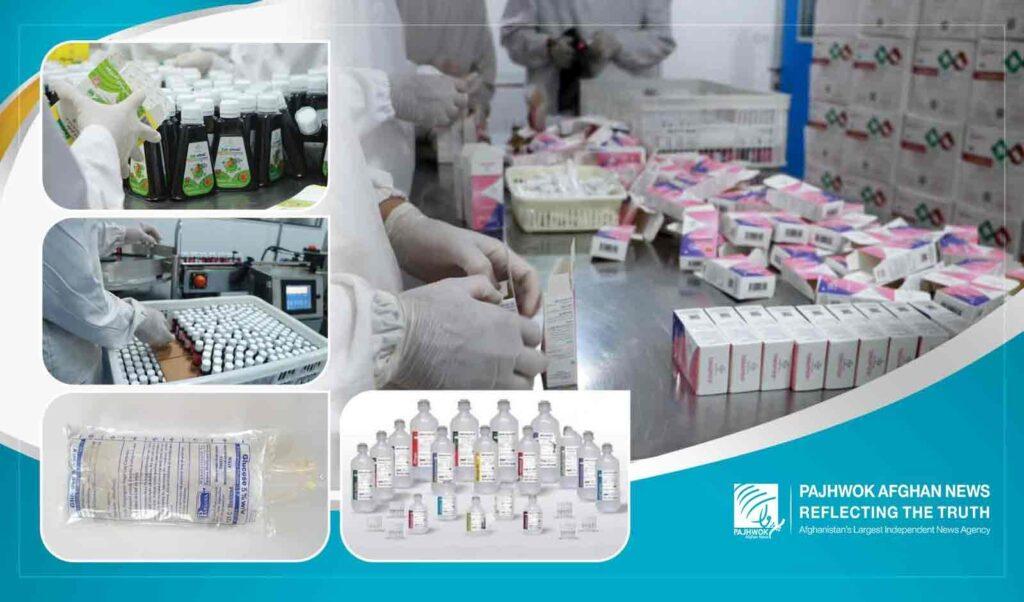

HERAT CITY (Pajhwok): Pharmaceutical production in western Herat province has increased significantly following a ban on the import of Pakistani medicines, with local factories now supplying thousands of types of medicines and tens of thousands of serums to domestic markets, officials say.
Mohammad Naser Amin, director of the Department of Industry and Mines, told Pajhwok Afghan News that eight pharmaceutical factories were currently operating in the province, producing thousands of types of medicines daily and distributing them across the country.
He said the ban on Pakistani medicine imports had positively affected the growth of pharmaceutical factories in Herat.
According to Amin, the move created greater opportunities for the expansion of the domestic pharmaceutical industry and encouraged investors to increase local production.
He added that continued support for domestic production could help Afghanistan move toward pharmaceutical self-sufficiency and reduce dependence on imported medicines.
Factory owners report surge in pharmaceutical production
Mohammad Hossein Sharifzadeh, head of “Itok Pharma”, said the company was producing more than 50 types of high-quality medicines in accordance with health standards.
He said the factory’s production had helped meet part of domestic market demand and gradually replace imported medicines.
Sharifzadeh added that the quality and reasonable prices of locally produced medicines had increased the company’s market share and strengthened public trust in domestic products.
Meanwhile, Feroz Ahmad Usmani, chief executive officer of the company, said the factory produced up to 80,000 units of medicine daily, with employees working in day and night shifts to meet market demand on time.
He said dozens of workers were engaged in production, packaging and quality control, adding that efforts were underway to ensure all stages of manufacturing complied with health standards.
Officials at the Parsava factory, a producer of injectable solutions in Herat Industrial Park, said the company also produced up to 60,000 serums daily.
The factory was established with an investment of more than three million US dollars and now plays an important role in supplying medicines to domestic markets.
Mohammad Reza Alami, head of “Parsava”, said the factory produced more than 40 types of medicines and injectable solutions of standard quality and distributed its products to all 34 provinces.
He stressed the importance of supporting domestic products and urged people to use locally manufactured goods, saying public and government support would encourage producers and help further expand the industry.
Alami also called on the government to prevent the import of low-quality and similar medicines in order to strengthen and support domestic manufacturers.
According to him, the factory provides direct employment to more than 250 people, while efforts continue to increase production capacity and meet a larger share of domestic demand through local production.
Pharmacist
Mohammad Dawood, a pharmacist in Herat, said some imported medicines were not of acceptable quality, and preventing the import of substandard medicines would further strengthen Afghanistan’s pharmaceutical industry.
He said strict measures against the import of low-quality medicines and firm action against medicine smugglers would help increase the production of higher-quality medicines under government supervision in Afghanistan.
kk/sa