
KABUL (Pajhwok): A British magazine, in an investigative report, has alleged that a network of Afghan businessmen used gift and confectionery shops in the United Kingdom to launder aid money allegedly taken out of Afghanistan years ago, failed to pay taxes, and avoided debts through the repeated dissolution and re-establishment of companies.
However, one of the network’s main businessmen, Ghulam Sarwar Afzali, has strongly denied all of these allegations.
Pajhwok cannot independently verify these claims.
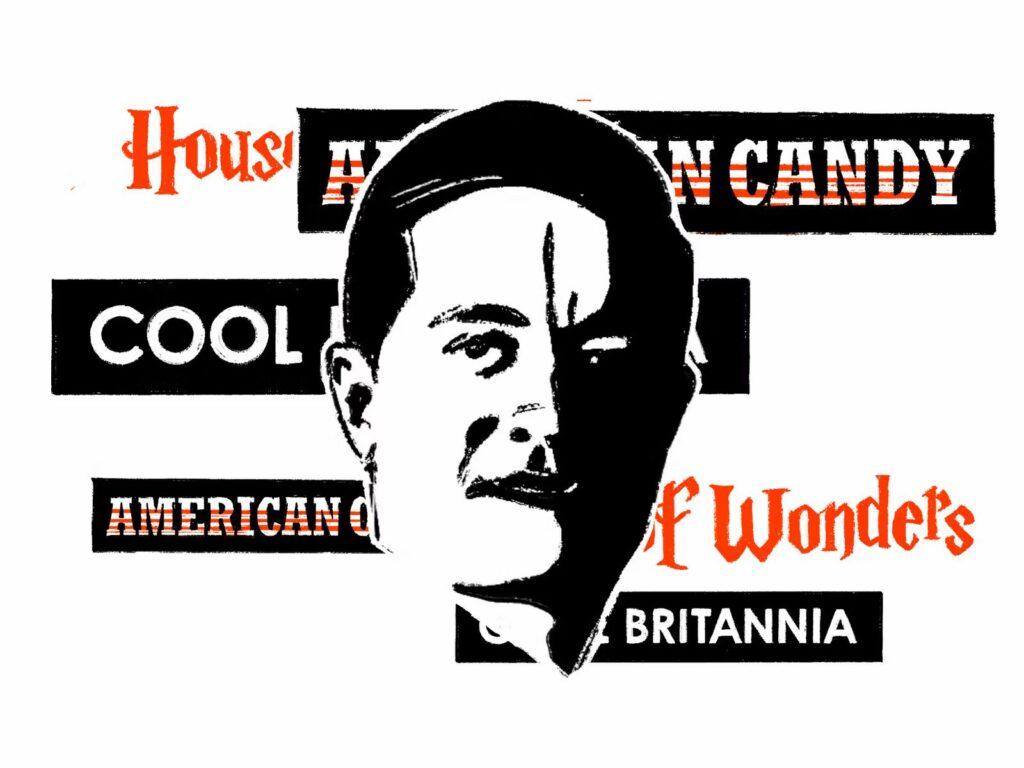
The British magazine “The Fence” claimed in a recent investigative report that a network of Afghan businessmen built an extensive chain of souvenir shops, American candy stores, and unofficial “Harry Potter” shops in London and several other British cities, and that these businesses may have been used to invest money from international aid funds removed from Afghanistan.
The report, titled “The Graveyard of Empires,” was written by journalist Cormac Kehoe and published on July 16, 2026. It claims to be based on business records, company financial accounts, property registrations, an audio recording, and interviews with various sources.
Pajhwok has not independently verified the allegations in the report.
Establishment of the “LaModa” Company
According to The Fence report, LaModa UK Limited was the central company of this business network. The company was established on June 6, 2006, by Ghulam Sarwar Afzali, Mohammad Jan Sakizadeh, and Nasser Mirwais.
The report states that Ghulam Sarwar Afzali later changed his name to Sarwar Nabizadeh.
It says that in its first year of operation, the company leased several commercial units in London, including locations in Bayswater, the Trocadero Centre, Whitehall, and Buckingham Palace Road.
People involved in the souvenir retail business told the magazine that businesses behind LaModa and their related network controlled around 100 shops by the end of 2019.
However, the report also cites one source from the business network as saying that the actual number of shops was closer to 10.
Allegations of Company Dissolution and Re-establishment
The investigative report alleges that companies linked to the network used a practice known as “phoenixing.”
Phoenixing refers to a process in which a company is dissolved while leaving behind debts and financial obligations, while a similar business continues operating under a new company and name.
The magazine alleges that the group left behind thousands of pounds in unpaid business property taxes at several commercial properties in central London.
The report claims that at the address of the unofficial Harry Potter-themed shop “House of Secrets” at 146 and 148 Oxford Street, around £325,000 in business rates remained unpaid.
Allegation of Money Laundering of Aid Funds
The most serious allegation in the magazine’s report is that these shops may have been used to launder international aid money taken out of Afghanistan.
The magazine says it obtained an audio recording in which a member of the network is speaking. It claims the recording suggests that money brought into the businesses through the shops originated from funds taken out of Afghanistan during the government of former President Hamid Karzai.
According to a reported conversation, a source described as an Afghan souvenir seller said that development aid had gone to Afghanistan, but that large amounts of money were later transferred back to the United Kingdom.
However, the published report does not provide detailed evidence showing the exact path of the alleged funds, complete banking records, or a direct connection to specific international aid programs.
Alleged Links with Former Afghan Officials
The report also alleges connections between some members of the network and officials from Afghanistan’s former government.
The magazine, citing several Afghan government sources, wrote that Ghulam Sarwar Afzali had links with former Foreign Minister Abdullah Abdullah. Afzali, however, said he did not personally know Abdullah Abdullah.
The magazine also stated that Hafizullah Shakir, who previously worked for the Afghan government in Abu Dhabi and at the United Nations office in Kabul, supplied goods to the shops.
The report also mentions the name of Homayoun Hassani, stating that he was registered as the director of 14 companies involved in souvenirs and sweets.
Alleged Relationship with Ahmad Massoud
The report claims that Afzali also had ties with Ahmad Massoud.
According to the report, Afzali was part of Ahmad Massoud’s delegation that traveled to the Austrian Parliament in April 2023 to discuss the Vienna Process.
The magazine also wrote that Afzali served as a member of the advisory board of the Mosaic Foundation Afghanistan in the United Kingdom. The report states that the foundation was established by Zalmay Nishat, a former senior adviser to the Afghan government.
The report does not provide evidence showing that Ahmad Massoud, Abdullah Abdullah, or the foundation were involved in any alleged financial misconduct. It only refers to Afzali’s political and social connections.
Tax and Financial Account Issues
The report states that Cool Britannia Retail was one of the network’s major business names and generated nearly £10 million in revenue in 2009, employing 106 people.
According to the report, sources alleged that some companies in the network did not collect value-added tax (VAT) from customers, giving them an economic advantage over competitors that complied with tax regulations.
The report says that in 2011, auditors issued a qualified opinion on the company’s financial accounts because they had not observed the inventory-counting process and could not verify the accuracy of recorded stock worth £1.58 million.
It adds that a similar issue occurred again in 2014, when the recorded value of goods reached nearly £3.5 million.
Properties worth millions of pounds
Based on analysis of property records, the magazine reported that some key members of the network purchased homes and commercial properties worth millions of pounds in London and other areas.
According to the report, Nasser Mirwais bought a large house in Golders Green, while Afzali purchased a flat in Fulham worth £1.3 million and another house in New Malden worth nearly £1 million.
The report says that after the establishment of Eton Holdings Limited, the network began extensive property purchases in the UK.
According to the magazine, the company purchased a property opposite Canterbury Cathedral for £2 million in 2019, another property opposite the British Museum for £2.15 million, and several properties in Scotland worth more than £2 million.
The report alleges that Afzali provided a personal loan of £745,000 to Eton Holdings in 2020, and that Cool Britannia had also provided the company with a loan of £843,443 by November 2024.
Afzali rejects all allegations
Ghulam Sarwar Afzali rejected all allegations made in The Fence investigation.
He told the magazine: “I strongly reject every allegation suggesting that I or my companies have done anything improper.”
Afzali added that claims regarding avoidance of VAT and business taxes, laundering of Western aid money, and the use of phoenixing practices were “completely false.”
The report does not state that Afzali or any other individuals mentioned have been convicted by any court of money laundering or tax fraud.
Pajhwok says it is attempting to obtain direct responses from Ghulam Sarwar Afzali and other individuals mentioned in the report. Their comments will be added to the report once received.
sa