Language

Don't you have an account with Pajhwok Afghan News?

Click here to subscribe.

Govt breaks law to create weak anti-graft body: SCOs


KABUL Joint Working Group (CSJWG) on Tuesday said the government deliberately broke the anti-corruption law to create a weak and political anti-graft body.

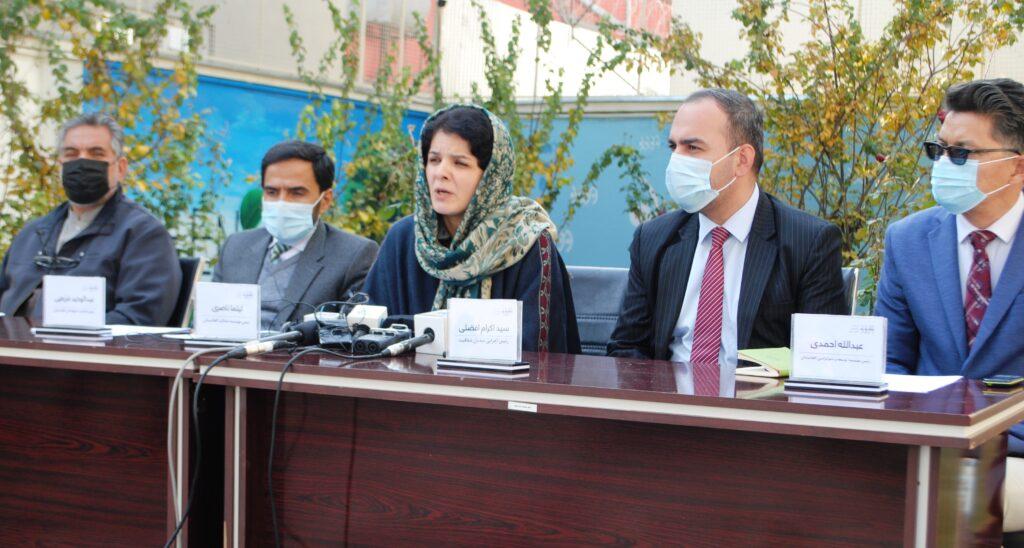
The group, the largest coalition of Afghan civil society organizations (CSOs), at a news conference here highlighted their objections to the recent what it called illegal appointment of the Anti-Corruption Commissions’ (ACC) Commissioners.

President Ghani last Thursday decreed formation of the five-member ‘Anti-Corruption Commission.

The president made the announcement during the European Union delegation to Afghanistan’s sixth annual conference on anti-corruption held at the ChaharChinar Palace of Presidential Palace.

The civil society coalition said the government violated the Anti-Corruption Law by expelling the elected representatives of CSOs from the selection process and then selected 15 applicants out of 50 candidates.

The president violated Article 10 of the Law by appointing five commissioners out of the 15 finalists without consultation with CSOs.

According to Article 9 of the Anti-Corruption Law and Articles 5 and 6 of the Selection Guidelines, two elected representatives of the civil society and two representatives of the government should prepare a shortlist of candidates.

Based on article 10 of the Anti-Corruption Law, the President should consult civil society on the final nominees for the Anti-Corruption Commission, the group said.

However, the government removed the civil society representatives from the selection process in July 2020 and then in November 2020 the President refused to consult with civil society on the final nominees.

Sayed Ikram Afzali, Executive Director of Integrity Watch Afghanistan, said, “Government delayed six years in creating the ACC. During this time CSOs stopped the government from creating a political commission. However, by expelling CSOs from the selection process, the government at the end illegally created the ACC.”

He added anti-corruption institutions that were prone to political interference would have low effectiveness because the political leadership could use it for their political and personal benefits.

Civil society reviewed profiles of the appointed commissioners and believed three members were closely associated with the current political leadership, based on their past background. Also, two members lacked necessary experience in anti-corruption.

In the document that the Afghan government presented to the London Conference in 2014, it committed that an independent anti-corruption commission with time-bound prosecutorial powers would be formed and membership of this commission would be drawn from civil society and qualified legal specialists as well as from the government.

After the Conference, the CSO’s requested the creation of such a ACC but to no avail.

When the National Strategy for Combating Corruption was being developed, CSOs requested that it should contain a commitment to the creation of ACC but the President rejected this, saying that the creation of such a commission would be against the Constitution.

After a year of advocacy by CSOs and some members of international community, President Ashraf Ghani recommitted to create the ACC.

The Anti-Corruption Law drafting process started at the Ministry of Finance, but the President rejected it three times thereby wasting two more years.

After further advocacy, the President signed off on the Anti-Corruption Law but when it was published in the Official Gazette, 42 differences were observed between the version approved by the Cabinet and the version published in the Gazette, showing a huge distortion from the law which was originally agreed.

After another six-month of advocacy by civil society, the Government admitted the distortion in the Law and President ordered its amendment. Finally, when implementing the Law, the Government tried to marginalize CSO and when the elected representatives of the CSOs resisted the government’s political process, the government forced them out.

Lailuma Nasiri, President of Afghanistan Justice Organization, and an elected representative of CSOs in the selection process said, “The Government has been ambivalent about the creation of an apolitical and impartial ACC and has failed to create strong anti-corruption bodies that the Afghan people expected.”

She added that CSOs shared their concerns and criticisms with the government previously and they were still critical of the process.

Abdul Wahid Farzayi, senior member of Lawyers Union of Afghanistan, said, “The appointment process of commissioners as stipulated in the Law has been rejected by both houses of Parliament and the Government should not implement a legislative in contradiction with the Constitution.”

The Lower House of Parliament has rejected both the Anti-Corruption Law and its amendments, but the Upper House approved the Law albeit with amendments in the selection process.

Baryalai Omarzai, Head of Afghan NGOs Coordination Bureau, said, “Some members of international community’s role in creation of the ACC is deplorable.”

He said not only some members of international community declined to protest creation of an ACC in stark contradiction with United Nations Convention against Corruption (UNCAC) but also questionably joined the government in such a step.

The CSOs urged the government to cancel the commissioners’ appointment and restart the process once the law was approved by the Parliament.  

Executive Director of Afghanistan’s Democracy and Development Organization, Abdullah Ahmadi, said, “We urge Afghan people, the Parliament, reformers within the government, members of international community committed to creation of independent institutions to pressure the government to dissolve this illegitimate commission and pave the ground for creation of the ACC in a month.”

“We request the Parliament to discuss the Law in the Joint Committee and submit it to the Government as soon as possible”, he added.

Pr/ma

GET IN TOUCH

SUGGEST A STORY

Pajhwok is interested in your story suggestions. Please tell us your thoughts by clicking here.

PAJHWOK MOBILE APP

Download our mobile application to get the latest updates on your mobile phone. Read more