KABUL (Pajhwok): The National Environmental Protection Authority (NEPA) reports a reduction in air pollution in the country over the past 10 months.
The authority explained it implemented various programmes to address air pollution.
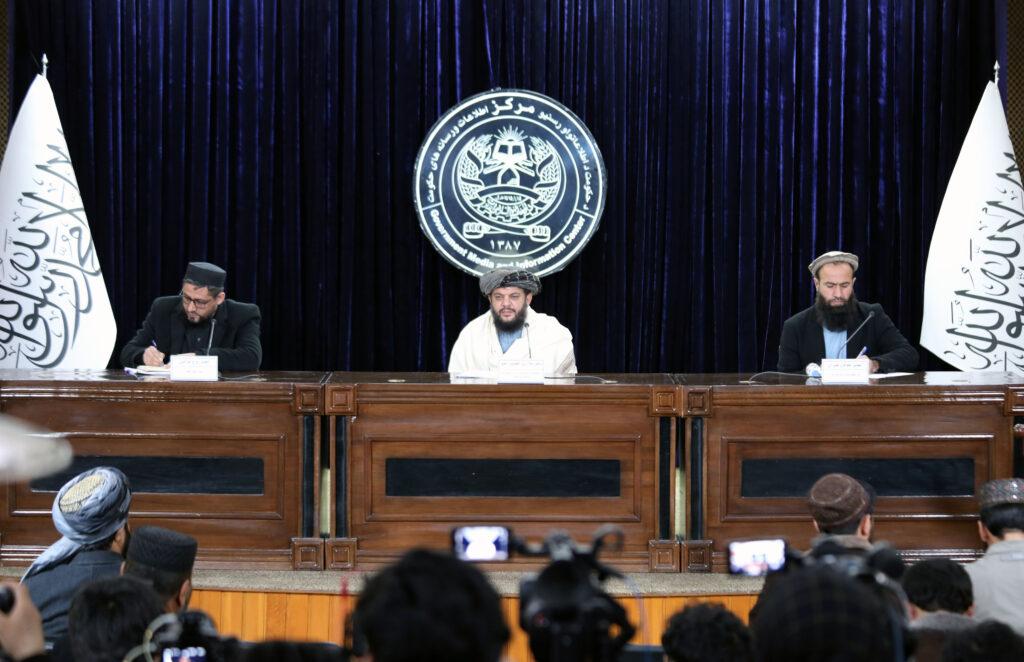
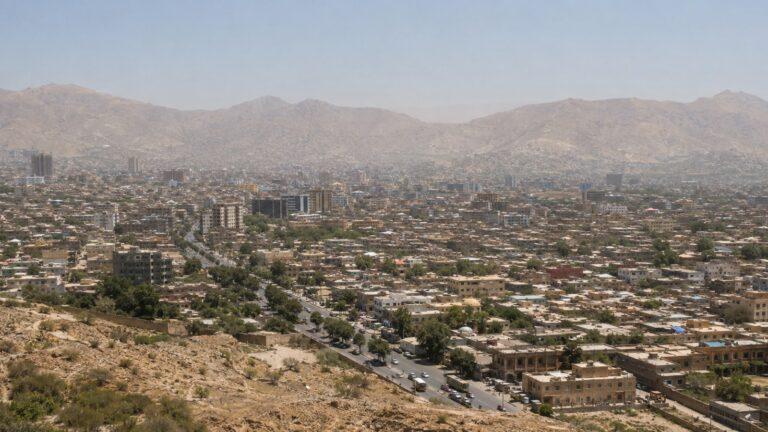
Deputy Minister of Environmental Protection Authority Dr. Mullah Zainul Abideen Abid told a press conference in Kabul today (Sunday) that the capital with a population of over six million, was one of the cities facing environmental pollution, a problem that worsens every winter.
He recalled underground water contamination, a lack of green spaces, the absence of a sewage and drainage system, economic challenges, and the increasing number of vehicles in the city were some of the issues that previous governments did not adequately address.
He added: “Alhamdulillah, after the re-establishment of the Islamic Emirate of Afghanistan (IEA), especially in Kabul, significant progress has been made, including Kabul’s development and expansion programs.”
Abid explained air pollution increases worldwide, especially in cities, during winter, and Kabul is no exception.
Along with climate change and reduced snowfall and rainfall, he cited the burning of non-standard and polluting fuels by citizens as one of the main causes of increased air pollution in the country, particularly in the capital.
He further stated: “In Kabul and its districts, there are approximately 638 industrial factories, 673 private and government hospitals, 260 markets and commercial centres, 503 brick kilns, 598 car repair workshops, 87 regrinding machines, 17 residential townships, 705 high-rise buildings, and 689,193 high-speed vehicles, among many other activities that contribute to environmental pollution.”
According to Abid, NEPA prepares a six-month operational plan every year before winter to reduce air pollution. This plan is implemented in cooperation with relevant institutions, and a similar plan has been formulated this year in three phases.
He explained that under this six-month plan, the first step is to raise public awareness in collaboration with relevant institutions. This initiative is currently ongoing.
The second phase involves operational activities, for which eight monitoring and inspection teams have been established. These teams work day and night to inspect heating centres, bathhouses, high-rise buildings, and other sources of pollution.
He continued these monitoring and inspection teams have overseen 3,644 different businesses, high-rise buildings, production factories, bathhouses, and companies. Legal action has been taken against those who failed to comply with environmental regulations.
He further added: “Fortunately, we can confidently say that no high-rise building is operating without an active filtration system.”
Abid also stated that in cooperation with the traffic department, they have inspected smoke-emitting vehicles. Over the past three months, 4,211 vehicles with malfunctioning engines that produced excessive smoke have been stopped and their owners advised to repair them.
He stated that since the takeover of IEA, awareness campaigns about air pollution and environmental protection have reached over 500,000 people directly, while millions more have indirectly benefited from the awareness efforts.
Without providing specific details, Abid mentioned that technical data from the authority indicates a reduction in air pollution over the past 10 months compared to the previous year. He emphasized that NEPA’s efforts in this regard will continue.
He highlighted several initiatives as achievements of the authority, including drafting sewage treatment plant plans for cabinet approval, developing a plan for wastewater tanker management, an eight-year tree-planting project, finalizing filtration system plans, and implementing other environmental programs.
With the successful implementation of the agency’s five-year plan, environmental pollution will be significantly controlled, he concluded.
kk/ma
GET IN TOUCH
NEWSLETTER
SUGGEST A STORY
PAJHWOK MOBILE APP