
KABUL (Pajhwok): An Afghan paediatric surgeon in Kabul has received an international clinical excellence certificate after successfully treating a five-year-old child suffering from severe burns through an innovative fish-skin grafting technique.
What is the Arctic Midnight Sun Surgical Workshop?
The Arctic Midnight Sun Surgical Workshop is an annual event held in Iceland and is considered one of the leading specialised gatherings in the field of wound care and burn treatment.
The workshop brings together medical specialists from around the world to present case studies and exchange experiences on the use of fish-skin graft technology for treating burn victims and patients with complex wounds.
The Aurora Clinical Excellence (ACE) Recognition certificate is awarded to doctors who achieve outstanding clinical results through the use of this treatment method.
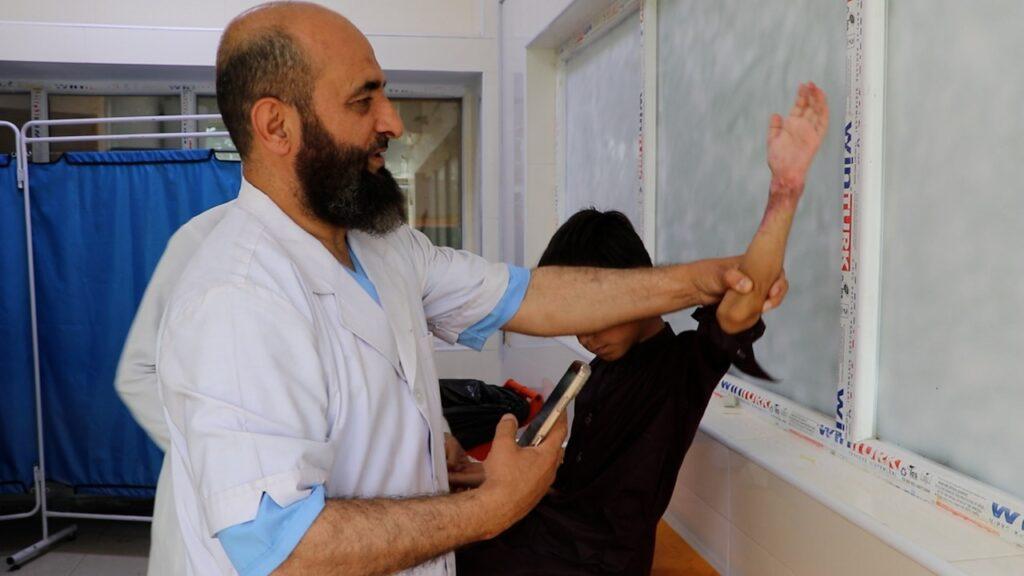
This year, Dr. Habib-ur-Rahman Qasim, a paediatric surgeon and head of the Paediatric Burns Surgery Department at Indira Gandhi Children’s Hospital in Kabul, was among the recipients of the award.
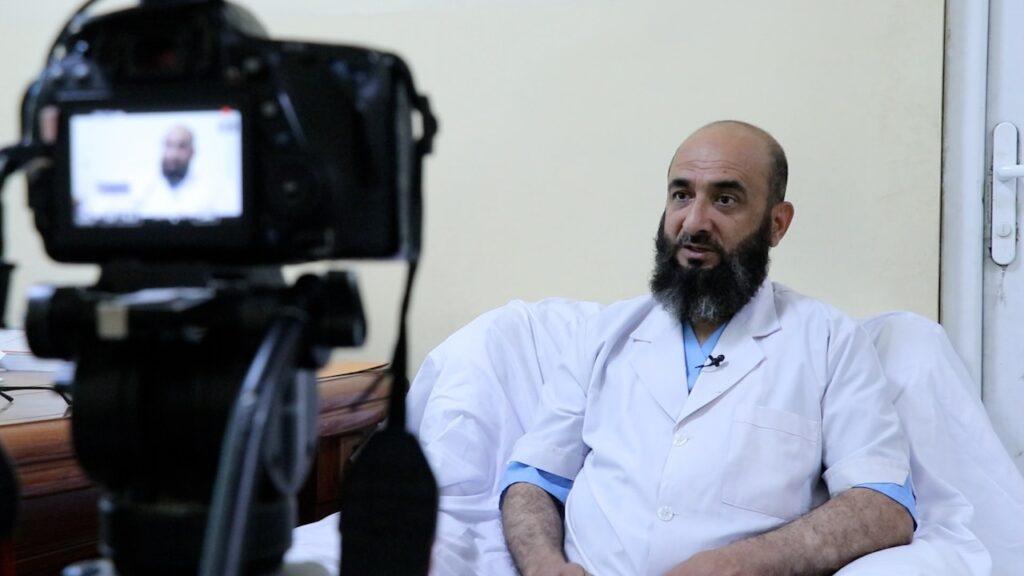
Speaking to Pajhwok Afghan News, Dr. Qasim said he attended the workshop as Afghanistan’s representative alongside more than 300 specialists from different countries.
He said he received the ACE certificate in recognition of his successful use of fish-skin grafts in treating burn patients.
Five-year-old child treated at Indira Gandhi Children’s Hospital
According to Dr. Qasim, the case that attracted significant attention at the workshop involved a five-year-old child from Farah province who suffered severe burns and a widespread infection before being successfully treated at Indira Gandhi Children’s Hospital using fish-skin grafting.
He said the child was admitted to the hospital on September 24, 2025, with burns covering around 50 percent of his body. The patient had sustained extensive third-degree burns, while large areas of his body had turned black due to a severe infection.
“When the child was brought to us, he was in a critical condition,” Dr. Qasim recalled. “We immediately started treatment and intensive care. Our first priority was to stabilise his overall condition before carrying out surgery.”
He explained that during the initial phase of treatment, damaged tissue and burned skin were removed. The child was also suffering from a serious infection that is difficult to manage even in advanced healthcare systems, but the medical team succeeded in controlling it.
After the child’s condition improved and consent was obtained from his guardian, doctors prepared for surgery and applied the fish-skin graft for the first time.
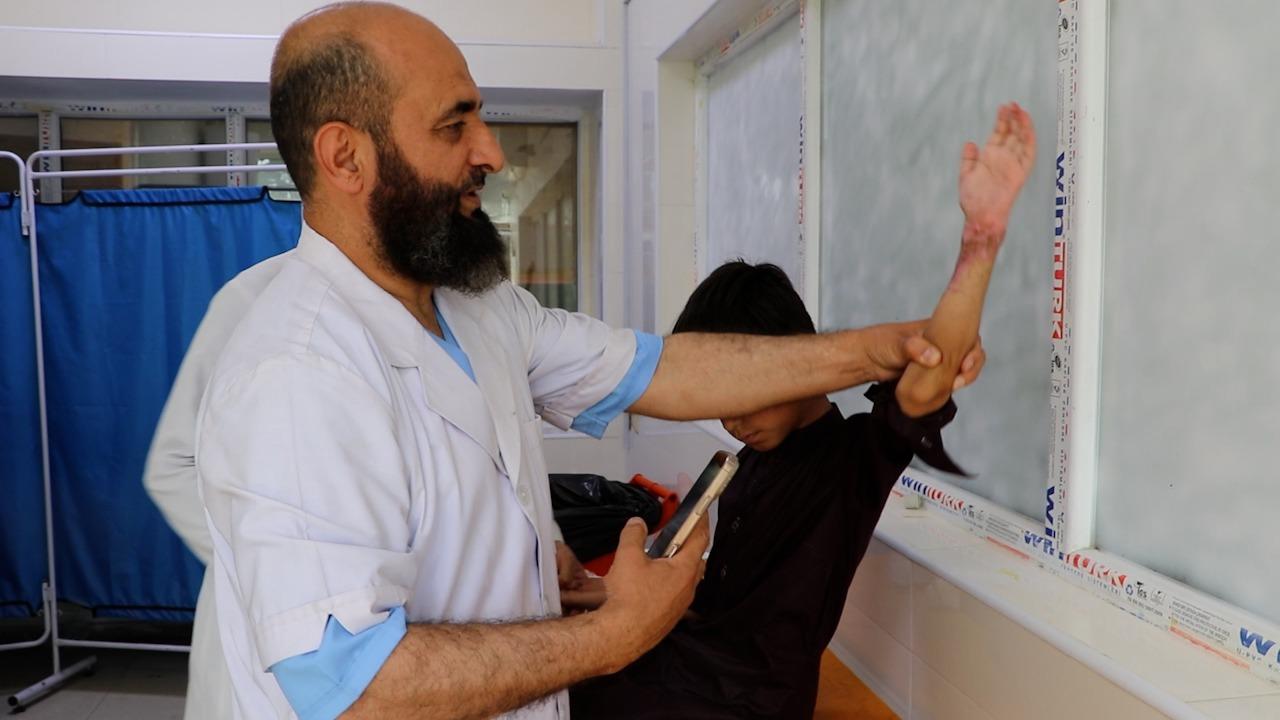
“Five days later, when we changed the dressing, the child was doing well, eating normally, and we were even able to carry out the procedure without anaesthesia,” he said. “We talked with him during the dressing change and, fortunately, he experienced very little pain. Seeing his recovery was extremely encouraging for the entire team.”
Dr. Qasim added that significant improvement was observed after 12 days, and the child eventually completed treatment and was discharged in good health.
He said the patient had experienced no side effects or complications following the procedure.
“I can proudly say that the entire treatment process took only five weeks at Indira Gandhi Children’s Hospital,” he said. “Even in highly developed countries, including Europe and the United States, similar cases often require a similar or longer recovery period.”
Father praises treatment
Agha Mohammad, the father of the child, Hakimullah, told Pajhwok by telephone that his son suffered severe burns after falling into a fire made from firewood collected for winter use.
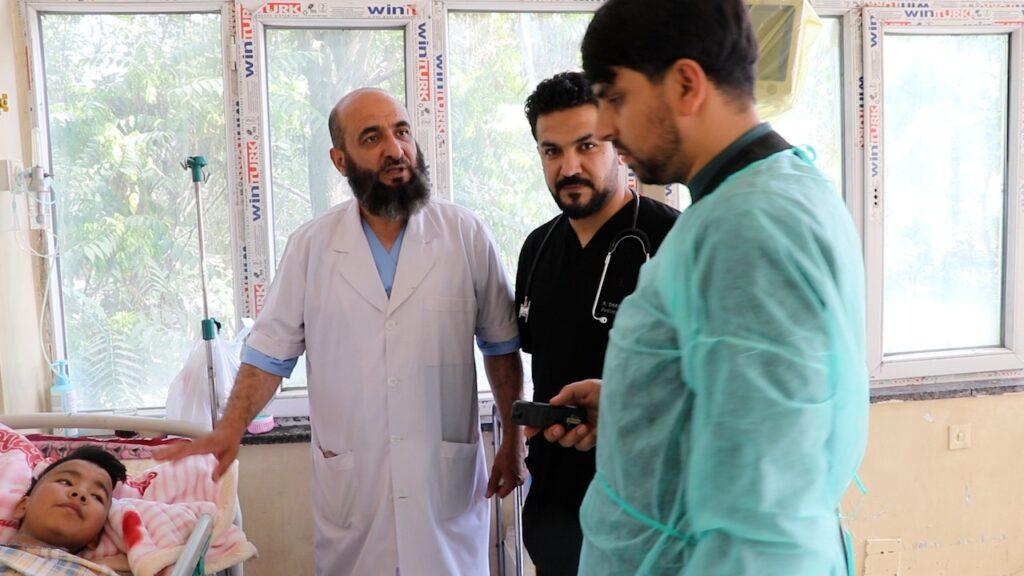
He said the child was transferred to Indira Gandhi Children’s Hospital in Kabul, where he underwent five operations under the supervision of Dr. Qasim and eventually made a full recovery.
Expressing satisfaction with the hospital’s services, Agha Mohammad urged parents to remain more careful and protect children from similar accidents.
He also thanked Dr. Qasim and the staff of Indira Gandhi Children’s Hospital for their efforts.
Efforts to improve burn treatment services
Dr. Qasim acknowledged that Afghanistan’s healthcare facilities face major resource limitations compared to hospitals in Europe and the United States.
Despite these challenges, he said efforts are being made to ensure patients receive treatment inside the country, reducing the need for medical travel abroad.
According to him, the fish skin used in burn treatment is supplied by Iceland, while part of the technical support comes from the University of Zurich.
He added that international cooperation in recent years has helped Indira Gandhi Children’s Hospital establish long-term partnerships with several recognised medical centres in Europe and North America.
Dr. Qasim said Iceland recently donated $100,000 to the hospital and provided a medical device worth around $7,000, which he believes will help expand and improve healthcare services.
He identified delayed referrals as one of the biggest challenges in burn treatment, explaining that many patients from remote provinces arrive at specialist centres 10 to 15 days after suffering injuries, increasing the risk of death or permanent disability.
He also highlighted shortages of hospital beds, weak coordination between provincial health facilities and specialist centres, and a lack of trained medical personnel as major obstacles.
Currently, the hospital’s burns department has only two specialist doctors, five trainee doctors and around 20 nurses. To address this shortage, a specialist training programme has been launched to strengthen professional capacity.
Dr. Qasim called on the Ministry of Public Health (MoPH) to pay greater attention to burn care, noting that such patients require specialised treatment, nutritional support and long-term medical follow-up.
He stressed that many families cannot afford treatment costs and that additional support would significantly reduce their burden.
He dedicated the award to his colleagues, praising their commitment to treating patients despite limited resources.
“Our dream is that one day people will have complete trust in their doctors and that stronger relationships based on confidence and mutual respect will develop between the public and healthcare workers,” he said.
A moving personal moment
Dr. Qasim also shared one of the most emotional moments of the event.
“After I finished my presentation and received the certificate and flowers, I was looking for a quiet place to call my mother and tell her that I had won the award,” he said.
“Then suddenly, I remembered that my mother had passed away 13 years ago. Until that moment, I had completely forgotten.”
kk/sa