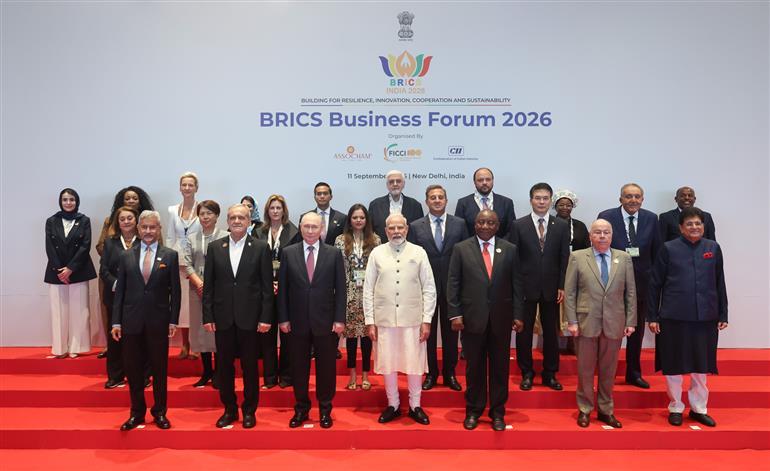

KABUL (Pajhwok): Leaders of the BRICS countries, at a summit in New Delhi, expressed concern over the continued escalation of tensions in the Middle East, called for restraint and the resolution of disputes through dialogue and diplomacy, and declared their opposition to unilateral coercive measures that are contrary to international law.
The 18th BRICS Summit, hosted by India, is being held in New Delhi on Saturday and Sunday, September 12 and 13.
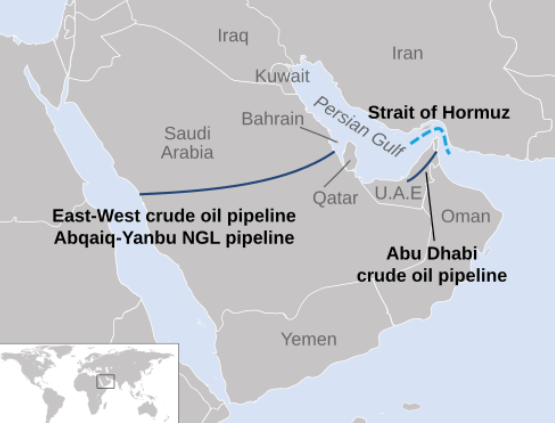
According to the “New Delhi Declaration,” released on the first day of the summit, BRICS leaders said they were deeply concerned about the continued escalation of tensions in the Middle East and West Asia.
They called on all parties to exercise maximum restraint and refrain from actions that could further worsen the situation.
The declaration emphasizes the protection of civilians and civilian infrastructure in accordance with the UN Charter, including respect for the sovereignty and territorial integrity of states.
BRICS leaders also called for increased efforts through dialogue and diplomacy to reach a lasting understanding that would contribute to sustainable peace, security, and stability in the region.
The declaration also stresses the need for cooperation to maintain the normal flow of global trade, supply chains, and energy in accordance with international law.
Concerns over attacks on nuclear facilities
In another section of the declaration, BRICS countries expressed concern over “deliberate attacks” on civilian facilities and peaceful nuclear facilities that are under the full supervision of the International Atomic Energy Agency (IAEA).
The declaration states that such attacks violate international law and relevant IAEA resolutions.
BRICS leaders stressed that nuclear safeguards, security, and safety must always be respected, including during armed conflicts, so that people and the environment are protected from harm.
The Associated Press reported that this position was seen as an indirect criticism of U.S. and Israeli attacks on Iran’s nuclear facilities.
Iranian President Masoud Pezeshkian is also attending the BRICS summit in New Delhi.
Opposition to coercive measures and unilateral sanctions
BRICS leaders also condemned unilateral coercive measures that are contrary to international law.
According to the declaration, such measures, including economic and secondary sanctions, can have far-reaching consequences for the rights of people in targeted countries, including the rights to development, health, and food security, and can disproportionately affect poor and vulnerable populations.
BRICS called for the lifting of such unlawful measures and stressed that they undermine international law and the principles and objectives of the UN Charter.
The declaration states that BRICS countries oppose unilateral coercive measures that are contrary to international law and the UN Charter, including sanctions that have not been authorized by the UN Security Council and are inconsistent with international law.
Gaza and Palestine
In their declaration, BRICS leaders also expressed deep concern over the continuation of violence in Gaza despite the October 2025 ceasefire agreement.
They called for the preservation of the ceasefire and for full and unhindered humanitarian access to the Gaza Strip.
BRICS also called for an end to policies aimed at the forced displacement of Palestinians from the Gaza Strip and expressed concern over actions that could undermine the inalienable rights of the Palestinian people or legitimize or prolong the occupation.
The group reaffirmed its support for a two-state solution and again backed the establishment of an independent, sovereign, and viable Palestinian state within the internationally recognized 1967 borders, including the Gaza Strip and the West Bank, with East Jerusalem as its capital.
BRICS also supported full membership for Palestine in the United Nations.
Reform of the UN Security Council
In another section of the declaration, BRICS leaders reiterated their support for comprehensive reform of the United Nations, including the Security Council, and called for greater representation of developing countries from Africa, Asia, and Latin America.
The declaration states that reform of the Security Council should strengthen the voice of the “Global South.”
China and Russia, as two permanent members of the Security Council, once again supported Brazil and India’s calls for a greater role in the United Nations, including the Security Council.
The Associated Press reported that Indian Prime Minister Narendra Modi said at the summit that BRICS is “not against anyone” and that countries of the Global South should move from being “rule-takers” to “rule-shapers.”
BRICS consists of Brazil, Russia, India, China, South Africa, Egypt, Ethiopia, Iran, the United Arab Emirates, Saudi Arabia, and Indonesia.
sa