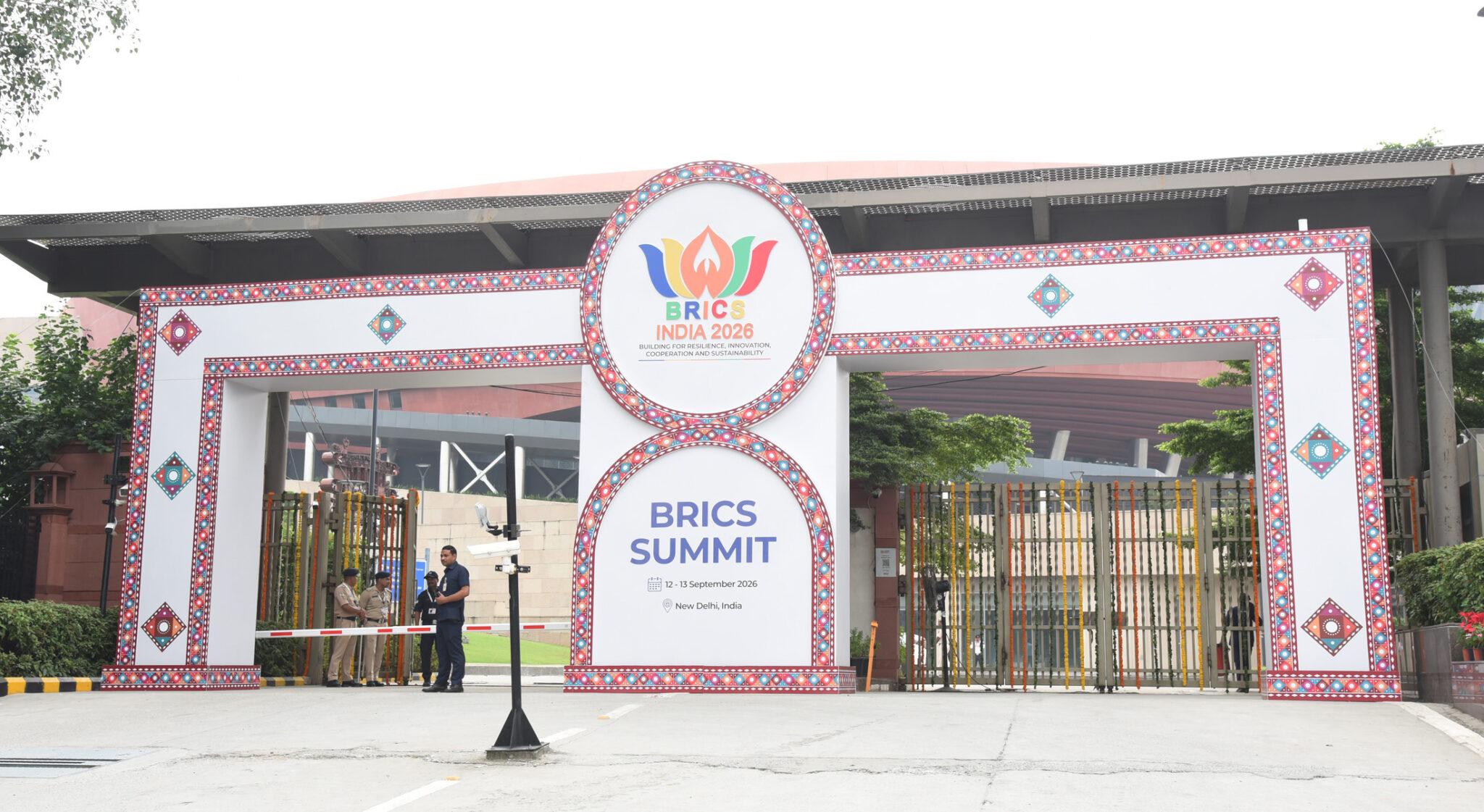
KABUL (Pajhwok): Leaders of BRICS member countries have gathered in New Delhi for a two-day summit of the group, being held amid the ongoing Ukraine war, conflicts in the Middle East and rising tensions between the United States and China, with economic issues and global developments among the key topics on the agenda.
According to official information from the Indian government, the country is hosting the 18th BRICS summit in New Delhi on September 12 and 13.
India’s BRICS presidency theme for 2026 is “Building Resilience, Innovation, Cooperation and Sustainability”, with development, finance, technology, trade and cooperation among member countries listed as key areas of focus.
The Associated Press reported that Indian Prime Minister Narendra Modi is hosting BRICS leaders in New Delhi, including Russian President Vladimir Putin, Chinese President Xi Jinping and Iranian President Masoud Pezeshkian.
It said the Ukraine war, conflicts in the Middle East and rising tensions between the US and China were testing the ability of BRICS members to find common positions at a time when the countries have differing geopolitical interests on some issues.
It added BRICS leaders are expected to discuss economic cooperation, energy, food security, technology, supply chains and reforms to global institutions.
BRICS’ demographic, economic weight
According to official Indian government information, BRICS now has 11 members: Brazil, Russia, India, China, South Africa, Egypt, Ethiopia, Iran, the United Arab Emirates, Saudi Arabia and Indonesia.
The Indian government’s Press Information Bureau said these countries collectively account for about 49.5 percent of the world’s population, 40 percent of global gross domestic product and 26 percent of global trade.
The report noted BRICS countries are home to nearly half of the world’s population and account for a significant share of the global economy. The group has in recent years called for a greater role for developing countries in global institutions, according to the news agency.
However, the agency noted that differences in geopolitical interests among members could make it difficult for them to reach common positions on some global issues.
National currencies, reducing reliance on the dollar
Reducing reliance on the US dollar and increasing the use of national currencies in trade among BRICS members have received growing attention in recent years.
Reuters reported in November 2024 that US President Donald Trump had urged BRICS countries to commit to not creating a new BRICS currency or supporting another currency to replace the US dollar. He warned that otherwise they could face 100 percent US tariffs.
The news agency reported again in February 2025 that Trump had repeated his threat of 100 percent tariffs against BRICS members if they took action against the dollar’s position.
Reuters also reported in February 2025, citing four Brazilian government officials, that Brazil’s presidency of BRICS that year did not plan to pursue the creation of a common currency for the group. Instead, it was focusing on facilitating international payments using national currencies. According to the sources, the idea of a common currency had previously been raised by Brazilian President Luiz Inacio Lula da Silva and others, but had not reached the stage of technical discussions.
The issue of expanding the use of national currencies has also received attention ahead of this year’s summit. India’s Press Information Bureau reported yesterday, citing Commerce and Industry Minister Piyush Goyal, that he had urged BRICS members and partner countries to further link their payment systems and expand trade using local currencies.
The discussion about creating a common BRICS currency has not been limited to media reports in recent years. In 2023, Brazilian President Luiz Inacio Lula da Silva publicly proposed creating a common currency for trade and investment among BRICS members.
Overall, available evidence shows that reducing reliance on the dollar, and even the idea of a common BRICS currency, have been seriously discussed in recent years. However, recent practical measures and official positions have focused more on expanding the use of national currencies, linking payment systems and facilitating trade among members.
Therefore, how the issue is reflected at the New Delhi summit and in its final declaration could indicate how close BRICS members have come to a common position on the matter.
India’s position at the BRICS summit
The Associated Press reported that India is hosting the BRICS summit while seeking to maintain its strategic relations with Russia and Iran, while simultaneously expanding economic, defence and technological cooperation with the United States and Europe.
Ahead of the summit, Indian Prime Minister Narendra Modi held separate meetings with Russian President Vladimir Putin and Iranian President Masoud Pezeshkian. The Indian prime minister’s office said that, in addition to bilateral relations, regional and global developments were discussed during the meetings.
Challenge of coordination among members
The expansion of BRICS has increased the group’s number of members as well as its demographic and economic weight. However, the Associated Press reported that differences in the members’ geopolitical interests could make it difficult to reach common positions on some issues.
The news agency identified the Ukraine war, conflicts in the Middle East and tensions between the US and China as issues that are testing the members’ ability to find common ground.
Meanwhile, official information from the Indian government shows that this year’s BRICS presidency is focused on cooperation in areas including development, trade, technology, finance and reform of the multilateral system.
Therefore, the final declaration of the New Delhi summit could show the extent to which member countries have reached common positions on economic issues and some major regional and global matters.
kk