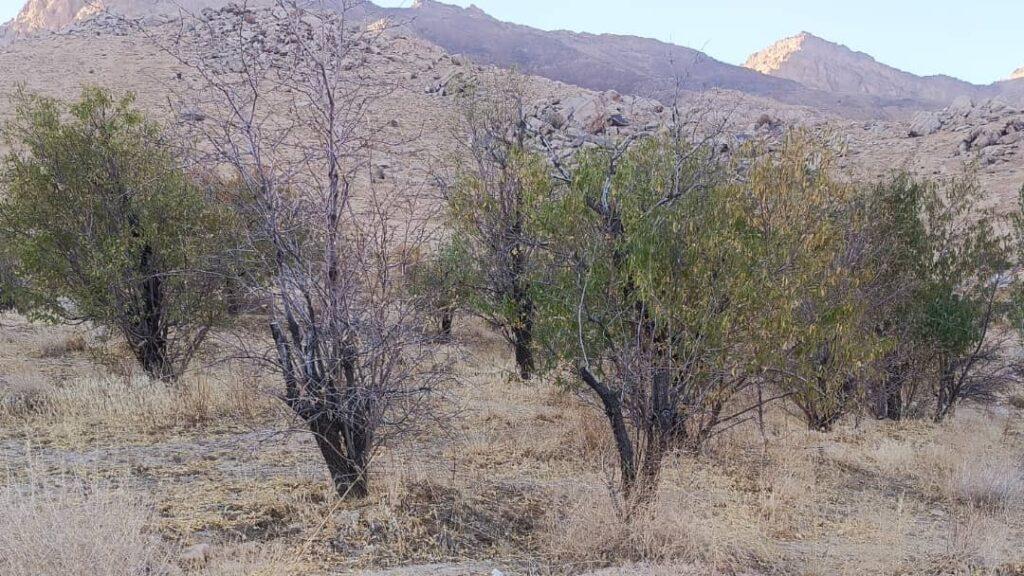

NEILI (Pajhwok): Almond growers in Daikundi say recurring droughts and climate change have significantly reduced almond production in the central province in recent years, threatening the livelihoods of families dependent on the crop.
Meanwhile, the Department of Agriculture, Irrigation and Livestock says almond production has declined by around 20 percent this year.
Officials say Daikundi almonds are among the country’s most famous and high-quality almonds, with a significant part of the province’s economy dependent on the crop’s yield.
Drought has dealt another blow to our economy: Farmers
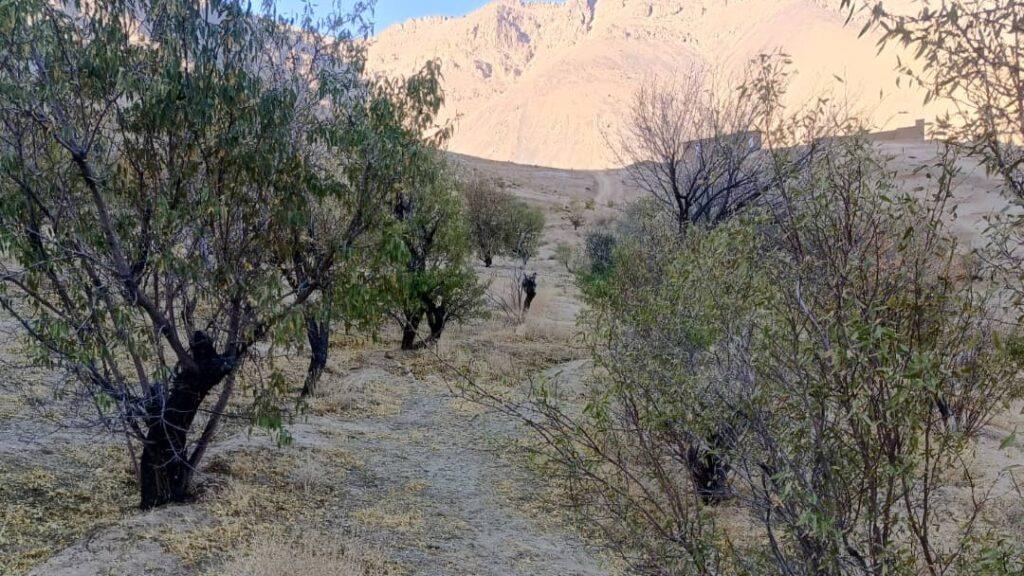
Akbar Joya, an almond grower in Miramor district of the province, told Pajhwok Afghan News that almond production had declined in recent years due to recurring droughts and natural pests.
“Our problems have become very serious. There is no water, the almond trees do not bear fruit, and some of our trees have dried up. We cut them down and use them as firewood. Our lives depended on almonds, but things have become very difficult,” he said.
He recalled that in previous years, he had harvested more than 1,050 kilogrammes of almonds and sold them at a good price, covering a significant portion of his household expenses.
“It has been several years since the drought intensified. Our old almond trees no longer produce properly. From all those almond trees, we can hardly get close to 140kg,” he added.
Akbar stressed that if the situation continued and almond yields did not improve, almond growers would be forced to leave their homes and the province in search of work and a livelihood.
Saleh Mohammad, another almond grower in Daikundi, said nearly 70 percent of his family’s needs had previously been met through almond production, but declining yields had made life increasingly difficult for them.
He urged the agriculture department and partner organisations to introduce modern irrigation systems, particularly drip irrigation, to help farmers protect their trees from drying up.
“If the situation continues like this, all our trees will be destroyed in the next few years, and we will be forced to leave the country,” he warned.
Mohammad Ayoub, another almond grower in Daikundi, expressed a similar concern.
“Four or five years ago, I harvested up to 1,400kg of almonds from my trees and sold them at a very good price. But under the current drought conditions, we can hardly harvest even 350kg in a year,” he said.
He explained that in the past, the proceeds from selling almonds covered almost all of his family’s annual expenses, but production had now declined considerably.
The grower pointed out that the drought had affected all of their agricultural activities. In the past, he could meet nearly all of his family’s needs by selling almonds and was satisfied with the income, but now he could barely afford to buy a few bags of flour and oil.
New almond varieties offer hope for Daikundi farmers
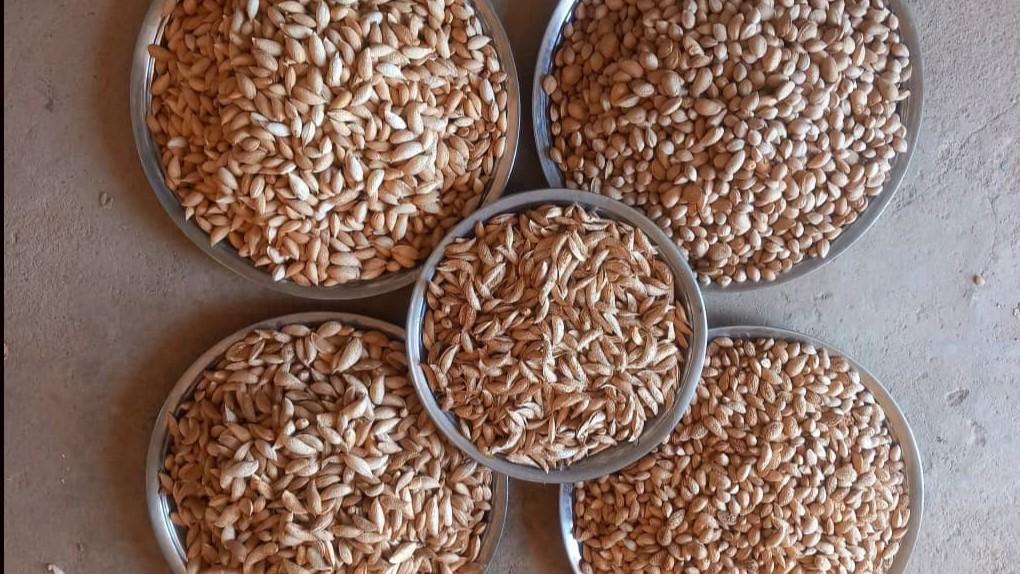
Despite these challenges, farmers believe that new almond varieties developed in recent years could help reverse the decline in production in the coming years.
Akbar Joya, another grower, explained that over the past two years, amid the drying of almond trees and water shortages, farmers had turned to cultivating new almond varieties with high market value.
He identified Rasa, Qandozi, Dogoni, Amrikai, Setarbai and Kafmal as among the new almond varieties that have become popular in recent years and require less water.
Asif Hamdard, another grower in the province, said: “The new almond varieties have become very popular among people, and this year I harvested a small amount from them.”
He noted that Rasa almonds currently sell for 2,250 afghanis per seer, while other varieties are sold at slightly lower prices in the market. Meanwhile, Sangaki almonds, whose trees are drying up, are traded for less than 1,000 afghanis per seer.
He added: “Although it is still early and every farmer may have harvested less than one seer, we hear from some areas that some farmers have earned several hundred thousand afghanis from Rasa almonds.”
Drought threatens Daikundi almonds; what is the solution?
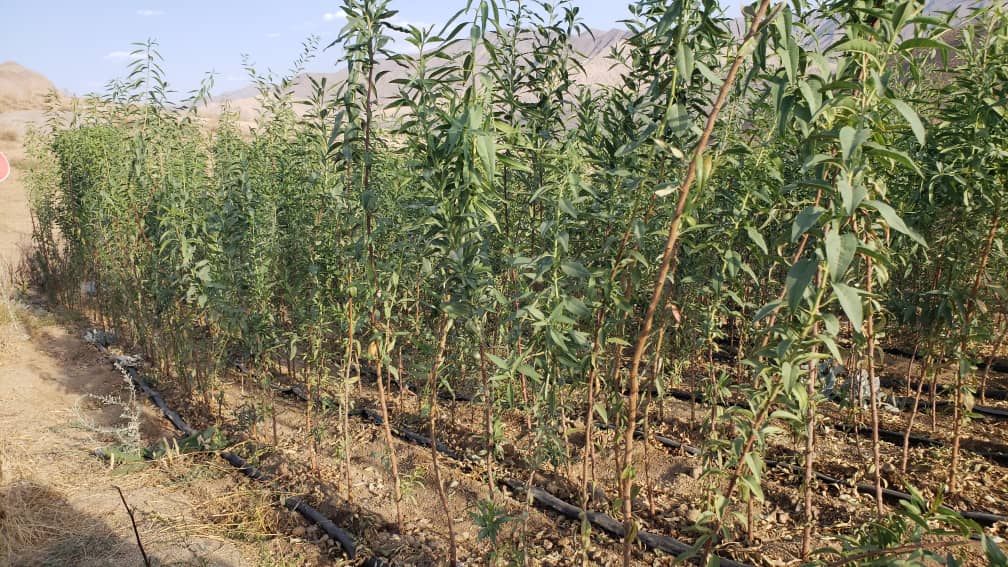
Aziz Sharifi, an agricultural expert in Daikundi, explained that drought had affected almond production both quantitatively and qualitatively, dealing a significant blow to farmers’ livelihoods.
Referring to the high quality and taste of Daikundi almonds, he said: “Although almond trees are very resistant to water shortages, the drought in recent years has been very severe, and proper irrigation has not been carried out. Professionally, if irrigation is not done properly, the tree first fails to blossom, and then the kernel becomes lighter. If a tree does not receive enough water in one year, the effects continue for several years, and it does not produce properly. If trees do not receive enough water, they become weak and are also more vulnerable to pests.”
Sharifi pointed out that despite these challenges, Daikundi almonds are exported by domestic and foreign traders to various countries, with India purchasing more than 70 percent of Daikundi’s almonds.
Highlighting the economic importance of the crop, he recommended: “One of the important solutions that both the government and farmers should consider
kk/sa