



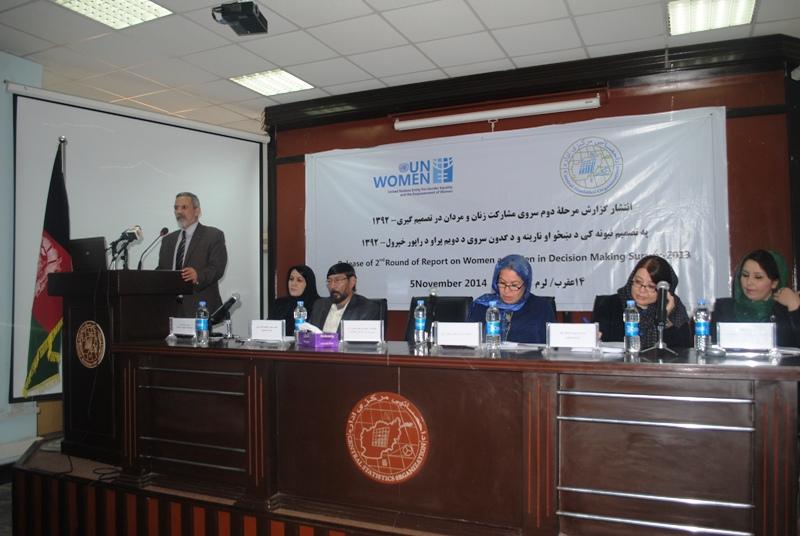

KABUL‘s participation in the decision-making process had increased by 20 percent as compared with statistics in 2005.
CSO chief Sher Mohammad Jami told reporters in Kabul they had interviewed 6,177 decision-makers in public and private organisations. Of them, 5,696 belong to the public sector, 249 to the private sector and 232 to NGOs.
The survey found 10 females among every 100 decision-makers, compared with eight in the 2005 survey. He said women had greater participation in decision-making in the central zone than in other zones of the country.
The survey said every decision-making woman had a bachelor’s degree or higher qualifications. It revealed among every 10 women, nine understood English and computer skills.
It linked the women’s lower representation in the decision-making to responsibilities at home, rearing children and different barriers to their education.
Rahima Zarifi, planning department head at the Ministry of Women’s Affairs, said although the study showed women’s role in decision-making had increased, more work was needed to improve their situation.
She said women proved good administrators because they had experience of running a family. She added her ministry had been working on how to increase awareness among females about their rights and social issues.
nh/ma/mud


GET IN TOUCH
NEWSLETTER
SUGGEST A STORY
PAJHWOK MOBILE APP