



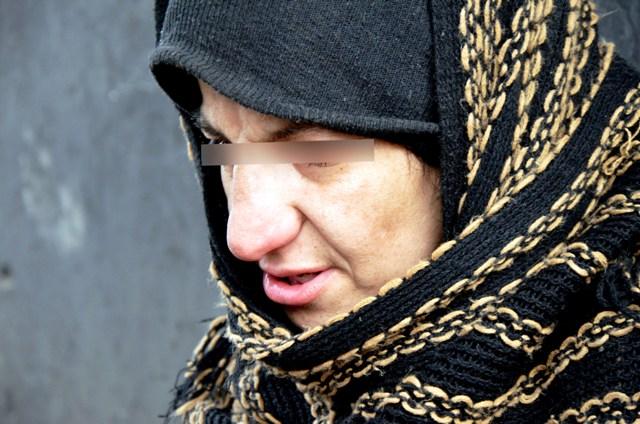

KABUL (Pajhwok): An Iranian woman, currently living alongside male drug addicts under a bridge in Kabul, has accused her husband and in-laws of pushing her into drug addiction.
In a state of discomfort, the woman alleged that her in-laws deceitfully gave her opium to relieve the pain that resulted from the injuries she suffered in a traffic accident. Gradually, she became dependent on the drug.
.jpg)
According to recent media reports, two to four addicts die in Pul-i-Sukhta area daily in the freezing Kabul winter.
Hailing from the Iran’s north-western Qazvin province, Laila Qambari said her mother was Dari-speaking and her father hailed from the Turkic Qazvin tribe. After passing 12th standard with very good grades, she got admission in the Imam recitation competition. She has also received a certificate from an Iranian computer academy.
Physical condition
Qambari lives in an extremely dirty surrounding and the stench emanating from the filth all around makes almost impossible to breathe without wearing a mask. Resigned to fate and compelled to live in such extreme conditions, the 30-year-old but seemingly 50-plus is suffering from hearing impairment.
She came out of the bridge, looking pale, frail and malnourished, with no teeth in her lower jaw. She leaned against the wall and agreed for an interview with Pajhwok Afghan News scribe.
Qambari married a young Afghan from central Daikundi province some 12-year ago. After two years of marriage she decided to come to Afghanistan to meet her in-laws.
On her arrival in Daikundi, a foreign health NGO offered her a job, which she joined with her in-laws permission.
Unable to speak with ease with her hands shivering because of weakness, Qambari said she worked as deputy district field coordinator (DDFC) with UNAMA in 2010, as trainer for midwives with MPO and in charge of a 50-bed hospital run by a French organization.
“I am too tired to remember how many other offices I have worked for,” said Qambari, with fatigue writ large on her face. Reminiscing the lost bright past, her voice choked and tears rolling down her eyes, she broke down.
Involuntary addiction through deceit
After half an hour of silence, she started sharing her journey into deep dark valley of addiction. The woman recalled she was suffered a spinal cord injury in a traffic accident five years ago in Shahristan district.
She recalled her mother-in-law giving her a cup of tea with two small black pills in it saying that it is a medicine that will soothe the pain and cure the spinal cord injury that she suffered in a traffic accident in Afghanistan. Unaware of the fact that it was not medicine but raw opium that she was given as a cure.
Qambari was annoyed with her in-laws and husband, saying they did not take her to a physician for treatment and instead gave her opium for six months. Meanwhile, during that period, she also got pregnant and was brought to Kabul for medical checkup.
After her examination, the doctor found her irresponsive to anesthesia and found her consuming opium for six months. Subsequently, Qambari lost her baby to a higher anesthesia dose and excessive use of medicine.
“I spent my entire life receiving religious education, strived to become a doctor and it pains me a lot to realize that I am a drug addict now.”
Qambari was angry with her in-laws and husband for making her an addict. She said that “My husband was a drug addict in the past and had been using opium openly at home.”
Following her discharge from the hospital and no care at home, she came to know that her husband was arrested by police in Wasilabad area for drug peddling and subsequently sentenced to two years in jail.
In the absence of her husband and support from her in-laws, she was forced to live on streets and finally finding her way to the ghetto called Pul-i-Sukhta, west of Kabul amidst hordes of addicts taking drugs and living in the most depraved conditions.
Kabul health officials have relocated a number of addicts to secure areas. But there are still hundreds of women and men addicts living under the bridge. Many of whom are faced with a looming death.
Asked why she did not ask her family in Iran for help, she replied: “I won’t go to Iran to earn a bad name for my parents. I expected help from my in-laws but they too forsake me.”
Asked if she ever intended to quit addiction, Qambari replied: “Once I was admitted to a rehabilitation centre, however, after being discharged and without any support system available to me, I once again found my way amongst other addicts under Pul-i-Sukhta where I am subject to constant harassment.”
Lamenting her bright past and current grim realities, she sighed: “Earlier I would treat thousands of people; I had a salary of $7,000 and paid for marriages of my husband’s brothers. But now there is no one coming to my rescue. I am all alone in this hour of anguish.”
Laila, who was an educated and a successful woman with a bright future is now a recluse and forced to live a doomed life under Pul-e Sukhta, is made an involuntary drug addict by her husband through deceit. Laila, who once soared up in the limitless skies, is now a fallen sparrow with bruised wings deep under Pul-e Sukhta.
Despite placed in grim present, she did indicate her zeal for a better future by saying that “I want the government to decide my husband’s case and send me to a rehabilitation centre for cure. As I am an educated woman, I could be employed as a nurse or a computer instructor in Afghanistan.”
Iranian embassy: We will facilitate her honourable return to Iran
A spokesman for the Iranian embassy in Kabul said that if Qambari proved her Iranian citizenship and desired to return to her home country, we would facilitate her treatment and honourable return.
He said the embassy had informed all Iranians living in Afghanistan to contact the diplomatic missions for resolving their problems and provide help.
Ministry of Counter-Narcotics: 3.5 million drug addicts
According to the Ministry of Counter-Narcotics, currently 3.5 million people are addicted to drugs, including 2.9 percent women addicts.
The Ministry of Counter-Narcotics said Qambari might be one of the addicted women who were not present in the area during a campaign for rehabilitating such individuals living on Kabul’s streets.
Mohammad Hanif Danishyar, the ministry’s spokesman, said nearly 116 rehabilitation centres existed all over the country, which had the capacity to take care of more than 40,000 addicts — 30 percent of women and children.
In addition, a 150-bed rehabilitation centre has been established to treat addicted women and children, apprehended from streets. He expressed concern over the relapse of rehabilitated people into addiction, citing their non-acceptance by relatives, unemployment, poverty and a low level of awareness as main reasons.
However, he said, the ministry concerned was trying to promote awareness among the people through mosques and schools about the need for the rehabilitation of drug-dependent individuals.
Local NGOs: Family support vital in rehabilitation
Nejat Centre, a local NGO operating over past 26 years to treat addicts, providing vocational training to addicts and their families and spreading awareness about connect between drugs and AIDS.
Head of Nejat Centre, Qasim Zamani, noted that the drug addicts’ situation worsens during winters, saying that “there have been increased number of deaths of women drug addicts living in the Pul-i-Sukhta vicinity due to severe cold while many more are facing an impending death.”
He said NGOs and government facilities were treating only 3-5 percent of addicts and the rest remain deprived of rehabilitation services. He noted that public and family support was vital in dealing with this menace. In the absence of their support, he said, no programme would yield positive results.
The families, rejecting rehabilitated women, are regularly contacted by Nejat. The women who are not accepted by their families are referred to certain organisations, which facilitate them in gaining employment.
Addiction deadlier than venomous snake – AIHRC
The Afghanistan Independent Human Rights Commission (AIHRC) dubbed addiction as a poisonous snake, saying a discernible rise is evidenced in the number of women drug addicts. The female addicts may face sexual assaults, violence and contract HIV.
Suraya Subhrang, an AIHRC member, termed the current situation of addicts as worrying, saying that they are deprived of basic human rights. The government should pay heed to their plight and prevent the menace.
She expressed concern over the lack of rehabilitation facilities in the country. “At provincial rehab centres, there are no wards specified for women addicts. They are crowded into a room with male addicts.”
Critical of lack of focused strategy on the part of government towards post-rehabilitation support to individuals, She noted that “lack of post rehabilitation support drives the cured individuals to fall prey to their drug habits again”.
Subhrang said she had suggested the government of strategies for eradicating the scourge but, unfortunately, the authorities had so far taken no serious step in this regard.
Afghanistan’s Law to Combat Trafficking in Persons considers abuse of vulnerability or need of a person through deceit a case of Human trafficking which is a punishable offence as per provisions of this law as well as under Afghanistan penal code.
The drug issue and the increasing number of addicts are considered a huge challenge, just like terrorism. There is also an international dimension to the problem, which should also be dealt with internationally.
nh/sns/mud

GET IN TOUCH
NEWSLETTER
SUGGEST A STORY
PAJHWOK MOBILE APP