KABUL (Pajhwok): The blind are worried about the spread of the coronavirus, saying they are greater risk than others because they have not been provided with guidelines on how to stay safe from the disease.
The Ministry of Public Health (MoPH) has published a number of guidelines following the breakout of the first wave of the coronavirus in the country.
In its messages, the ministry underlined handwashing several times with soap, using masks, social/physical distancing, and avoiding participation in meetings and gatherings. The instructions have been prepared in print, video and audio formats.
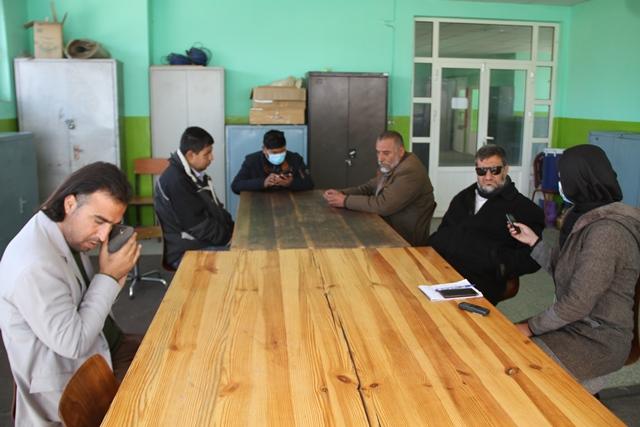
But some blind people told Pajhwok Afghan News they were at greater risk of contracting the coronavirus than others because of their disability. Special guidelines must be prepared for them, the visually-impaired individuals demanded.
Hamayun Azizi, teacher at a Kabul school for the blind, told Pajhwok the coronavirus was an unknown phenomenon that emerged for the first time in China. The deadly virus had shocked the world, he said.
The 31-year-old teacher added he had heard little about the pandemic from the media and the people around him. The awareness packages they have are general. Special guidelines must be developed for the blind, he stressed.
Azizi claimed sharing with students everything he heard from media, friends and relatives. But special awareness tools for the blind about the pandemic were yet to be produced, he deplored.
The teacher characterised the coronavirus as a highly confusing and dangerous disease. “We have been trying our best to avoid contracting Covid-19. Despite having little facilities, believe me, we are wondering how to protect ourselves.”
He called the second wave of the virus a matter of concern and asked MoPH to arrange special guidelines for this vulnerable group of the population as soon as possible.
Abdul Hai Haqparast, head of the Islamic Studies department at the blind school, said the coronavirus was a contagious phenomenon, worrying everyone, including the blind.
“Since the outbreak of the Covid-19,we have been hearing about the same few messages that have been made available to all people. For those of us who are more vulnerable and cannot follow these guidelines, a special guide should have been created. The guidelines are absolutely necessary during the second wave of the virus.”
He saw little possibility of protection, saying if a person — exercising care — could protect himself/herself from this deadly disease to some extent.
Haqparast called on MoPH to increase awareness programmes for the blind so they could protect themselves from the disease and inform students about it.
Omaid Abdul Ghayas, another teacher at this school, said: “Physically-fit people can stay safe from the virus because they can see and do anything without touching them. Contrarily, the blind do everything based on their sense of touch.”
As a consequence, the blind are worried that the number of positive cases would increase among them during the second wave. They urged MoPH to create a special guide for them.
Khwaja Abdul Kabir Sidiqi, headmaster of the blind school, told Pajhwok there were 220 students, 50 teachers and 25 other workers at the school.
He recalled during the first wave of the coronavirus, 25 students and teachers had been infected with Covid-19. At least three of them had died.
Other visually-impaired people also voiced their concerns at the arrival of the second wave of the coronavirus. They called for MoPH to give them special guidelines on protecting themselves from the deadly disease.
Massouma Jafari, deputy spokesperson for MoPH, told Pajhwok health guidelines for the blind had been prepared in braille and sent to the blind schools.
She pointed out that the blind were able to hear, and like other healthy people, they could also get information about the coronavirus through TV and radio.
Jafari said the ministry recently set up a committee to control the situation and raise awareness about the second wave of Covid-19.
She said the committee had been tasked with promoting awareness about ways of controlling the pandemic among people from all walks of life.
Official figures indicate there are more than 500,000 blind people in Afghanistan. At least 25,000 of them, aged about 50, have lost their vision due to health problems and lack of awareness.
 “This Investigative Report was produced with the financial support of the European Union. Its contents are the sole responsibility of Pajhwok and do not necessarily reflect the views of the European Union.”