Language

Major economic policy on the cards, says Nazari

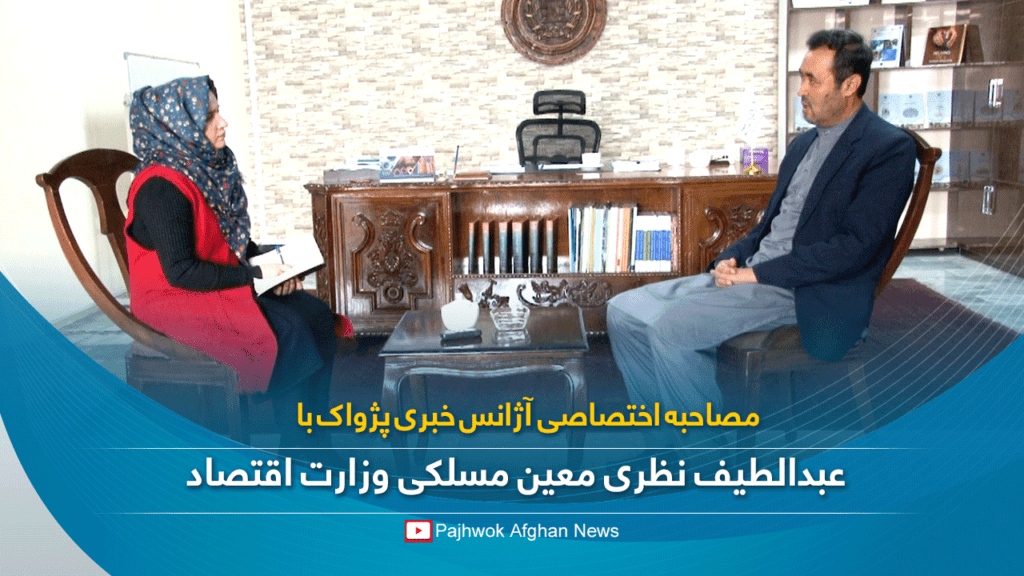
KABUL (Pajhwok): Deputy economy minister says the ministry is developing a major economic policy that would bring about positive changes to the country’s financial situation when approved.

Abdul LatifNazari in an interview with Pajhwok Afghan News said that the ministry was developing a national economic policy and charter.

Completion and approval of the policy would bring positive changes to the country’s economic situation, he said, adding that the economy of Afghanistan was intertwined with the economy of the region and world and government officials worked day and night for economic development of the country.

As a result of restless efforts of the government, the ministry formulated an economic policy within two months, a task that could take a year in normal process, he said.

Nazari said that the aim of the policy is to move Afghanistan's economic situation towards self-sufficiency in the next five to 10 years and would help stabilize people’s economy even if there any changes come in the country.

"After the fall of the republic government, the economy of Afghanistan faced a number of challenges, but some opportunities also surfaced,” he said.

He added that the main challenge was the freezing of Afghan capital by the United States, and sanctions on the country by the US and some other countries.

For the past 20 years, Afghanistan's economy was depended on foreign aid and that was the reason behind the capital flight from the country in the early days of new administration, he said.

Foreigners destroyed radars and other facilities at Kabul airport, disrupting international flights and transportation system with Afghanistan when foreign forces were withdrawing from the country, he said.

About current opportunities, Nazari said that Afghanistan is currently governed without the presence of foreign forces and the country under the new administration is not in a position where others would decide for it.

Referring to Afghanistan's trade, agriculture, mining and other sectors, he said that if all sectors were managed in an effective way, it would lead to self-sufficiency of Afghanistan.

"After 20 years presence of foreigners in Afghanistan, we came to a conclusion that we can never achieve economic self-sufficiency with the help of others, unfortunately, in the last 20 years, with the presence of foreigners, no major projects could be implemented across the country, and not even electricity, which is a basic need of humans,” he said.

However, Nazari said the new government was currently working on how to generate electricity from domestic sources and meet basic needs of the country.

Increasing poverty is a major problem in Afghanistan, it is a legacy of the previous government which has both internal and external factors, he said.

Nazari said that Afghanistan received a large amount of foreign aid in the last two decades, but no infrastructure was built and there was no any program for economic development.

He said that when new administration was established, Afghanistan immediately faced with political pressures, sanctions and freezing assets which led to worsening poverty in the country.

He said that widespread corruption in the previous government led to capital flight from Afghanistan and the country faced a shortage of capital. This situation increased unemployment, which in return increased economic poverty, Nazari said.

Unfortunately, Afghanistan was not governed in a developing way in the past two decades, he said.

He assured that the world will gradually recognize the current government that would help the new administration promote the private sector and commerce on domestic and global markets.

About NGOs and foreign organizations in Afghanistan, Nazari said that about 2,000 various formal and informal institutions in the country have recently limited their activities.

However, he said that many of the NGOs now willing to resume their activities as many of them have already requested the government to renew their licenses.

Regarding the ministry's plans, he said that efforts are underway to make trade apolitical and not in the control of a single monopoly as in the past.

About the implementation of laws in the government administration, Nazari said that 80 percent of the previous laws are in effect and the sections that are in conflict with Sharia and national values ​​will be removed.

mds/ma

Related Topics

GET IN TOUCH

SUGGEST A STORY

Pajhwok is interested in your story suggestions. Please tell us your thoughts by clicking here.

PAJHWOK MOBILE APP

Download our mobile application to get the latest updates on your mobile phone. Read more