Language

Sustainable water management national obligation: Baradar
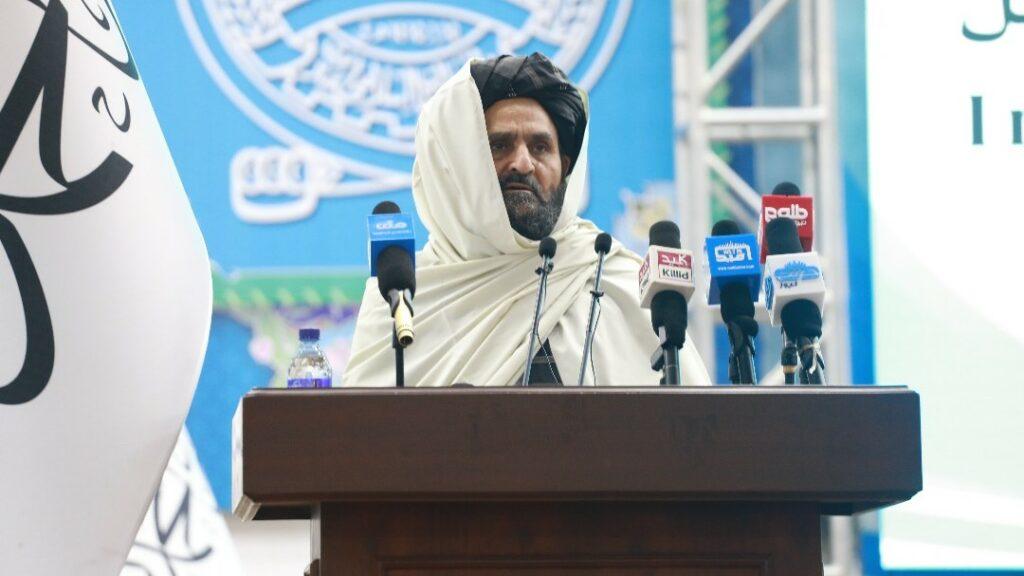
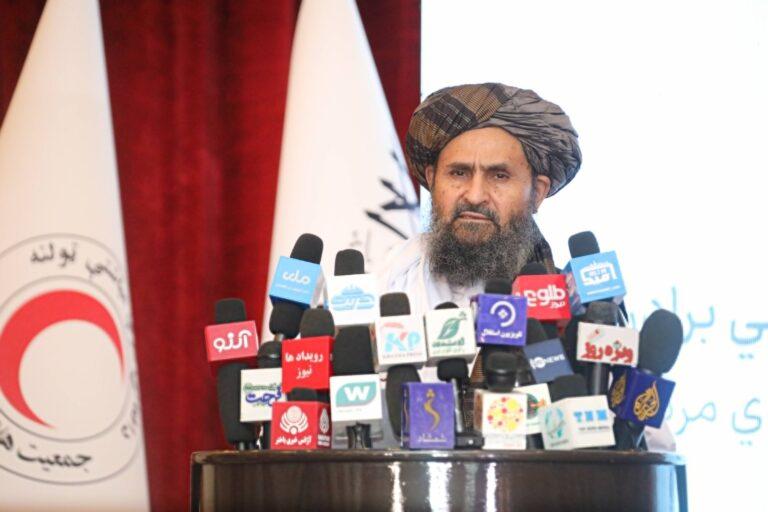
KABUL (Pajhwok): Deputy Prime Minister for Economic Affairs Mullah Abdul Ghani Baradar has emphasized the importance of water management, stating that Afghanistan possesses abundant water resources, which could not be managed professionally and nationally in modern history.

He made these remarks while addressing an ‘International Water Research Conference’ in Kabul on Monday.

The three-day conference, organized by the Ministry of Higher Education (MoHE) and Kabul Polytechnic University, commenced today at the Loya Jirga Tent in the capital, said a statement from Baradar’s office.

The event aims to discuss optimal water management, groundwater recharge, proper utilization of water resources, and prevention of water pollution.

The conference is attended by high-ranking government officials, professors from renowned international universities, envoys from international organisations, and both national and international experts in water management.

The statement also noted that 135 research papers would be presented during the conference.

Speaking at the event, Mullah Baradar described water as a priceless blessing from Allah Almighty, essential for the survival of humans, animals, and plants, as well as a key factor in a nation’s economic growth and development.

He stated: “As an Islamic society, our religion assigns us a religious duty to manage water resources properly. Additionally, in order to keep pace with global competition, to ensure economic growth, and safeguard the rights of future generations, sustainable and professional water management is a national obligation."

He explained that although water is a renewable natural resource, factors such as climate change, rising pollution levels, increasing human demand, and mismanagement of water resources have led to a serious decline in global water availability.

He also warned that this crisis has negatively impacted international political and economic relations.

Baradar emphasised that while Afghanistan has vast natural water resources, professional and national water management has been historically neglected due to various reasons.

He urged collective efforts to take fundamental steps for effective water management by utilizing all available means and resources.

He added that the Islamic Emirate of Afghanistan (IEA) is actively working to utilize Afghanistan’s water resources efficiently. Notable examples include the excavation of the Qosh Tepa Canal and the construction and rehabilitation of several dams.

He also highlighted the significance of the conference, emphasizing that the exchange of research papers and experiences by university professors and water experts would play a crucial role in improving water management. He encouraged more in-depth and precise research on the subject.

kk/ma