




NEILI (Pajhwok): Residents in Daikundi say the absence or poor quality of telecommunication and internet services in several districts and remote areas of the central province has created serious problems in their daily lives.
They complain that even in this digital era, many people are still forced to walk kilometres into the mountains and hills just to make a simple phone call.
They voice concern that this ongoing problem has left people— particularly young people— deprived of access to modern technology.
Officials also acknowledge the shortcomings in telecommunication and internet services in the province, but insist efforts are underway to address them.
Habibullah Qasemi, a social activist from Miramoor district, said telecommunication and internet services were currently a vital need for people. Yet, in many parts of the district, these services were unavailable, forcing residents to climb hills and mountains simply to make a phone call.
“Most families have relatives or migrants abroad and many people depend on the internet for study or business. Today’s life requires proper access to telecom and internet services, but in most areas, these services are lacking,” he explained.
Qasemi stressed that this issue was not confined to Miramoor but exists across all districts of Daikundi, including the provincial capital.
“In villages, the situation is worse. Even where coverage exists, the service is unreliable. Many villages with no access at all – even poor-quality service – are compelled to travel long distances just to connect with the outside world,” he added.
Reza Ramesh, a villager from Ashturli district, said residents lived in a harsh, mountainous geography and, besides other challenges, they were deprived of proper telecom services.
“To pass on information or make contact, I have no choice but to walk for hours or go to nearby villages. Sometimes we learn about illness or death news too late, and that is very difficult for us,” he said.
He urged the caretaker government to provide quality telecom services and extend coverage to villages currently excluded.
Similarly, Aman, a young resident of Neili, the provincial capital, said: “Networks do not work properly. The internet keeps cutting off, calls often fail to connect, and even when they do, the voice is unclear.”
He added that poor services have disrupted online learning for students and limited access to information.
“In remote villages the problem is even more serious – people are forced to walk for kilometres and climb hills just to make a simple phone call to their relatives.”
Aman pointed out that weak or absent services mean students could not use online learning platforms and people’s access to information was restricted. In emergencies, it wss impossible to quickly contact hospitals or ambulances.
He also called on the government to take serious steps to improve telecom services and provide modern, reliable coverage to the province.
Officials of the Afghanistan Telecom Regulatory Authority (ATRA) in Daikundi also acknowledged the problem.
Syed Abdul Ghani Alawi, ATRA’s representative in the province, said residents in some areas lacked access to internet and even basic telephone services.
He explained that five telecom companies were active in Daikundi, but only Etisalat and Afghan Wireless currently provide 4G services in Neili.
He added that, besides the provincial capital, internet services were available in Miramoor, Shahristan, Ashturli and Pato districts, while in the remaining districts – including Khadir, Sangtakht-Bandar and Kajran – internet access remains a serious challenge.
“In villages, most areas only have 2G coverage, while some have no service at all. Efforts are ongoing to upgrade microwave connections and improve telecom and internet coverage, with plans to extend 3G services across all districts,” he said.
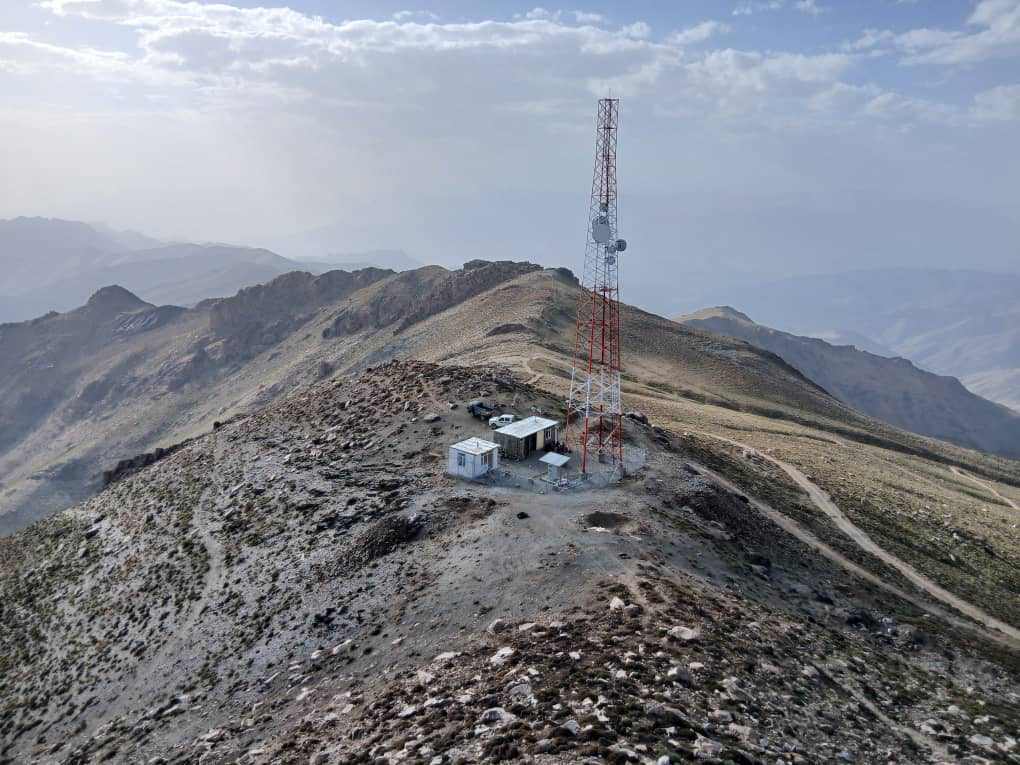
Alawi noted that Daikundi’s high mountains block direct connections between telecom towers, reducing coverage quality.
Meanwhile, Inayatullah Alokozai, spokesperson for the Ministry of Communications and Information Technology (MoCIT), told Pajhwok that ATRA has launched projects to expand services nationwide, including establishing new telecom sites in several provinces. Some sites are already operational, while work on others is ongoing.
He said Daikundi was among provinces where much of the population previously had either no telecom services or only very weak ones.
“So far, the ministry has activated several sites that now provide 3G and 4G services in different parts of the province. Construction work on another 12 sites has already begun, and once completed, the telecom and internet issues in Daikundi will be largely resolved.”
Daikundi, one of Afghanistan’s mountainous and hard-to-reach provinces, faces many obstacles due to its rugged terrain – challenges that have also slowed down the expansion of telecom services.
kk/ma


GET IN TOUCH
NEWSLETTER
SUGGEST A STORY
PAJHWOK MOBILE APP