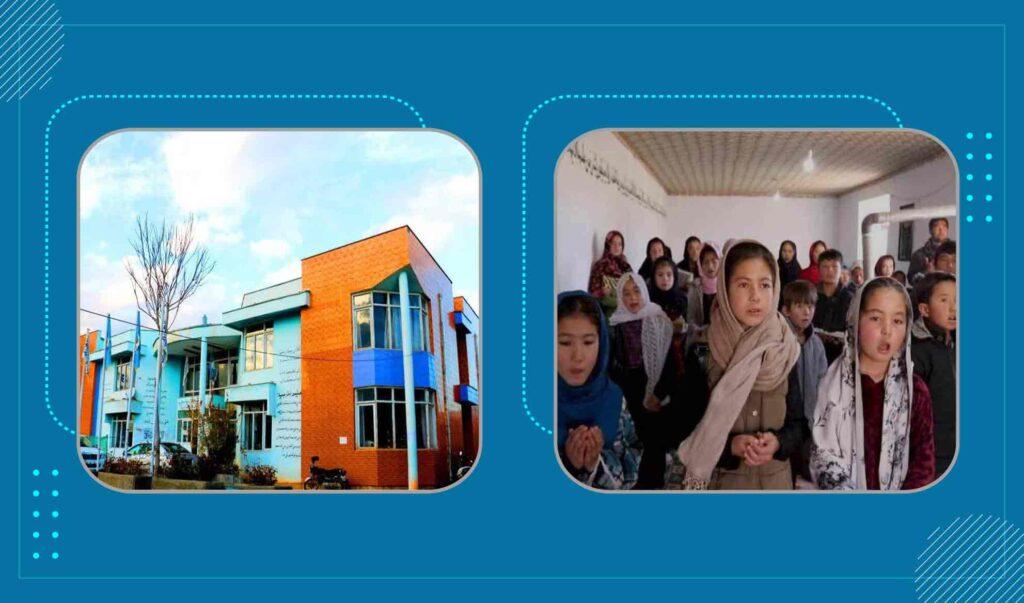

NEILI (Pajhwok): More than 1,600 people, 40 percent of them women, have participated in literacy courses this year in central Daikundi province. Some of them say that learning to read and write has opened a new door of hope and awareness for them.
Reza Rabbani, a professional member of the Literacy Management told Pajhwok Afghan News that around 80 literacy courses have been launched this year in districts and various areas of the province to educate illiterate people.
He said: “Among 80 courses, 13 are voluntary, and altogether 1,613 individuals have been enrolled in these programs.”
According to Rabbani, except for Patu district, literacy courses are active in all districts of the province, including Neili city. Among the participants, about 60 percent are men and 40 percent women, who have studied up to the third grade.
Rabbani said approximately 52 official and volunteer teachers have taught these individuals.
On the other hand, several participants said that the literacy programs have positively impacted their lives and urged responsible institutions to continue the courses and provide education at secondary and high school levels.
Nazaneen, a 21-year-old resident of Rabat village in Dasht-i-Neili, the capital of Daikundi province, who had been deprived of education, is now happy to have completed this educational program and urges for the continuation of such initiatives.
She says: “In these courses, I learned how to read and write. Now I can write my own name and my family’s names, read texts more easily, and I’ve also learned a bit about addition and subtraction.”
She added that literacy is very important for everyone, especially for girls; it enables them to know themselves, defend their rights and make decisions about their future.
Nazaneen also said: “I wish to study up to grade twelve and become a teacher in the future. I want all the girls in our village and province to be able to study.”
Najibullah, a participant, explained he is happy that for the first time the opportunity to learn has been provided, and he has been able to acquire basic reading and writing skills.
“We are very pleased with the launch of these courses, and it greatly impacts our lives.”
He expressed hope that such programs will continue in the future so that they can learn more.
Mohammad, another participant, claimed one of his dreams was to be able to sit in a classroom and gain knowledge like others.
“I am very happy; over several months, we have learned good things. Now I can write and gradually read books too,” Mohammad added.
He called on the government to launch more programs to enhance their capacities.
Meanwhile, Reza Ada, an education activist, said literacy is one of the fundamental needs of every human being. “Literacy is not only the ability to read and write but also the ability to understand, analyze, and actively participate in society.”
According to him, a literate person not only improves his or her individual life but can also contribute actively to the growth and development of family, community, and the country.
He described the literacy program as a major step toward combating illiteracy.
He emphasized: “When this many individuals, who were deprived of education for years, learn to read and write, in reality, their minds are enlightened, their families are more aware, and they can make better decisions in daily life and even contribute to the education of their children.”
Ada said that due to poverty and other challenges, many people in Daikundi have been deprived of literacy, and this problem needs to be addressed.
He stressed that literacy is a fundamental right for every individual, increasing self-confidence, decision-making ability, and active participation in society.
According to him, a literate person is less easily deceived, lives more consciously, and plays a more effective role in raising future generations.
He called on the government to establish more literacy courses in remote villages to fight illiteracy.
The difficult terrain and scattered geography of Daikundi not only makes access to basic services challenging but also creates serious obstacles to education in some areas.
Given these conditions, some national and international institutions, in cooperation with the Directorate of Education, have established local learning classes in remote and underserved areas of Daikundi to provide educational opportunities for out-of-school children.
Previously, the Education Department told Pajhwok that in some areas, due to harsh geographical conditions and a lack of students, establishing formal schools was not possible.
However, UNICEF has established hundreds of local classes, covering thousands of out-of-school children.
Meanwhile, according to officials, approximately 106,028 students are enrolled in 435 public schools across the province.
hz/ma