
KABUL (Pajhwok): Afghanistan’s Ministry of Foreign Affairs has welcomed remarks by Iran’s foreign minister on using opportunities and capacities for regional connectivity and cooperation.
Seyed Abbas Araghchi, Iran’s Minister of Foreign Affairs, said on Sunday at a meeting titled “Reviewing Developments in Afghanistan” in Tehran that Afghanistan’s geoeconomic position places it at the center of communication networks connecting Central Asia, West Asia and South Asia.
He emphasized that stability and development in Afghanistan are not only a humanitarian necessity, but also a strategic imperative for the entire region.
He added: “The experience of the past several decades clearly shows that security, development, and prosperity in Afghanistan are directly intertwined with the interests of all neighboring countries. Therefore, it is not an exaggeration if, echoing the words of the Persian-speaking Pakistani poet Iqbal Lahori, we say that the shared future of our region is linked to the future of Afghanistan.”
Araghchi said regional transit and energy networks not only contribute to Afghanistan’s growth and development, but also facilitate regional convergence. Strengthening road and rail connectivity, facilitating trade, enhancing border cooperation, and developing transit corridors, he noted, could transform Afghanistan into a vital link between Central Asia, West Asia, and South Asia.
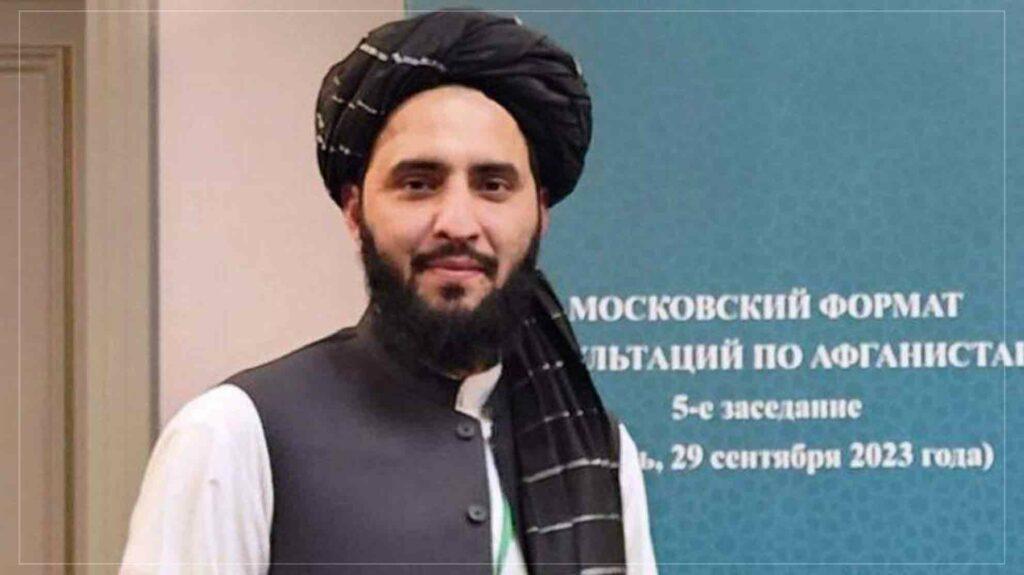
Zakir Jalali, a senior official at the Ministry of Foreign Affairs, wrote on X that moving beyond purely security-focused approaches and recognizing Afghanistan’s constructive role in regional connectivity, cooperation, and convergence is an important and noteworthy point.
He stated that pre-2021 Afghanistan, due to the military presence of dozens of foreign countries and interventions by regional and extra-regional actors, had become a serious and alarming security challenge not only for Afghans, but for the entire region.
According to Jalali, Afghanistan today should no longer be viewed through a crisis-management lens. Instead, considering its geoeconomic position, goodwill, and the economy-oriented foreign policy of the current Afghan government, the country can become an effective bridge connecting Central Asia, West Asia, and South Asia.
He added that under such an approach, regional countries would be able to effectively benefit from Afghanistan’s transit, trade, and connectivity capacities—an outcome that would ultimately safeguard shared interests and strengthen regional convergence.
Jalali said the emphasis placed by Iran’s foreign minister on utilizing these opportunities and capacities deserves appreciation.
He noted that over the past four years, practical and tangible steps have been taken in the areas of transit, regional connectivity, trade facilitation, and the expansion of economic cooperation between Afghanistan and regional countries, demonstrating that an engagement-oriented and forward-looking approach can lead to stability, prosperity, and shared regional benefits.
He concluded that engagement with Afghanistan should be based on opportunities, on-the-ground realities, and existing capacities, adding that Afghanistan and the region possess extensive actual and potential resources which, if utilized effectively, can ensure mutual benefits and create a sustainable win-win outcome for all sides.
sa