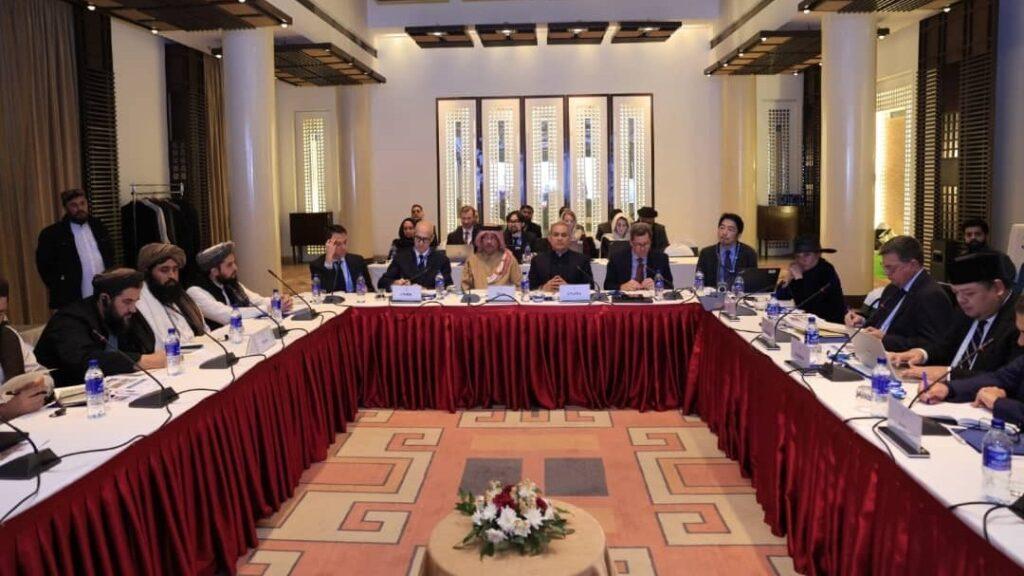

KABUL (Pajhwok): The fourth meeting of Doha process working group on counter-narcotics, hosted by the United Nations Assistance Mission in Afghanistan (UNAMA), has been held in the capital Kabul in both physical and virtual formats, the Ministry of Foreign Affairs (MoFA) announced on Wednesday.
The meeting was attended by representatives of MoF, the Ministry of Interior (MoI), the Ministry of Agriculture, Irrigation and Livestock (MoAIL) and the Ministry of Public Health (MoPH), as well as UNAMA, other UN agencies, international and regional organisations, the European Union, the Organisation of Islamic Cooperation (OIC), ambassadors from several countries, diplomats and experts, MoFA said in a statement.
Representatives from the Islamic Emirate Afghanistan (IEA) noted opium cultivation in the country had reduced to zero following a decree on banning poppy cultivation from supreme leader of IEA.
They highlighted achievements in law enforcement, alternative livelihoods and treatment of drug users, while also noting challenges and proposing solutions.
The officials said IEA had demonstrated both strong commitment and capacity to combat drugs. They added that while anti-narcotics measures have been implemented in Afghanistan, their benefits extend regionally and globally and sustaining them requires joint responsibility, investment, trust and coordination.
They also voiced concern over synthetic drugs, noting that their sources lie outside Afghanistan and, if unchecked, could harm not only Afghanistan but the wider region and the world.
UNAMA, other UN agencies, international organisations and experts acknowledged Afghanistan’s efforts in counter-narcotics.
They noted a “dramatic reduction” in poppy cultivation following the ban, calling it a historic achievement.
The statement said several countries and organisations pledged support for the fight against drugs and offered proposals for greater coordination under the Doha Process and through bilateral cooperation.
It added that many participants stressed that sustaining these achievements requires providing alternative livelihoods for farmers and expanding treatment and social reintegration services for drug users.
kk